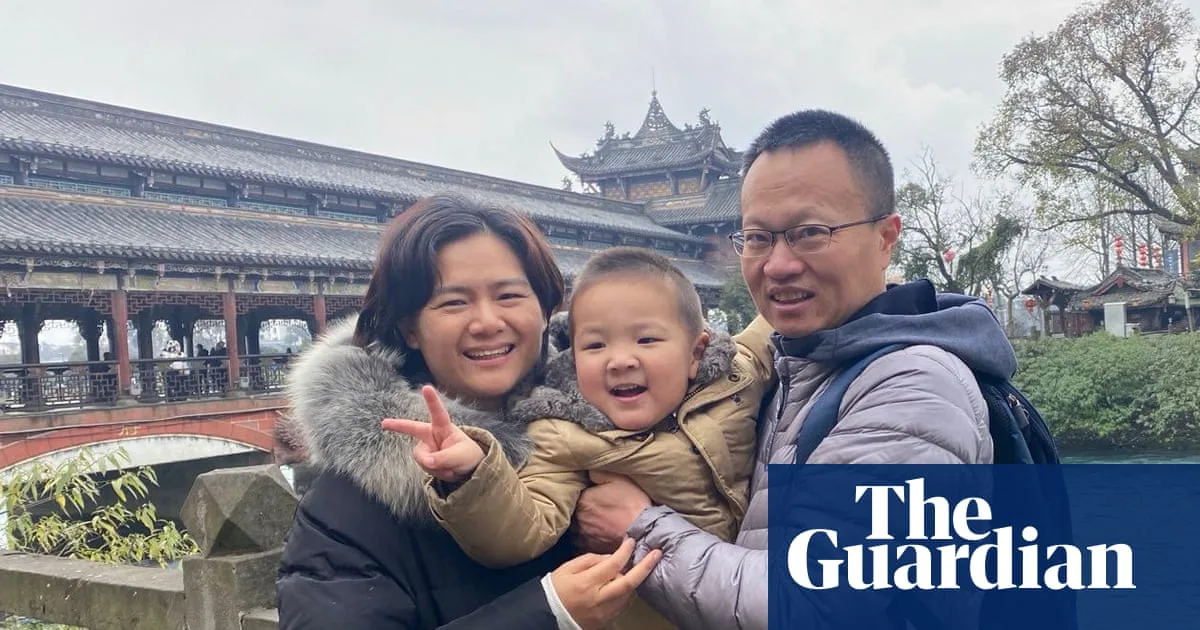
A senior Chinese pastor is being held in a detention centre in southern China while his wife and young son have fled the country, amid what is being described as the most severe crackdown on unofficial Christian churches in years.
Midnight Raid and Family Flight
The ordeal for Pastor Gao Yingjia and his wife, Geng Pengpeng, began with knocks on the door at 2am. Hiding at a friend's house in a Beijing suburb, the couple rushed downstairs to meet a group of plain-clothed men identifying themselves as police officers. Their nearly six-year-old son was asleep upstairs, and they sought to avoid a disturbance, knowing their time of relative freedom had ended.
Two months on, Gao Yingjia remains detained in Guangxi province, facing charges of "illegal use of information networks." His arrest forms part of a sweeping campaign against Christians that has prompted alarm from the United States government and human rights organisations globally.
"We both knew that as Christians in China, there were risks," said Geng Pengpeng, who has since fled overseas for safety with her son. "But to be honest, you can never be fully prepared."
A Nationwide Assault on Unofficial Worship
Gao is a senior pastor in Zion Church, one of China's most prominent underground "house churches," boasting thousands of members nationwide. His detention in October, alongside founder Jin Mingri and nearly 30 other pastors and members, signals a significant escalation. However, the pressure extends far beyond Zion Church.
Last week, the US-based NGO Human Rights in China reported that more than 100 people were detained in Wenzhou, Zhejiang province, during raids on Christian groups. Tensions there had been mounting for months following a dispute over installing a Chinese national flag inside a local church.
This crackdown represents the most significant since 2018, when a nationwide campaign led to the imprisonment of Wang Yi, leader of the Early Rain Covenant church, for inciting subversion. Following that, Zion Church adapted, adopting a hybrid model of large online sermons and small in-person gatherings, even using methods like renting tour buses to worship while moving.
Ian Johnson, author of The Souls of China, stated that after 2018, unofficial churches went underground, with Zion being one of the most successful. The recent arrests, he said, are intended to "make it clear to everyone that this is not acceptable."
Impossible Choices and International Condemnation
Now in exile, Geng Pengpeng faces a harrowing dilemma. Returning to China would bring her closer to her husband but risk her own arrest. Remaining in Thailand, which has relaxed visa rules for Chinese nationals, carries the threat of potential deportation at Beijing's request. Seeking asylum elsewhere presents another uncertain path.
Her faith, once tested, is now steadfast, but the reality is overwhelming. "Sometimes I wonder, is this real?" she asks, awaiting guidance.
The crackdown has drawn sharp international criticism. US Secretary of State Marco Rubio condemned the actions and called for the release of the church leaders, urging China to "allow all people of faith, including members of house churches, to engage in religious activities without fear of retribution."
China officially recognises five religions—Buddhism, Taoism, Islam, Protestantism, and Catholicism—but bans activities outside state-sanctioned institutions. This policy has long driven Christians to worship in unofficial house churches.
The government's stance has been reinforced recently. In September, new rules banned unlicensed religious groups from holding online sermons. Furthermore, President Xi Jinping has chaired senior Communist Party meetings urging the "Sinicization of religions."
Analysts like Johnson believe the latest arrests mark "the final nail in the coffin" for such unofficial churches, a trend he says has been evident since the 2000s. Despite these pressures, estimates of China's Christian population vary. Official figures suggest a stable 3%, while a 2018 survey indicated as many as 7% of Chinese believe in a Christian deity.
For the detained founder of Zion Church, Jin Mingri, faith in the church's resilience was unshaken. Weeks before the crackdown, when asked if he feared arrest, he reportedly replied, "Hallelujah, a new wave of revival will follow." His daughter, Grace Jin Drexel, based in the US, confirmed his unwavering confidence even after the 2018 crackdown.
China's Ministry of Public Security did not respond to requests for comment on the detentions.




