Prime Minister Sir Keir Starmer is facing mounting criticism for his celebratory response to the return of a British-Egyptian activist to the UK, following the emergence of historic social media posts containing violent rhetoric.
Controversial Posts Spark Outcry
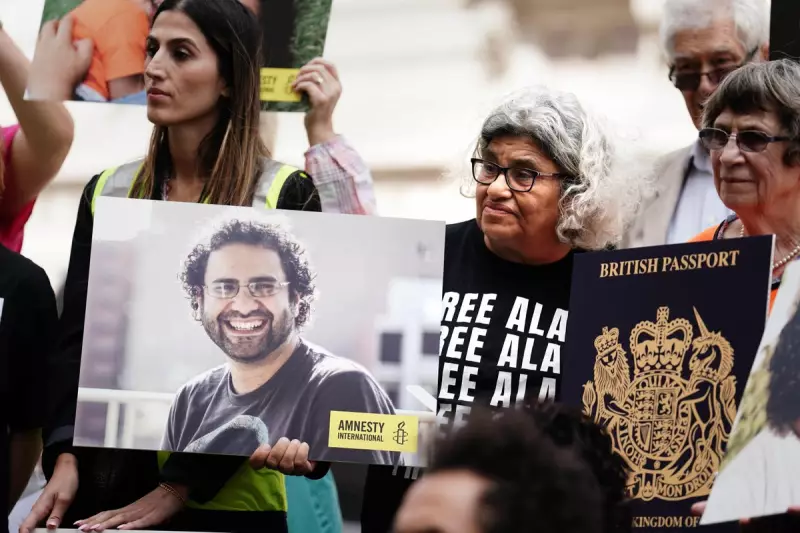
The backlash centres on Alaa Abd El-Fattah, a dual-national democracy activist who was released from detention in Egypt and returned to Britain on Boxing Day. Shortly after his arrival, social media posts dating back to 2010 and 2012 surfaced, in which the activist appears to call for violence towards "Zionists," Israelis, and the police. The posts, attributed to Mr Abd El-Fattah's X account but not verified by the Press Association, have been described as "abhorrent" by sources close to the government.
Sir Keir had publicly stated he was "delighted" that Mr Abd El-Fattah was back in the UK and reunited with his family, a sentiment echoed by Foreign Secretary Yvette Cooper and Justice Secretary David Lammy. However, a Number 10 source has since clarified that the Prime Minister was not aware of the contentious posts at the time and insisted that welcoming his return was not an endorsement of his political views.

Jewish Organisations Condemn Government Response
Leading Jewish groups have voiced profound concern and criticised the government's "effusive" welcome. The Board of Deputies of British Jews stated the posts revealed "previous extremist and violent rhetoric" that was "threatening to British Jews and the wider public." They argued that the cross-party campaign for his release, supported by successive Conservative and Labour governments, demonstrated an "astonishing lack of due diligence."
The Jewish Leadership Council linked the rhetoric to recent antisemitic attacks, expressing alarm. "We know from Heaton Park, Manchester, and Bondi Beach that there are those who hear such words as a call to action," the council said, adding that British Jews would see the government's celebration "as yet another reminder of the danger we face."
Political Fallout and Calls for Investigation
The controversy has triggered a political row, with former Conservative leader Sir Iain Duncan Smith stating he regretted signing a letter calling for Mr Abd El-Fattah's release. "Had I known of these [views], I would not have signed the letter," he said, urging police to investigate the "extremist comments."
Shadow justice secretary Robert Jenrick accused the Prime Minister of making a "serious error of judgment" and providing a "personal, public endorsement." In a letter to Sir Keir, he demanded the Prime Minister clarify his prior knowledge of the statements, condemn them without qualification, and withdraw his "unalloyed endorsement."
Mr Abd El-Fattah, a leading figure in Egypt's 2011 Arab Spring, was detained in September 2019 and later sentenced to five years in prison on charges of spreading false news. His imprisonment was deemed a breach of international law by UN investigators. He was released after being pardoned by Egyptian President Abdel-Fattah el-Sisi. This case had been a long-standing diplomatic priority for both Conservative and Labour administrations.
A Foreign Office spokesperson reiterated that securing the release of Mr Abd El-Fattah, a British citizen, had been a consistent goal across governments.