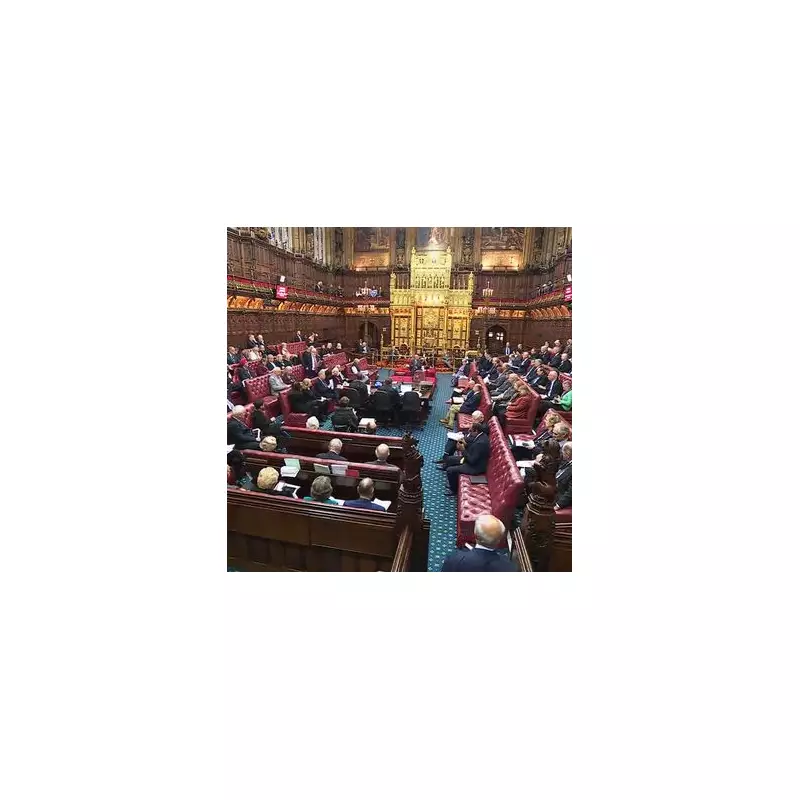
The House of Lords has been accused of attempting to create a 'law for the rich' through a controversial amendment to the historic assisted dying bill, which seeks to prohibit the use of legal aid for terminally ill people.
Legal Aid Ban Proposed Amidst Flood of Amendments
Peers are currently debating a record-breaking 1,100 amendments to the Terminally Ill Adults (End of Life) Bill, a process supporters claim is a deliberate delaying tactic. The bill, which passed the House of Commons in June last year, would allow adults in England and Wales with less than six months to live to seek an assisted death.
On Friday, Baroness Therese Coffey, the former Deputy Prime Minister under Liz Truss, addressed the Lords. She revealed she had tabled an amendment to prevent state funding being used by individuals applying to the courts for permission to end their lives.

"I've specifically tabled an element basically which doesn't allow state funding, taxpayer funding, to be used by the person applying to get this determination by the court," Coffey stated. She suggested charities could instead provide financial support.
Campaigners Decry 'Targeting' of Lower and Middle Classes
The proposal was met with immediate fury from campaigners. Louise Shackleton, who accompanied her husband Antony to the Dignitas clinic in Switzerland over a year ago, condemned the move.
"They are trying to turn it into a law for the rich," Shackleton said. "Baroness Coffey has again offered an amendment that disqualifies a certain group of people from accessing an assisted death."
She argued that if the Lords mandate a High Court application, families would face thousands of pounds in legal costs for solicitors and barristers. "The lower and middle classes again are targeted," she added.
Judicial Safeguards and Parliamentary Timetable Pressures
During the same debate, Lord Alexander Carlile of Berriew KC argued strongly for a court-based decision-making process, claiming it would "provide confidence-inspiring judgment". He proposed that the UK's 42 designated family judges could handle the applications.
This contrasts with the current draft bill, which favours a panel of medical and legal professionals over a judge. Opponents, like Conservative peer Lord Shinkwin, warned that adding court approvals would strain an already overloaded justice system.
The bill faces a race against time. Both Houses must agree on the final wording before May, when the current Parliamentary session ends. Lord Falconer of Thoroton, steering the bill, pleaded with peers to expedite the process, with ten debate sessions scheduled between Friday and April 24th.
While opponents insist they are conducting vital scrutiny of an "unsafe" bill, supporters see the avalanche of amendments as filibustering, threatening to derail the landmark legislation entirely.