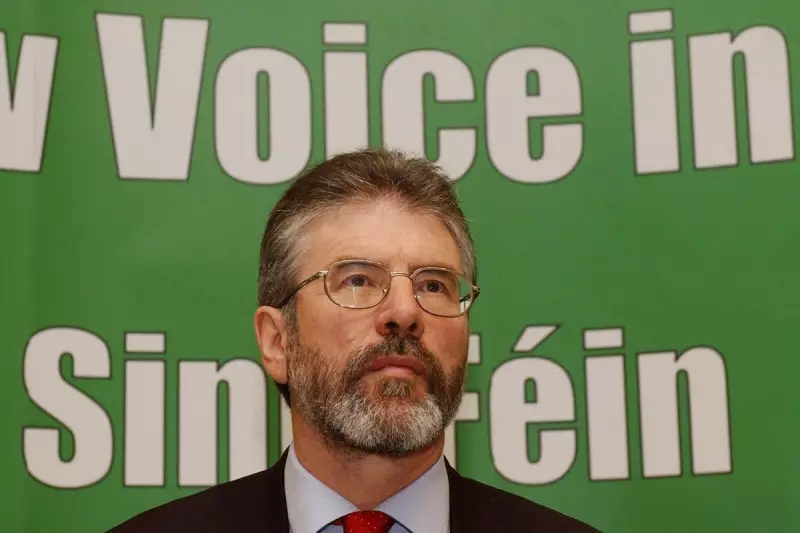
In 2004, Sinn Fein leader Gerry Adams issued a stark warning that proposed new laws to tackle anti-social behaviour in Northern Ireland risked creating a system where one section of the community would police the other, according to a newly declassified government file.
Sinn Fein's 'Deep Concern' Over Rushed Legislation
The revelation centres on a letter sent by Mr Adams to the then Northern Ireland Secretary, Paul Murphy, in the autumn of 2004. Adams expressed that his party was "deeply concerned at the speed with which this legislation is being rushed through the system". The legislation in question aimed to introduce Anti-Social Behaviour Orders (Asbos) to the region, following their implementation in England and Wales.
The UK Government had published a consultation document on the plans in April of that year. However, Sinn Fein demanded further consultation, arguing the unique political and social landscape of Northern Ireland required more careful consideration.

Fears of Disproportionate Impact on Catholic Youth
A detailed briefing document attached to Adams's letter laid out the party's core objections. It pointed to evidence from England and Wales where Asbos had "been used mainly against young people".
The proposal to grant enforcement powers to the Police Service of Northern Ireland (PSNI), district councils, and the Housing Executive was deemed "unacceptable" by the republican party. The document cited the "sectarian make-up of the PSNI" and past abuses of power by some councils as reasons for having no confidence in a fair process.
"Combined with the judiciary... it is our concern that these three bodies will oversee and implement a process which will result in one section of the community in the north of Ireland policing the other," the briefing stated. It anticipated that Asbos would therefore impact more adversely on young Catholic and nationalist males.
Advocacy for Restorative Justice Over Punitive Orders
While acknowledging that anti-social behaviour was a serious issue for all communities, Sinn Fein argued that Asbos were not the solution. The party advocated for restorative justice approaches to tackle low-level problems, claiming these were more likely to succeed.
Furthermore, the document contended that sufficient legislation already existed to deal with more serious offences, but it was not being properly implemented due to the "lack of a proper policing service" at the time—a reference to ongoing controversies surrounding police reform and community confidence.
The declassified file offers a revealing look into the political tensions surrounding law, order, and community relations in post-Good Friday Agreement Northern Ireland, highlighting enduring debates about policing impartiality and justice.