White House Press Secretary Condemns Bad Bunny's Grammy Stage Comments on ICE
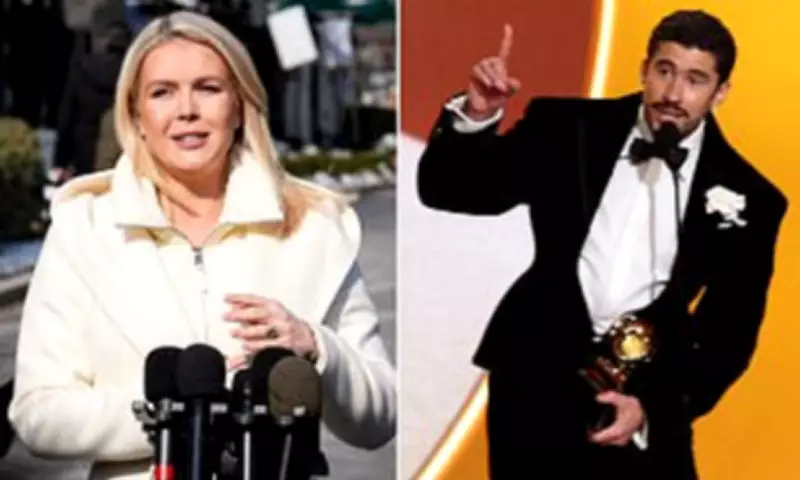
White House press secretary Karoline Leavitt has launched a sharp critique of Puerto Rican singer Bad Bunny following his pointed remarks about Immigration and Customs Enforcement (ICE) during Sunday night's Grammy Awards ceremony. The controversy erupted after the artist, who is set to perform at the upcoming Super Bowl halftime show, used his acceptance speech for the Best Música Urbana Album award to deliver a political message.
"ICE Out": Bad Bunny's Grammy Declaration
Upon receiving his award, Bad Bunny told the audience, 'Before I say thanks to God, I'm going to say: ICE out.' He further elaborated, 'We're not savage, we're not animals, we're not aliens. We are humans, and we are Americans.' These comments quickly garnered widespread attention and sparked debate across political and entertainment circles.
Leavitt's Response: Accusations of Celebrity Hypocrisy
When questioned by reporters on Tuesday from the White House driveway, Leavitt delivered a robust defence of law enforcement while criticising what she perceived as hypocrisy among wealthy celebrities. 'I think it's very ironic and frankly sad to see celebrities who live in gated communities, with private security with millions of dollars to spend protecting themselves, trying to demonize law enforcement, public servants who work for the United States government to enforce our nation's laws,' she stated.
Leavitt contrasted the current outcry with what she described as silence during previous administrations, specifically referencing high-profile cases involving victims like Jocelyn Nungaray and Laken Riley. 'You didn't hear this same type of uproar from celebrities in Hollywood when the previous administration allowed an invasion of our nation's borders and allowed innocent women and girls to be killed, raped, and murdered at the hands of people who should have never been in our country in the first place,' she asserted.
The press secretary framed the issue as one of supporting law enforcement officers who are 'simply trying to do their jobs to remove violent predators.' This response comes amid ongoing scrutiny of ICE and U.S. Customs and Border Patrol following two deadly incidents in Minneapolis, which have fuelled protests and criticism of mass deportation policies.
Broader Political Context and Reactions
The incident has unfolded against a backdrop of heightened political tensions. President Donald Trump has previously expressed disapproval of Bad Bunny's selection as a Super Bowl performer, telling the New York Post last month, 'I'm anti-them. I think it's a terrible choice. All it does is sow hatred. Terrible.' Trump also indicated he would not attend this year's Super Bowl, citing the West Coast location as 'too far away.'
Meanwhile, conservative organisation Turning Point USA has announced counterprogramming for the halftime show, featuring performances by Kid Rock and country singers Brantley Gilbert, Lee Brice, and Gabby Barrett. This move underscores the cultural and political divisions highlighted by the Grammy controversy.
Additional Grammy Controversy: Trevor Noah's Epstein Joke
Bad Bunny was not the only Grammy figure to attract presidential criticism. Host Trevor Noah opened the ceremony with a joke linking Trump to Epstein Island, prompting an angry response on Truth Social. Trump called Noah a 'total loser' and threatened legal action, vehemently denying any association with the location. 'I have never been to Epstein Island, nor anywhere close, and until tonight's false and defamatory statement, have never been accused of being there,' the president declared.
This series of exchanges illustrates the deepening intersection of entertainment, politics, and immigration discourse in the United States, with the White House firmly positioning itself in defence of federal law enforcement agencies against celebrity criticism.