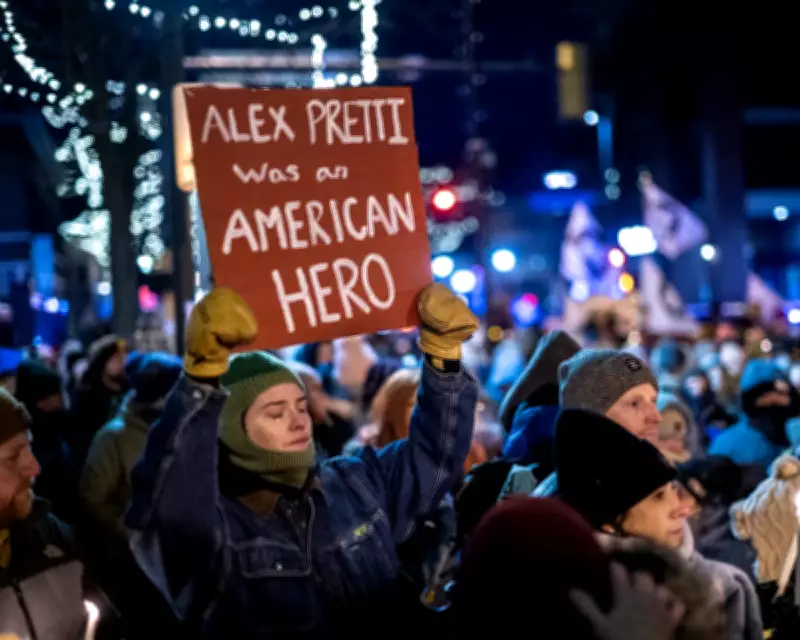
A poignant candlelight vigil was held on the streets of Minneapolis, Minnesota, at the very location where Alex Pretti was fatally shot by immigration agents on 28 January 2026. The sombre gathering illuminated a stark contrast between two competing visions of masculinity, one rooted in fear and the other in care, as mourners reflected on the life and sacrifice of Pretti.
The Clash of Masculine Ideals on Nicollet Avenue
On 24 January, near the frozen kerb of Nicollet Avenue in Minneapolis, a powerful display of manliness unfolded, challenging the prevailing narratives promoted by certain political factions. This vision of masculinity, embodied by individuals like Alex Pretti, emphasises deep empathy and the willingness to place oneself in harm's way to protect others from repression, rather than serving as an instrument of it.
Empathy Under Siege in Modern Discourse
In recent times, rightwing voices have launched a concerted attack on empathy, with figures such as Elon Musk labelling it "the fundamental weakness of western civilisation." Others have gone further, branding empathy as "toxic," "suicidal," or even "sinful." This perspective is often associated with the macho wing of the Maga right, which draws on medieval imagery and symbolism, yet fails to uphold the chivalric ideals of generosity, courtesy, and mercy that defined knights of old.
Contrast this with the actions of Alex Pretti, who, in a moment of crisis, demonstrated a profound commitment to care over aggression. Despite carrying a legally held firearm under Minnesota's concealed carry laws, Pretti chose not to draw his weapon, a decision that may have prevented a broader escalation of violence and repression under potential invocation of the Insurrection Act.
The Courage of Nonviolent Resistance
Pretti's response, driven by empathy for a fellow protester who had been pushed to the ground, resulted in a sacrifice that could alter the course of resistance history. This act aligns with the philosophy of nonviolent resistance, which is often misunderstood as passive. In reality, it requires immense courage and active choice, particularly when power imbalances exist. As French psychoanalyst Anne Dufourmantelle noted in her work, risking one's life can be an acceptance of risk that transcends individual ownership, a concept she tragically embodied in her own life-saving efforts.
Societal Narratives and the Search for Respect
Many atomised and disaffected young men are drawn to far-right ideologies that peddle exaggerated versions of masculinity because society, especially in the US, has historically offered limited conceptions of power. As anthropologist Philippe Bourgois observed in the context of 1980s Harlem drug gangs, these individuals often seek respect and visibility in a world that fails to acknowledge alternative forms of strength.
Personal experiences, such as growing up in communities that value emotional vulnerability, open-heartedness, and sacrifice, can provide a counter-narrative. For instance, exposure to social justice teach-ins, anti-war protests, and diverse friendships can foster a deeper understanding of empathy and care, as opposed to the performative masculinity that relies on violence and intimidation.
Teaching a New Generation of Men
As a society, there is an urgent need to shift the stories we tell boys and young men about what it means to be a man. Alex Pretti exemplified courage and aspiration not through aggression, but through his empathy and ethic of care. His executioners, in contrast, displayed a hollow performance of masculinity, one built on violence and terror.
On that street in Minneapolis, two versions of masculinity clashed: one anchored in fear, the other in care. To young men grappling with their identity, the message is clear: true manhood takes time to cultivate, and it is found in the slow, deliberate embrace of empathy and connection, as echoed in the lyrics of the Rapture's song, "It Takes Time to be a Man."
Alexander Hurst, a Guardian Europe columnist, reflects on these themes in his memoir, Generation Desperation, published in January 2026, urging a reevaluation of masculine ideals in contemporary culture.