
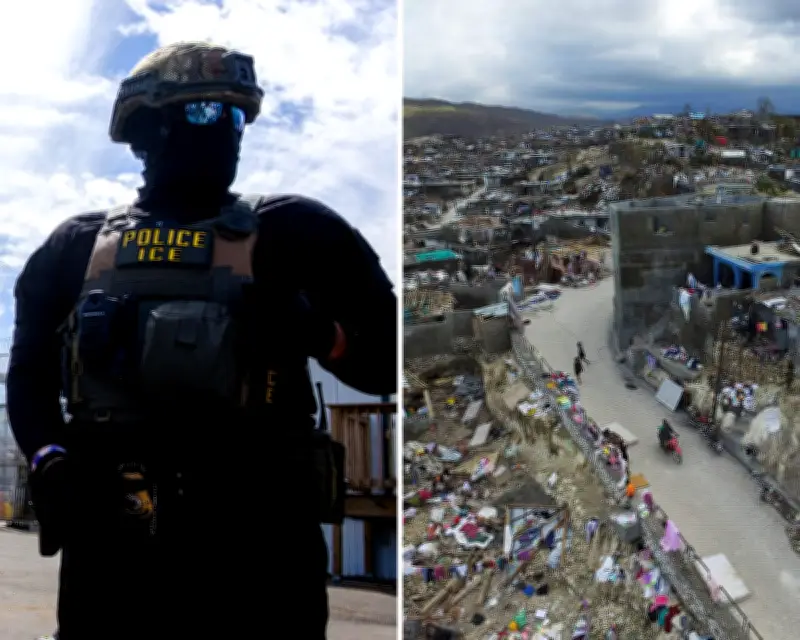
A Guardian analysis reveals that Donald Trump's immigration crackdown largely targets people from countries most vulnerable to displacement from climate-driven disasters. Of the 39 nations facing full or partial US entry restrictions, 22 rank within the most climate-vulnerable quarter globally, according to the Notre Dame Global Adaptation Initiative.
Climate Vulnerability and US Entry Bans
Chad and Niger, the two most climate-vulnerable countries, are fully barred, along with Sudan, Somalia, and Sierra Leone. Honduras, among the most vulnerable half, has seen intensified storms and floods. When Hurricane Mitch struck in 1998, killing 7,000, one family fled to the US. Evelyn, now in New York, recalls: "There were bodies and dead animals floating in the water. My uncle said, 'Just bring the kids over here.'"
Trump's policies have made such escapes harder. "Every day it's more barriers," Evelyn says. The administration also seeks to end Temporary Protected Status (TPS) for Honduras and 12 other countries, half of which are highly climate-vulnerable. The Supreme Court is considering appeals for Syria and Haiti, both hit by climate disasters.
Climate Displacement Crisis
The UN estimates 250 million people have been displaced by climate disasters in the past decade. Most move internally, but a growing number become climate refugees. US law does not recognize environmental disasters as grounds for asylum. "People are being displaced by climate change, the number is growing every year," says Jocelyn Perry of Refugees International.
Advocates note that climate disasters often trigger secondary crises like violence, which can be asylum grounds. "If crops fail and families move to dangerous urban areas, climate change plays a key role," Perry adds.
US Role and Policy Contradictions
The US is the largest historical emitter, but Trump dismisses climate science as a "hoax" and promotes fossil fuels. His administration has cut refugee programs and foreign aid, with USAID cuts potentially causing 4.5 million child deaths. "All these actions will increase displacement," Perry warns.
TPS is the only climate-sensitive immigration tool, granting stays for war or natural disasters. Syrians received TPS in 2024 due to drought; Haitians due to hurricanes. Trump has terminated TPS for many countries, with court battles ongoing. A Sudanese doctor who fled drought-fueled conflict says, "It would be very difficult to go back."
Future Prospects
Efforts to update US immigration law for climate refugees, like the Climate Displaced Persons Act, have stalled. "There's virtually no data on international climate displacement," says Hannah Flamm of IRAP. Analysts doubt near-term change. "Climate has been put on the back burner," Perry notes. Future administrations might focus on adaptation funding rather than new visas. "Right now, sympathy for immigrants is nil," says Yael Schacher of Refugees International.




