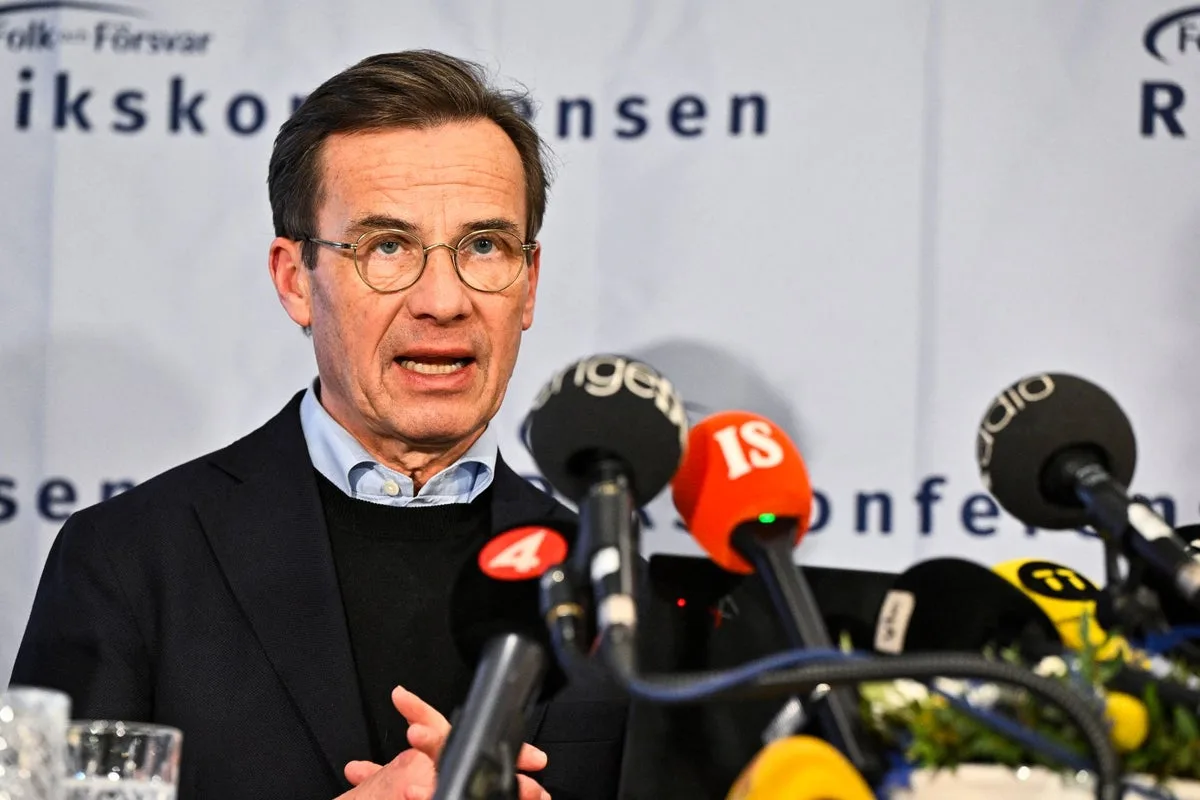
Sweden Unveils Plan to Deport Migrants for Breaching 'Honest Living' Rules
The Swedish government has proposed a controversial new bill that would enable authorities to deport migrants who fail to adhere to a standard of "honest living." This legislative move, announced by Migration Minister Johan Forsell, targets individuals who avoid paying fines, work without paying taxes, cheat the benefits system, or obtain residence permits fraudulently. If adopted, the changes are set to take effect on July 13, 2026, granting officials the power to withdraw residence permits for non-compliance.
Political Backing and Electoral Context
The centre-right Moderate Party, which leads Sweden's coalition government with support from the anti-immigration Sweden Democrats, came into office in 2022 after pledging to implement stricter immigration laws. Ahead of legislative elections in September 2026, the government is rolling out a wave of reforms across various policy areas. However, recent Politico polling indicates the coalition is currently in third place, adding urgency to their legislative agenda.
Migration Minister Forsell emphasized the rationale behind the proposal, stating, "Following laws and rules is a given, but it must also be a given that we do our best to live responsibly and not harm our country. If, for example, you ignore paying your debts, if you don't comply with decisions from Swedish authorities, if you cheat the benefits system, if you cheat your way to a Swedish residence permit... then you do not have the right to be here."
Human Rights Concerns and Criticism
The proposal has sparked significant backlash from human rights groups, including Civil Rights Defenders, a Stockholm-based organization. They argue that the bill could undermine democratic principles such as legal equality and freedom of expression. John Stauffer, the group's legal director, expressed particular concern over the inclusion of non-criminalized statements as potential indicators of a lack of honest living.
Stauffer warned, "The fact that non-criminalized statements may also be taken into account, even if they cannot constitute an independent ground for a lack of honest living, raises particularly serious concerns. Such an arrangement may have a chilling effect on freedom of expression and lead to increased self-censorship. In practice, this creates different rules depending on who you are, which runs counter to fundamental principles of equality before the law."
European Context and Similar Policies
This move aligns with a broader trend across Europe, where several countries have recently introduced tougher immigration measures. For instance, Denmark's centre-left Social Democrats government announced in January 2026 that it would expel non-Danish citizens who have served prison terms of a year or more for serious crimes. In February 2026, British Home Secretary Shabana Mahmood undertook a fact-finding mission to Denmark, where Labour's sister party successfully countered right-wing populist challenges by adopting stricter immigration laws.
In the UK, Mahmood has faced criticism from within her own party after announcing new measures, including offering refugee status on a temporary, renewable 30-month basis and proposing to extend the time required for most migrants to gain permanent residency from five to ten years, or up to twenty years for refugees.
Migration Statistics and Impact
According to the Swedish Migration Agency, Sweden granted 79,684 residence permits in 2025, with only 6 percent for asylum-related reasons. This marks a significant decrease from 2018, when 133,025 permits were approved and 18 percent were asylum-related. The proposed bill reflects a continued shift towards stricter immigration controls in Sweden, potentially affecting thousands of migrants residing in the country.
Ludvig Aspling, migration policy spokesman for the Sweden Democrats, clarified that statements alone should not be seen as evidence of dishonest living but could indicate links to violent extremism, which might signal a deficient character. This nuance highlights the government's attempt to balance security concerns with individual rights, though critics remain skeptical of its implications for civil liberties.






