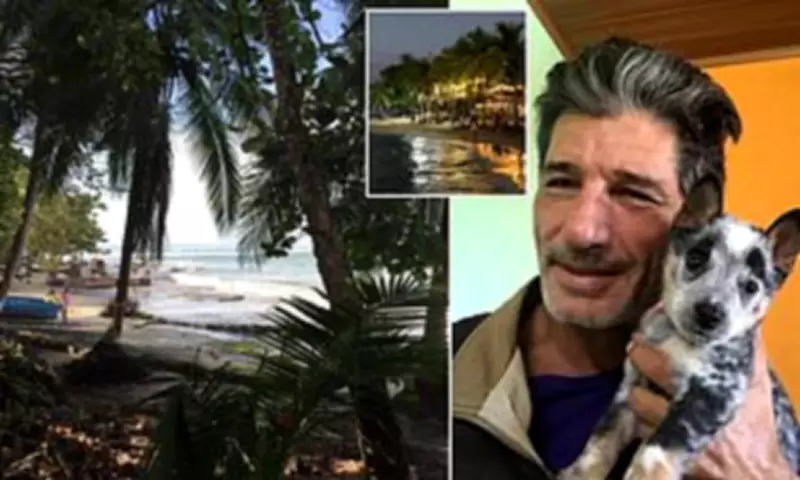
Surfing Legend's Brother Blames Regional Crime Wave for Costa Rica Murder
The brother of a renowned surfing figure stabbed to death in Costa Rica has pointed to a surge of criminal activity flooding into the picturesque vacation town as the likely cause of the tragedy. Kurt Van Dyke, aged 66, was discovered deceased beneath his bed with a sheet covering his head inside his residence in the coastal community of Hone Creek around 10:50 AM last Saturday.
Violent Home Invasion Details
According to police reports, Van Dyke's 31-year-old girlfriend Arroyo was taking a shower when two armed intruders forced their way into the beachside apartment. The assailants held both occupants at gunpoint before fatally attacking Van Dyke. They then restrained Arroyo using zip-ties on her hands and feet, subjected her to a brutal beating, and escaped in the couple's 2013 Hyundai Elantra vehicle.
A preliminary medical examination revealed Van Dyke had suffered multiple stab wounds and showed evidence of asphyxiation. Investigators found a knife positioned near his body at the crime scene.
Family Rejects Personal Grudge Theory
Peter Van Dyke, the victim's grieving brother, has dismissed speculation that his sibling might have been murdered by enemies bearing personal grudges. Speaking from the family farm in Gilroy, California, Peter instead attributed the killing to escalating criminal activity spreading into the nearby resort destination of Puerto Viejo de Talamanca and throughout Costa Rica generally.
"With cartels, extensive drug trafficking operations, and crackdowns in countries like El Salvador and Venezuela, many criminal elements are relocating to neighboring nations where they can operate more freely," Peter explained to the Daily Mail. "The Caribbean coast has long served as a drug trafficking corridor, but the violence has intensified dramatically in recent times."
Robbery Motive Suspected
Peter Van Dyke emphasized that his brother maintained regular weekly phone contact with family and that relatives visiting from Costa Rica had previously expressed concerns about deteriorating safety conditions. "I believe this was a robbery because crime has become rampant in many areas of that country, particularly on the Caribbean side," he stated. "Friends who visited my brother in recent years have declared they won't return due to safety concerns."
Local authorities have not identified any suspects yet and remain cautious about sharing investigation details, though Peter noted they appear to be maintaining an open investigative approach. "The police are investigating whether this was nefarious activity or a robbery gone wrong," he said. "I cannot imagine Kurt having enemies who would do this. We see no reason for this tragedy beyond random violence, though we await conclusive findings."
Community Impact and Legacy
Peter described his brother as a benevolent community figure who owned the Hotel Puerto Viejo since the 1980s and was actively involved in a real estate transaction at the time of his death. "He was exceptionally generous, helping numerous people throughout the town. The entire community where he lived is deeply distressed by his loss," Peter shared. "Kurt would never harm anyone and was always available when needed. Everyone who knew him recognized these qualities."
Van Dyke's three children—Salvador (23), Lulu (21), and Jacob (7)—are currently in Puerto Viejo coordinating with authorities while processing their father's sudden death. Peter noted he hadn't communicated with Arroyo personally, though he understood the relationship had lasted approximately five years.
Tourist Safety Concerns
The United States State Department maintains a Level 2 travel advisory for Costa Rica, recommending visitors exercise heightened caution. The advisory specifically notes: "Petty crime is common throughout Costa Rica. Violent crime also affects tourists. This includes armed robbery, homicide, and sexual assault." The warning further mentions reports of robberies at short-term rental properties and criminal incidents targeting foreign business owners and residents.
Online travel forums reveal tourists echoing the Van Dyke family's safety apprehensions about the Puerto Viejo area. Located approximately 3.5 miles from Van Dyke's home in Costa Rica's Limón province, this Caribbean coastal town near the Panama border has developed a concerning reputation despite its popularity with backpackers and international vacationers.
Statistics indicate the Limón province accounts for 25 percent of homicides nationwide. Travelers have shared alarming accounts of recent rapes, robberies, and murders, with some describing harassment and stalking incidents targeting young women. Multiple visitors reported feeling unsafe exclusively in Puerto Viejo compared to other Costa Rican destinations, with several recounting vehicle break-ins and pervasive surveillance by suspicious individuals.
Hotel Reputation and Surfing Heritage
Van Dyke had operated the Hotel Puerto Viejo for four decades after purchasing it from a retiring previous owner. The budget establishment, originally catering to surfers when the area remained relatively undiscovered, receives mixed reviews from guests. Some complaints cite dirty facilities, noise disturbances, insect infestations, and questionable clientele including prostitutes.
Born into a family of influential surfers, Van Dyke established his own legacy riding waves in Santa Cruz before relocating to Costa Rica in 1983. He settled specifically for the renowned Salsa Brava waves along the Caribbean coast, where he earned the nickname "King" within the surfing community. His father Gene pioneered surfing culture, while his mother Betty helped integrate women into the sport during the 1950s and 1960s.
Friends and admirers have expressed profound sorrow following Van Dyke's unexpected death, sharing heartfelt tributes online celebrating his spirit, energy, and lasting impact on those around him. One memorial post noted: "Some people leave footprints—you left waves. May you surf the clouds forever, free and fearless."
Beyond surfing, the Van Dyke family has managed the Van Dyke Ranch in Gilroy, California, for sixty years. In a recent interview with a Limón publication, Van Dyke recalled receiving his first surfboard at age seven and described the sport as both euphoric and addictive.