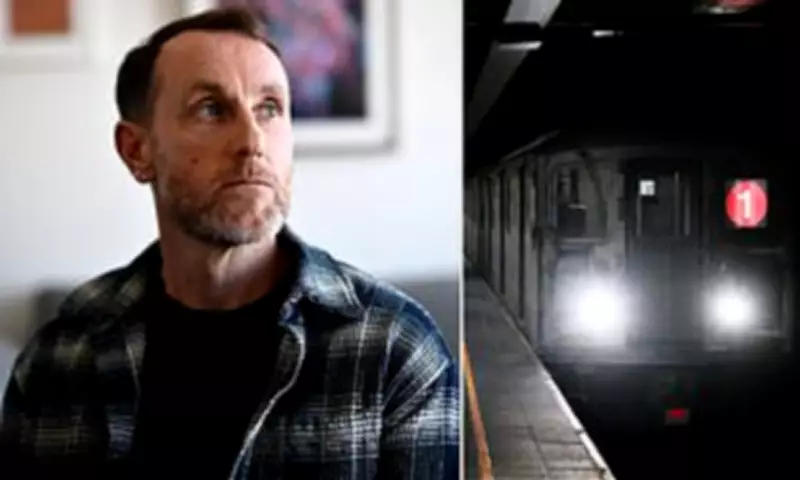
Musician Survives Subway Push, Returns to Tracks After Year-Long Recovery
A musician who miraculously survived being shoved into the path of an oncoming New York City subway train is now speaking out about his harrowing ordeal and the difficult journey back to riding the system. Joseph Lynskey endured what many commuters consider their worst nightmare when he was pushed onto the tracks at the 18th Street station in Manhattan on New Year's Eve 2024.
Nine Minutes Trapped Beneath a Train
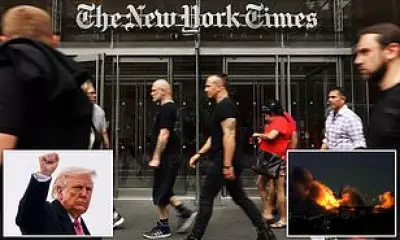
The 46-year-old music programmer spent nearly nine minutes trapped beneath a massive train car, lying inches from the electrified third rail in a pool of blood. Authorities described the incident as a random push from behind. 'I had felt like a piece of my life in New York had been taken from me,' Lynskey told the New York Times from his Brooklyn studio apartment.
Lynskey believed he was alone on the platform when, just as a Brooklyn-bound train roared into the station, he felt what he described as a massive shove from behind. When he regained awareness, the train had stopped on top of him. 'I knew that I had to remain calm. There was nobody on the platform answering my calls for help. For about 90 seconds, I was alone, screaming for help,' he recalled.

Miraculous Rescue and Severe Injuries
A good Samaritan eventually responded, asking Lynskey questions to keep him conscious while he lay as still as possible beside the lethal third rail. Firefighters, police, and subway workers arrived within minutes, with two firefighters retrieving him from the tracks. Surveillance video captured the violent push by a masked man later identified as 23-year-old Kamel Hawkins.
Lynskey suffered devastating injuries including:
- A cracked skull
- Four broken ribs
- A ruptured spleen
- A concussion
On the platform, bleeding heavily as rescue workers cut away his clothing, Lynskey pleaded with bystanders to make sure his 16-year-old dachshund, Leo, waiting at home in Brooklyn, would be cared for. His alleged attacker, Hawkins, was arrested later that day and charged with second-degree attempted murder. He has pleaded not guilty, and his trial has been delayed while he receives psychiatric care.
The Long Road to Recovery
After a week at Bellevue Hospital in Manhattan, Lynskey began the long process of rebuilding. While his ribs healed physically, he struggled emotionally. 'I am not someone who typically takes cars or cabs,' he explained. 'I am a New Yorker, and in New York everyone takes the train because it's the fastest and most reliable way to get around the city.'
For months, he avoided the subway entirely, relying on Uber rides during winter and Citi Bikes as temperatures rose. He slowly returned to tennis courts, museums, and music venues - but only within cycling distance. The subway remained psychologically out of reach.
Confronting Fear Through Exposure Therapy
Last summer, Lynskey began exposure therapy with a specific goal: to ride the subway again. He started above ground, biking to the Manhattan Bridge where trains cross in the open air, reacquainting himself with the mechanical rhythm and sounds of approaching trains.
He then progressed through carefully planned steps:
- Sitting on station steps
- Standing on platforms with his back pressed firmly against the wall
- Finally boarding a train with friends
Each step required confronting sleepless nights and racing heartbeats triggered by the memory of that almost fatal shove. He reminded himself what the subway represented: access to art, sport, and music. He saw Nine Inch Nails at Barclays Center, watched Venus Williams play doubles at the US Open, and visited Diane Arbus's photography exhibition 'Constellation' at the Park Avenue Armory - all reached by bicycle.
Returning to the Subway System
When winter returned and his beloved dachshund Leo died after a brief decline, Lynskey took it as a sign that it was time to confront the subway head-on. With two close friends, he descended into the Fulton Street station in Brooklyn. When the G train pulled in, they clasped hands and ran aboard together. 'I started crying but I was happy for myself,' Lynskey recalled.

They rode six stops to Greenpoint for lunch, but he made the return trip alone. Soon after, he traveled by train to Manhattan's Upper West Side to see Patti Smith perform her 1975 album 'Horses' at the Beacon Theater - a journey that would have once felt impossible.
Legal Action Against City Authorities
Lynskey has now filed a lawsuit against the Metropolitan Transportation Authority and the city, alleging negligence and disregard for rider safety. The suit claims the agencies ignored data about the risk of riders being pushed and failed to implement safety recommendations from engineers. It seeks unspecified damages.
'Only by holding defendants accountable for their negligence, gross negligence, and reckless conduct will the defendants be forced to take responsibility,' the lawsuit states. 'The safety of every rider should be the main concern, and the MTA and the city have ignored it for years,' said Bruce Nagel, one of Lynskey's attorneys.
Questioning Safety Priorities
On a recent ride on the No. 6 line, Lynskey studied the safety measures installed along parts of the platform edge - waist-high barriers he described as sporadic and minimal. 'A little tiny fence that it's hard to imagine could protect anyone,' he observed.
Across the station stood new, high-tech entry gates designed to curb fare evasion - part of a $1.1 billion MTA investment planned over five years. 'Fare evasion is important, and the MTA has to be funded so they can do things like protect their citizens,' Lynskey acknowledged. But comparing the two installations left him unsettled. 'When you look at those entry gates, with all the bells and whistles, and then look in the other direction and see these tiny, randomly placed fences, it feels like a tale of two priorities.'
As the anniversary of the attack approached, Lynskey marked it by riding the subway to Chelsea to visit the firehouse of Engine 3, Ladder 12 and Battalion 7 - the crew that had pulled him from beneath the train. One of the firefighters who rescued him was on duty. 'I had to thank him for getting me to another New Year's Eve,' Lynskey said. 'I have sort of a new birthday.'
Lynskey now rides the subway more often, although he prefers to wait on the station steps until trains arrive before heading onto the platform. He believes his life was spared for a reason. 'Being of service is something I really plan on focusing on for the next part of my life,' he said. 'What happened to me was not an anomaly. It was preventable, and it should not happen to anyone else.'