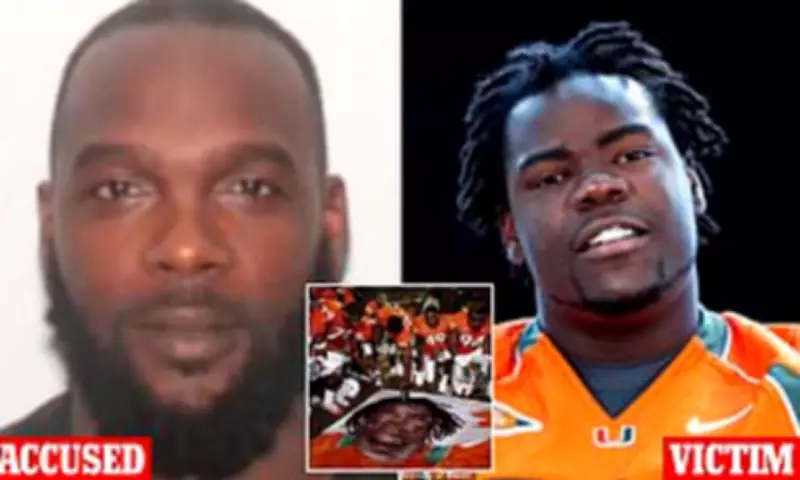
Prosecutors Conclude Murder Case Against Former Miami Hurricanes Player
Prosecutors in South Florida have concluded their murder case against former Miami Hurricanes football player Rashaun Jones, alleging he had the gun, motive, and opportunity to kill teammate Bryan Pata in 2006. The 40-year-old defendant now awaits jury deliberations, which are set to begin on Thursday, nearly two decades after the tragic incident.
Key Testimony from 2022 Recording
Over the last five days, jurors heard testimony from 21 witnesses. The most significant evidence may have come from a 2022 recording of former University of Miami faculty member Paul Conner. In the recording, Conner explained that in 2006, he heard a gunshot and witnessed a man emerging from the direction of the blast. He also identified Jones in police lineups in both 2006 and 2022.
Due to Conner's health and memory issues, Miami-Dade Circuit Court Judge Cristina Miranda ruled the 81-year-old was not fit to testify in person. Consequently, she allowed the 2022 recording to be submitted as evidence. Jones, who has pleaded not guilty, was arrested in 2021 and remains in custody.
Detective's Testimony and Cold Case Revival
Miami-Dade Sheriff's Office Detective Juan Segovia, who has worked on the case since 2006, testified that Conner immediately identified Jones in a photo lineup, stating, "This is the guy who ran past me." Segovia was put in charge of the cold case in 2020, which led to Jones' arrest for second-degree murder in 2021.
Segovia told jurors that Jones' name repeatedly surfaced in the days following the crime. He highlighted a "lot of bad blood" between the players, as Pata's girlfriend had allegedly been in a previous romantic relationship with Jones. Additionally, phone records indicate Jones was near the crime scene on November 6, 2007, raising questions about his whereabouts at the time of the murder.
Weapon and Threats Evidence
A teammate informed police that he saw Jones with a .38-caliber revolver, believed to be the weapon used in the crime. Another teammate reported hearing Jones discuss his handgun. Segovia emphasized that the evidence points to Jones, citing historical threats, discussions about the firearm, phone records, and Conner's identification.
"It was all the historical previous threats he had made to the victim," Segovia said, as quoted by ESPN. "It was the threats accompanied with the display or talk of the same type of firearm that killed the victim. It was the phone records, it was the identification of Mr. Connor and all the lies ... the lies about where he was that night. The lies about the phone."
Defense Rebuttal and Legal Delays
Jones denied owning a firearm when speaking to police. He has been in custody for nearly five years due to court delays and turnover among defense attorneys and prosecutors. Jones has maintained his innocence and declined a pretrial deal that would have given him 15 years in prison with credit for time served. If convicted of second-degree murder, he faces up to life in prison.
Defense attorney Christian Maroni rebutted much of the testimony and introduced several other leads pursued by police. However, as reported by ESPN, prosecutors objected each time, and the judge typically ruled in the state's favor.
Background on the Victim
Bryan Pata, a 22-year-old defensive lineman and graduate of nearby Miami Central High, was expected to be drafted by an NFL team before being shot in the back of his head on November 7, 2006, outside his apartment complex in Kendall, Florida, following a team practice. The trial marks a significant moment in a case that has lingered for nearly 20 years, with jurors now poised to deliberate on the fate of his former teammate.