
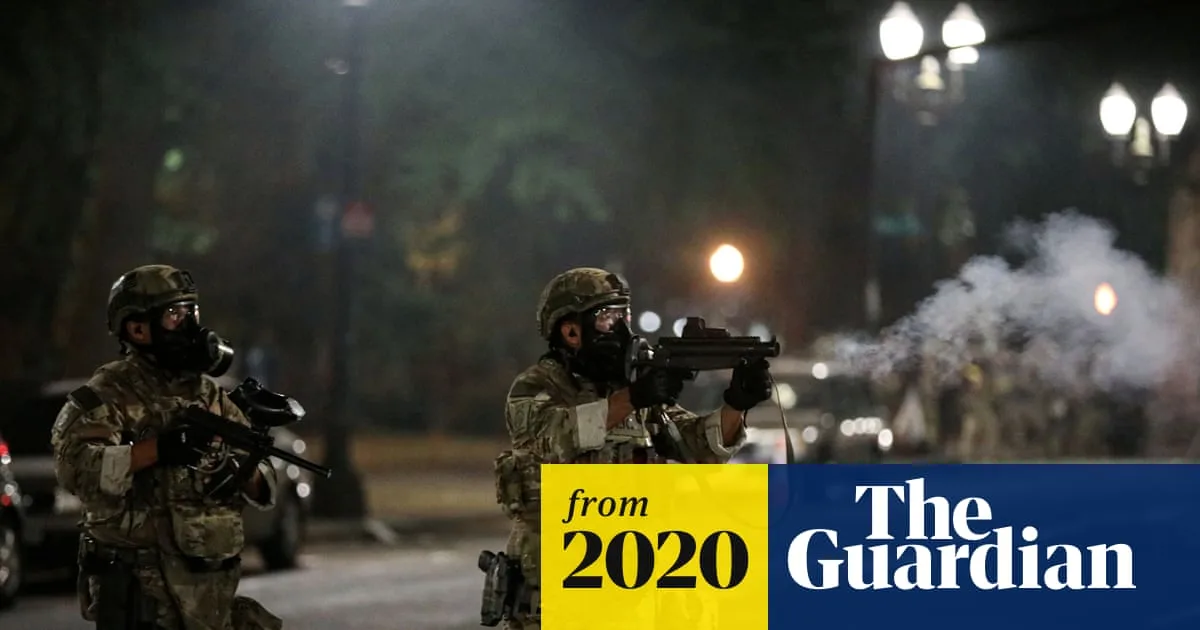
President Donald Trump has defended the actions of federal agents sent to Portland, Oregon, to confront protesters, saying they have “done a fantastic job” and could be deployed to other cities. Speaking in the Oval Office on Monday, Mr Trump brushed aside allegations that officers are violating constitutional rights and concerns that the deployments represent an overreach of executive power.
The largest city in Oregon has seen more than 50 nights of protests against police brutality and systemic racism following the killing of George Floyd in Minneapolis on 25 May. Protesters have reported violence by police and instances of people being seized by unidentified officers and held without due process. The mayor of Portland has called for the withdrawal of federal agents, and the Oregon attorney general has filed a lawsuit seeking the same outcome.
Mr Trump said law enforcement could be sent to other cities, including Chicago and New York, which he claimed were “run by liberal Democrats”. He described the protesters as “anarchists” who “hate our country”, and claimed the situation in Portland was “worse than Afghanistan”. The president also suggested that he would soon issue a plan related to healthcare, citing a Supreme Court ruling on DACA as a precedent for bypassing Congress.
Democrats in the US House of Representatives have demanded investigations into the use of federal law enforcement to suppress First Amendment-protected activities. In June, federal officers were used against protesters in Washington DC, some of whom were forcibly dispersed so Mr Trump could stage a photo op at a church. The White House has been influenced by John Yoo, a former government lawyer who justified the use of torture, who argues that a recent court ruling shows Mr Trump how to bypass Congress.
Local media in Portland have stressed that the protests are confined to a small area and that much of life continues normally despite the coronavirus pandemic. Nonetheless, Mr Trump has indicated he will take a tough stance on law and order ahead of the November election, in which he trails Democratic challenger Joe Biden in most polls.




