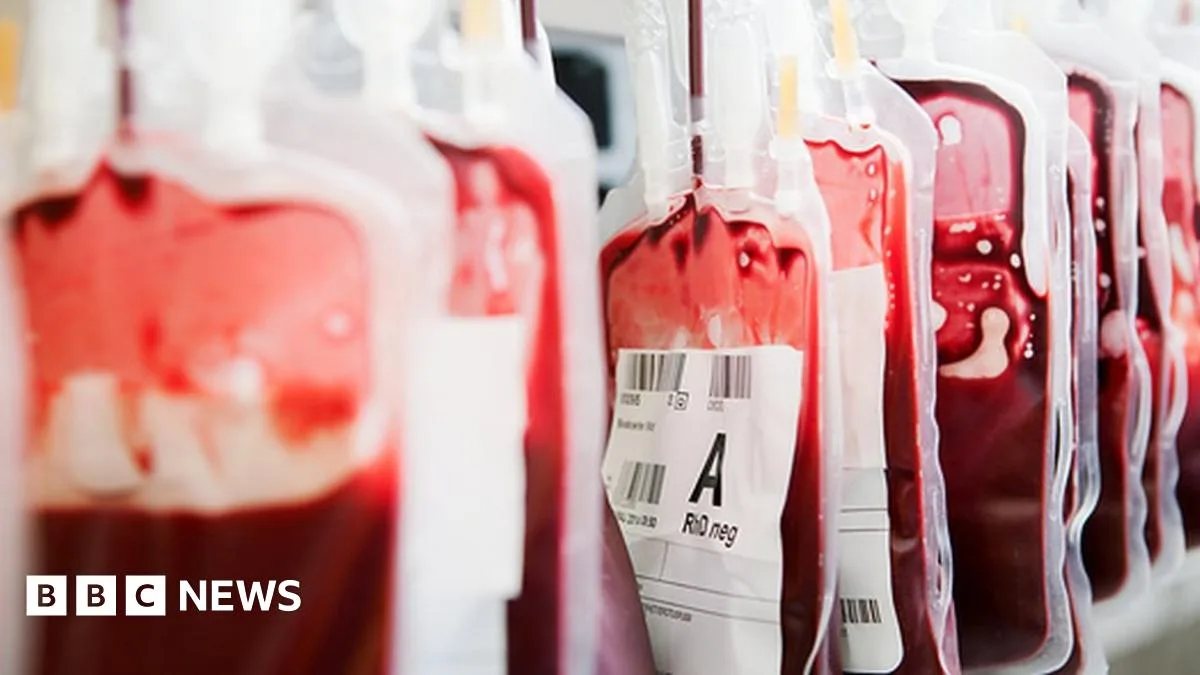
More gay and bisexual men across England are donating their blood, a new survey has found. This follows the implementation of new eligibility rules in 2021, which broadened the criteria for donors in England, Scotland, and Wales.
Survey Findings
Recent polling of 8,744 male donors found that 7.5% identified their sexual orientation as bisexual, gay, pansexual, queer, bicurious, or sexually fluid. This figure marks a notable rise from just 1.8% recorded in a comparable survey conducted in 2014.
At the time of the 2014 survey, men were unable to donate blood if they had engaged in any sexual activity with another man within the preceding 12 months. This deferral period was subsequently reduced to three months in 2017.
In 2021, a “landmark” change was introduced which meant anyone who has had the same sexual partner for the last three months can be a blood donor. Eligibility is now based on individual circumstances surrounding health, travel, and sexual behaviors.
Personal Story
Thomas Yates, a gymnastics coach from Westhoughton in Greater Manchester, was able to donate for the first time in 2021 and has now donated 16 times. He was inspired to donate by his grandfather who needed weekly blood transfusions after being diagnosed with leukaemia.
“I feel very passionate about it – you are literally saving someone’s life with one hour of your time, it’s something we should all do as part of the human race,” said Mr Yates.
He said he felt “incredibly upset” when he went to donate in 2018 and was not able, adding: “I felt it was another way queer people are marginalised. I was so fit and healthy.”
“I booked my first donation in 2021 almost as soon as the rules changed, I donate at the Plymouth Grove donor centre in Manchester.”
“I felt elated afterwards, proud that I was able to donate, pleased the rules had changed, happy, overjoyed – even speaking about it now, I am getting a little teary. It was such a great day.”
“My journey has been quite tumultuous, a love and hate experience. I could have done nearly 80 donations by now had we as queer people been able to donate sooner.”
“Honestly, it’s so easy to donate. You complete the form, have a drink, have the screening chat, and then go and donate blood. The staff are so friendly.”
“I am pleased the surveys show evidence more queer people are donating. I think it helps change perspectives.”
Expert Comments
Su Brailsford, NHS Blood and Transplant consultant in epidemiology and health protection, said: “Donation became more inclusive but safety remained the priority.”
“The survey statistics indicate more gay and bisexual men are now donating, it’s very encouraging to see new donors coming to our centres and we try and make them very welcome.”
“We are very grateful to all our blood donors, whatever their background, for helping to save and improve lives.”
Katy Davison, from the UK Health Security Agency, added: “More people are now eligible to donate blood based on their health, travel and sexual behaviour.”
“The annual NHSBT and UKHSA blood safety report shows no impact on blood safety since the more individualised assessment introduced… allowed more gay and bisexual men to donate blood.”
Ellouise Bishop, from the charity Anthony Nolan, said: “At Anthony Nolan we see every day how critical blood donors are – for patients with blood cancers and blood disorders, transfusions of red blood cells and platelets can be a vital supportive treatment during their stem cell transplant journey.”
“It’s really encouraging to see evidence of an increase in gay and bisexual men donating blood. By making donor assessments more inclusive, more people, regardless of their sexuality, are able to donate their blood to help save lives.”