
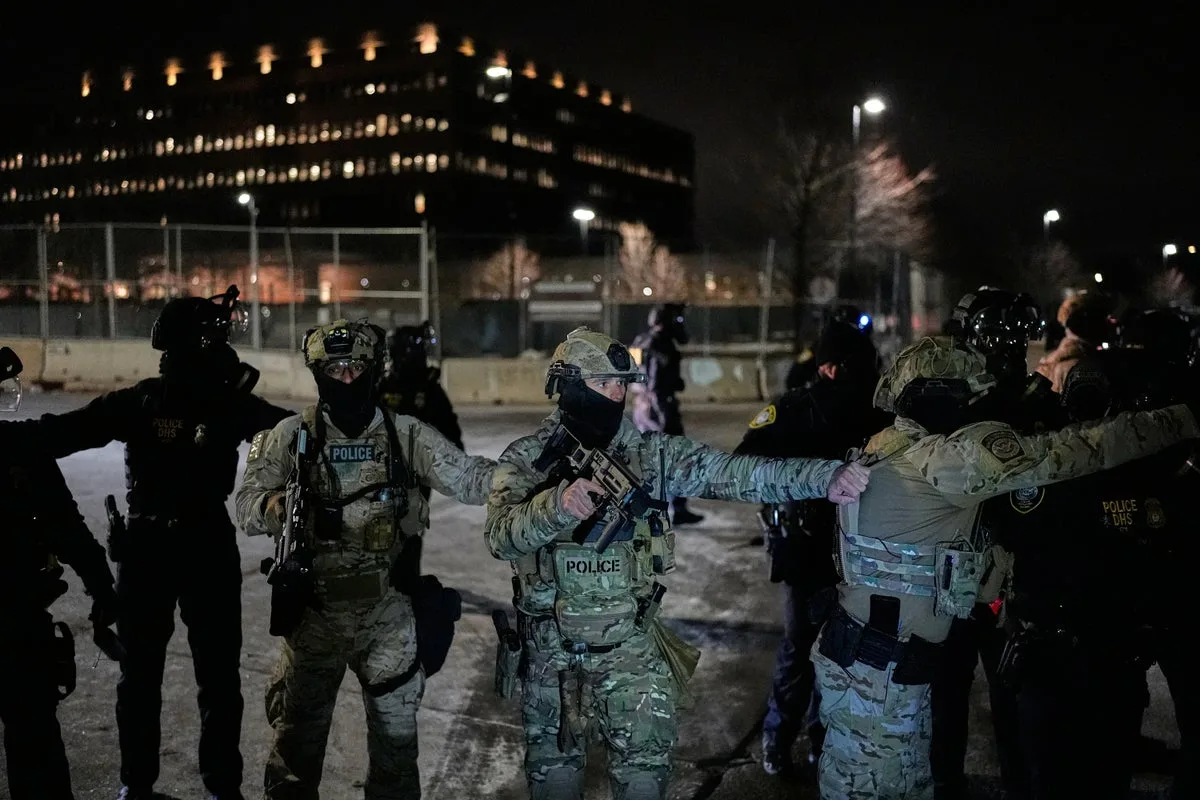
Detainees at a federal building in Minneapolis being used as an immigration detention centre have reported severe mistreatment, including being denied food, proper sanitation, and legal counsel. The Bishop Henry Whipple Federal Building, which houses an immigration court and agency offices, has been used to hold individuals arrested under the Trump administration's immigration crackdown.
One former detainee, a legal refugee with a pending green card, told the Minnesota StarTribune she was shackled at the ankles and held in a locked bathroom with three men, without bedding or pillows and with a non-functioning sink. She alleged detainees were fed only one sandwich per day. She was later moved to another locked bathroom, where she said guards refused menstrual products and ignored her requests for medical care despite dizziness and vomiting. 'There was no humanity,' she said through a translator.
Others reported overcrowding so severe that they had to take turns lying down, and many were unable to access legal counsel. One refugee said he was held overnight at Whipple, then flown to Houston without being able to inform his lawyer, and released without his ID after nearly a week—until a nonprofit brought him back to Minnesota.
Federal agencies disputed the allegations. An ICE spokesperson told the StarTribune, 'Ensuring the safety, security, and well-being of individuals in our custody is a top priority.' The Department of Homeland Security called claims of no attorney access 'FALSE,' stating that detainees have phone access and receive a list of free or low-cost attorneys.
A class-action lawsuit filed by Advocates for Human Rights alleges violent arrests, extreme overcrowding, and constant shackling, as well as blocked legal counsel. In one instance, a St. Paul woman with a pending asylum case and recent cranial surgery was reportedly unable to consult her attorney. The Department of Homeland Security denied these allegations.
The conditions mirror broader issues in the immigration system. At a hearing earlier this month, a Department of Justice attorney admitted, 'The system sucks,' while a Guardian investigation found that 32 people died in ICE custody in 2025, the deadliest year in over two decades.




