
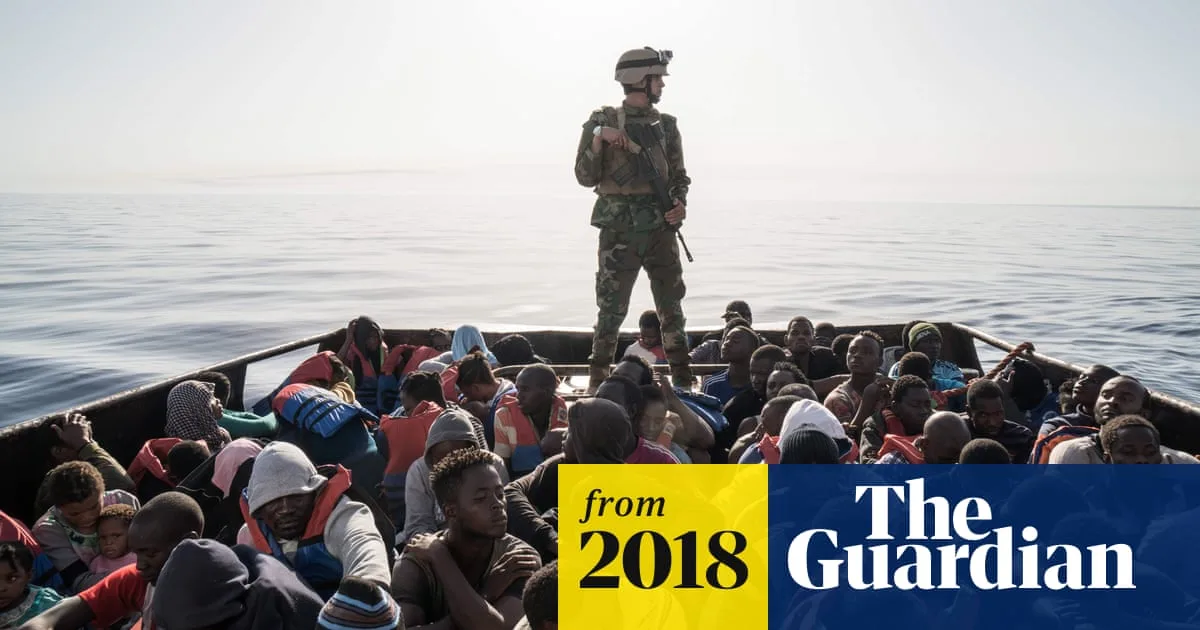
Italy is facing a legal challenge at the European Court of Human Rights over its collaboration with Libya to intercept migrant boats, with allegations of grave human rights abuses including torture and slavery. The lawsuit, brought by the UK-based charity Global Legal Action Network, centres on an incident in November 2017 when the Libyan coastguard allegedly prevented an NGO vessel from rescuing 130 migrants, leading to 20 deaths. Survivors who were forced back to Libya reported inhumane detention, beatings, rape, and starvation.
Under a deal struck by Italy’s centre-left government and endorsed by EU leaders, Italy has trained, equipped, and financed the Libyan coastguard to turn back migrant vessels. This policy has been credited with significantly reducing migrant arrivals on Italy’s southern coast. However, critics argue it exposes migrants to extreme ill-treatment. “They are putting migrants’ lives at risk and exposing them to extreme forms of ill treatment by pulling them back to Libya by proxy,” said Itamar Mann, a legal adviser.
The case recalls a 2012 ECHR ruling against a similar deal between former Italian Prime Minister Silvio Berlusconi and Libya’s Muammar Gaddafi, which was later suspended. The current agreement has sparked clashes between rescue NGOs and Libyan authorities, with claims that NGOs have been threatened with violence unless they handed over rescued migrants. In one instance, a man named Chica Kamara was separated from his 10-year-old son after Libyan forces took the boy’s dinghy.
Migrants who have reached Italy described Libya as “the worst place on earth,” with one saying, “If you are a black African in Libya, they automatically consider you a slave.” Ibrahim Diallo, 20, from Gambia, stated, “There are cities like Sabha or Zawiyah that are made for slaves. Prisons and detention camps one after the other. I would rather die than go back to Libya.” The legal challenge may offer hope for change, but it does not resolve the broader political deadlock over migration in Europe.




