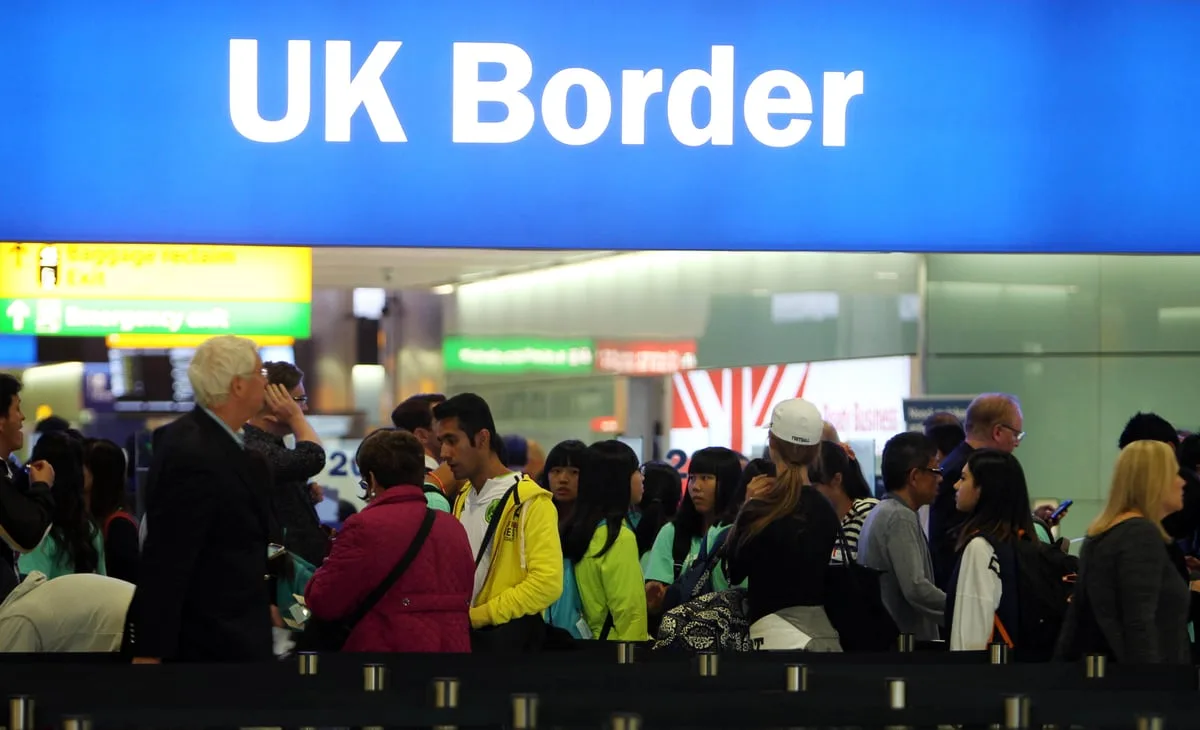
Sir Keir Starmer has unveiled a major crackdown on migration, introducing significant changes to citizenship rules in a bid to reduce net migration. The White Paper, published on Monday, aims to make it harder for individuals to settle permanently in the UK, with the government estimating the reforms will cut visa numbers by around 50,000.
Home Secretary Yvette Cooper will gain new powers to streamline the deportation of foreign criminals. Currently, only those receiving a jail sentence are reported to the Home Office, with deportation typically considered for custodial sentences over one year. Under the new proposals, ministers will be informed of all foreigners convicted of any offence, and those with criminal records overseas may also face removal. Critics argue that despite this measure, the threshold for deportation will remain at a 12-month jail sentence, posing challenges for removing lower-level offenders.
Most migrants will now need to reside in Britain for at least ten years, rather than five, before applying for settled status. Skilled worker visa eligibility will require a higher salary threshold or graduate-level qualification, and applicants and their dependents must meet an English standard equivalent to A-level, up from the current GCSE-equivalent. The Migration Observatory at the University of Oxford suggests this is unlikely to significantly affect migration levels but may increase temporary status holders, boosting Home Office income from fees.
Care workers will no longer be recruited from overseas, forcing providers to hire British nationals or extend visas for existing overseas workers. Cooper has promised a new fair pay agreement to make care professions more attractive to UK workers. Employers can recruit temporary lower-skilled workers in sectors like IT and construction via the points-based system, but must prove they are training British workers through apprenticeships. Unions and care providers have criticised the move, with Care England's chief executive Martin Green saying the Home Office is “kicking us while we’re already down”.
The government will restrict visas for nationalities with higher overstay or asylum rates, particularly from the Middle East. Financial documents will face stricter scrutiny, and access to taxpayer-funded accommodation like hotels will be limited. Only those showing a “lasting contribution” to British society through tax returns or outstanding public service will be entitled to permanent residency. An eVisa system will require digital IDs to better track compliance with visa conditions, building on the rollout last year.