Democrat Justin Jones Unleashes Fiery Critique in Explosive Fox News Interview
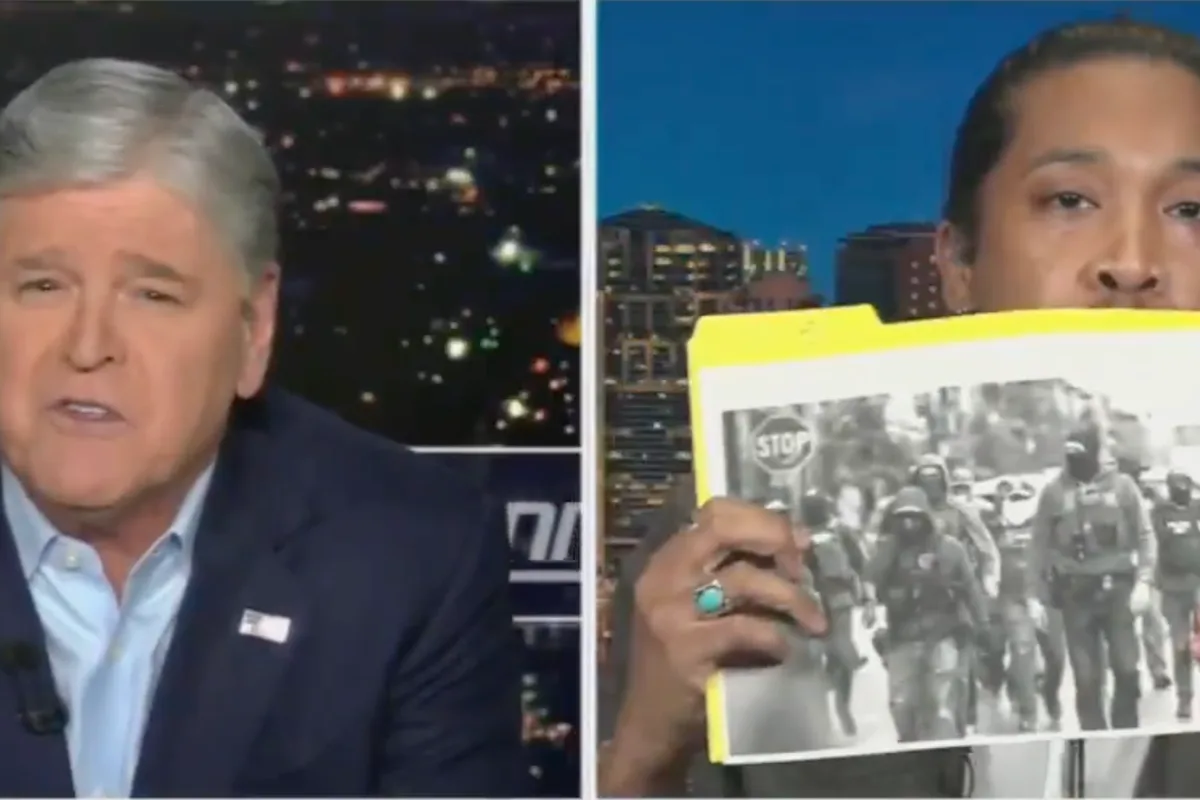
Tennessee Democrat Justin Jones delivered a blistering attack on Fox News host Sean Hannity during a chaotic and confrontational interview that covered multiple contentious topics from immigration enforcement to political rhetoric. The explosive exchange saw Jones brandishing a photograph of a Ku Klux Klan gathering, which he directly compared to federal Immigration and Customs Enforcement (ICE) agents operating across the United States.
KKK Comparison Sparks Heated Immigration Debate
The interview took a dramatic turn when Jones presented visual evidence of historical Klan activities, drawing direct parallels with contemporary ICE operations. "They both drag Americans out of their homes while hiding their identities with masks," Jones asserted during the broadcast, defending his controversial comparison between the white supremacist organization and federal immigration agents.
Hannity attempted to distinguish between the two groups, arguing that the KKK's historical actions more closely resembled those of the Gestapo, but Jones remained unflinching in his critique. The Tennessee representative, whose grandparents were reportedly forced out of Tennessee by Klan activities, emphasized his personal connection to the discussion while challenging Hannity's perspective on immigration enforcement.
Immigration Rhetoric and Economic Concerns Collide
Jones launched a comprehensive attack on what he described as fear-based immigration rhetoric, directly addressing Hannity's approach to the topic. "All you do... it's the same talking points to keep people fearful, because you get paid $45 million a year to keep these people watching your show fearful," Jones declared during the heated exchange.
The Democrat redirected the conversation toward economic concerns facing working-class Americans, arguing that corporate interests rather than immigration represent the genuine threat to citizens' wellbeing. "Their pain is real, but it's not immigrants, it's the corporate CEOs who are screwing them over and making it so they cannot afford groceries and their healthcare," Jones emphasized, connecting immigration discourse to broader economic policy discussions.
Trump Administration and Epstein References Surface
The interview expanded beyond immediate immigration concerns to include references to the Trump administration and the Jeffrey Epstein scandal. Jones challenged Hannity to examine connections between political figures and convicted sex offenders, specifically mentioning associations with the Mar-a-Lago estate.
While Donald Trump has maintained that he expelled Epstein from his Florida club and has faced no accusations of wrongdoing in the case, Jones used the reference to question broader patterns of association within political circles. This exchange added another layer of tension to an already volatile discussion between the two figures.
Personal Histories and Political Service Debated
The confrontation became increasingly personal as Jones referenced his family's military service and challenged Hannity's own contributions. "My father was a U.S. Marine; he fought for this country. Who have you served, Sean, other than your pocketbook?" Jones questioned, highlighting his Filipino-American heritage and family's service record.
Hannity countered by suggesting that Jones's criticism of ICE operations made constituents "less safe and secure," while also arguing that comparing federal agents to the KKK endangered those same officers. The exchange revealed fundamental disagreements about both immigration policy and appropriate political discourse surrounding enforcement practices.
Interview Concludes with Mutual Prayer Pledge
Remarkably, the fiery confrontation concluded with both participants stating they would pray for each other, suggesting an underlying recognition of their shared humanity despite profound political differences. This unexpected ending provided a moment of reflection following nearly thirty minutes of intense debate covering immigration, economic policy, historical comparisons, and personal accountability.
The interview represents another chapter in the ongoing national conversation about immigration enforcement, political rhetoric, and the appropriate boundaries for comparing contemporary government agencies with historical organizations. As both sides continue to advocate for their perspectives, such public confrontations highlight the deep divisions and passionate convictions characterizing current American political discourse.