
A federal judge in the United States has imposed significant new restrictions on Immigration and Customs Enforcement agents operating in Oregon, specifically targeting the controversial practice of warrantless arrests during enforcement operations.
Injunction Targets "Arrest First, Justify Later" Approach
U.S. District Judge Mustafa Kasubhai issued a preliminary injunction in a proposed class-action lawsuit that challenges the Department of Homeland Security's methods. The ruling effectively prohibits ICE agents in Oregon from making arrests without warrants, except in circumstances where there is clear evidence that an individual is likely to flee from the scene.
This legal action comes amidst growing national concern from civil rights organisations about similar enforcement tactics across the country. Critics have labelled the approach "arrest first, justify later," particularly regarding agents entering private property without court-issued warrants.
Contradiction Between Policy and Practice
Despite a recent memo from Todd Lyons, the acting head of ICE, emphasising that agents should not make arrests without administrative warrants unless probable cause exists regarding flight risk, evidence presented to the court revealed a different reality.
Testimony indicated that agents in Oregon have been conducting immigration sweeps and making arrests without obtaining proper warrants or determining that escape was likely. This contradiction between official policy and on-the-ground practice formed a central part of the judge's consideration.
Human Impact: Victor Cruz Gamez's Experience
The court heard compelling testimony from one plaintiff, Victor Cruz Gamez, a 56-year-old grandfather who has lived in the United States since 1999. Despite possessing a valid work permit and having a pending visa application, Gamez was arrested and detained in an immigration facility for three weeks.
His experience highlighted what Judge Kasubhai described as concerning patterns of behavior by enforcement agents. The judge specifically noted that agents' actions in Oregon—including drawing firearms while detaining individuals for civil immigration violations—have been "violent and brutal."
Broader Constitutional Concerns
Judge Kasubhai expressed deep concern about the administration denying due process to those caught up in immigration raids. "Due process calls for those who have great power to exercise great restraint," he stated during proceedings.
"That is the bedrock of a democratic republic founded on this great constitution. I think we're losing that," the judge added, highlighting the broader constitutional implications of the enforcement practices under scrutiny.
Legal Challenge and Context
The nonprofit law firm Innovation Law Lab brought the lawsuit that led to this significant ruling. The legal challenge specifically targets enforcement methods that have been a hallmark of extensive deportation initiatives under the current administration.
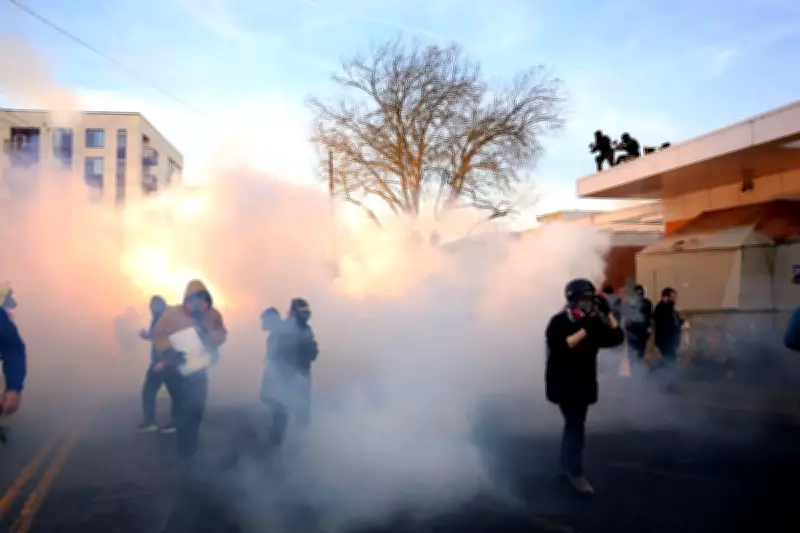
This development occurs against a backdrop of heightened tensions in Portland, Oregon, where federal agents have previously used tear gas and flash bangs against protesters outside ICE facilities. The ruling represents a substantial judicial check on immigration enforcement practices in the region.