

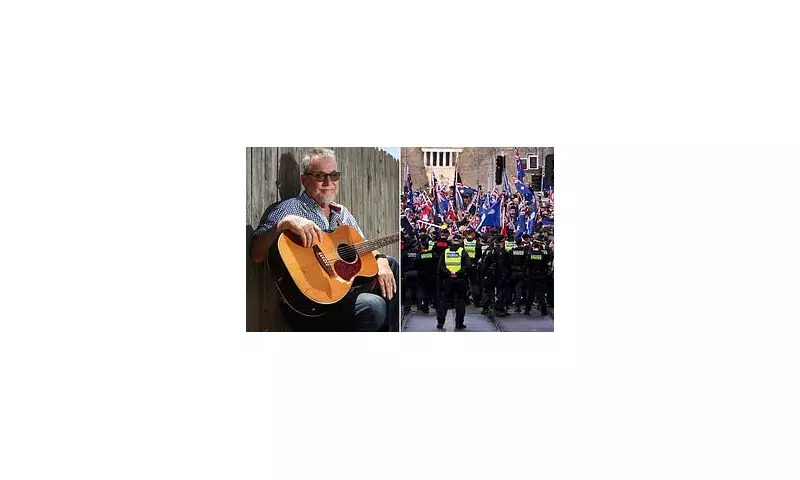
Australian music icon John Williamson finds himself at the centre of a renewed cultural storm as his beloved anthem 'True Blue' faces fresh scrutiny over its perceived stance on immigration. The folk singer's classic hit, long considered an unofficial national anthem, has become the subject of intense debate among political commentators and cultural critics.
The controversy explained
Recent analysis of Williamson's lyrics has prompted some critics to label the song as having anti-immigration undertones. Particular attention has been drawn to lines that some interpret as promoting exclusionary views about Australian identity. The timing coincides with ongoing national conversations about immigration policy and cultural integration.
Williamson's musical legacy
John Williamson, now 79, has been a towering figure in Australian music for over five decades. With more than 5 million albums sold and 28 gold albums to his name, his influence on the country's cultural landscape is undeniable. 'True Blue' itself has become woven into the fabric of Australian identity, regularly performed at sporting events and national celebrations.

Historical context and previous controversies
This isn't the first time Williamson's work has faced criticism. His 1990 song 'A Flag Without a Stain' previously drew attention for its conservative stance on Australian symbolism. The current debate reflects broader tensions in Australian society about how national identity evolves in an increasingly multicultural context.
The artist's perspective
Throughout his career, Williamson has positioned himself as a chronicler of rural Australian life and values. His music often explores themes of landscape, community, and what he perceives as authentic Australian character. Supporters argue that his work celebrates rather than excludes, while critics see deeper political implications in his lyrical choices.
Broader cultural implications
The debate surrounding 'True Blue' comes at a time when many Western nations are grappling with questions of national identity, immigration, and cultural preservation. The conversation highlights how art and music can become lightning rods for larger societal discussions, with familiar anthems taking on new meanings in changing political climates.
As the discussion continues to evolve, it raises important questions about how nations reconcile traditional cultural touchstones with evolving social values, and whether beloved artistic works can be separated from the political contexts in which they're reinterpreted.






