Australian Police Launch Investigation into Iranian Football Handler
Queensland police have confirmed they are investigating a complaint involving an Iranian regime-linked handler for the country's women's football team. The investigation follows allegations that the handler made a death threat against protesters during a Women's Asian Cup match on the Gold Coast last week.
Alleged Threat During Football Match
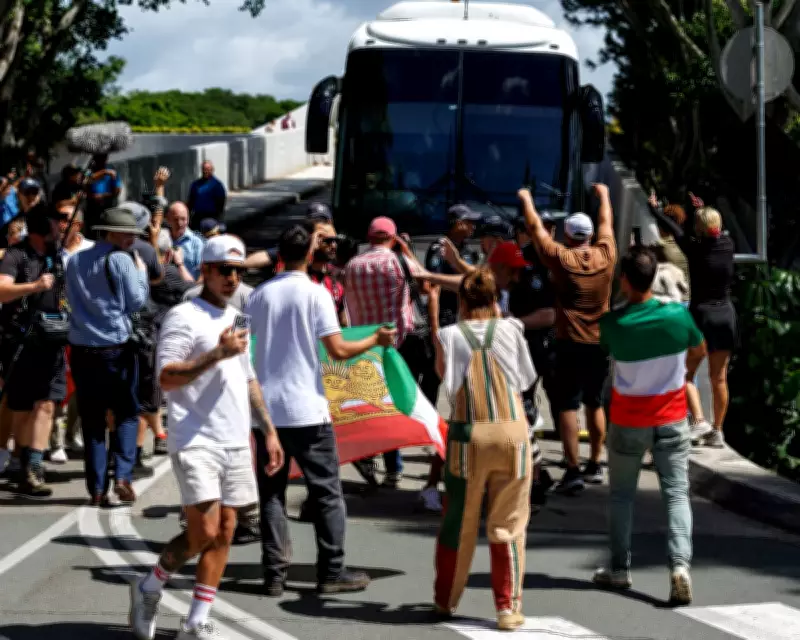
According to an Iranian Australian protester who requested anonymity due to safety concerns, the incident occurred at Cbus Stadium on March 5th. The protester stated they were among a group standing behind Iran's women's football team and their handler Mohammad Salari during the match against Australia's Matildas.
"We saw Salari looking at us so we started calling out to him... calling him 'shame on you'," the protester said. "He turned around and looked at us and then drew a line on his throat and pointed to us."
The protester expressed disbelief that Salari had been allowed entry to Australia, stating: "I don't understand how he got onto Australian soil."
Community Outrage and Political Response
The investigation has prompted renewed calls from the Iranian diaspora for stricter immigration screening processes. Community leaders are demanding explanations about why individuals linked to Iran's Islamic Revolutionary Guard Corps (IRGC) - designated as a state sponsor of terrorism - are being granted visas.
Dr Rana Dadpour, founder of advocacy group AusIran, argued that the Iranian diaspora had been failed by Salari being permitted entry. "He shouldn't be granted a visa," she stated emphatically.
Hadi Karimi, vice-president of the Iranian Society of Queensland, echoed these concerns: "We need to know from the Australian government why our girls were kept in a hotel organised by IRGC and IRGC members."
Parliamentary Committee Weighs In
The incident comes as a Labor-led parliamentary committee on Thursday supported the government's decision to list the IRGC as a state sponsor of terrorism. The committee also recommended the government examine whether sufficient measures are being taken to address IRGC activity in Australia, including harassment of citizens critical of Iran's theocratic regime.
Iranian-born Sydney councillor Tina Kordrostami had previously raised concerns about IRGC infiltration at a hearing before the parliamentary joint committee on intelligence and security last month.
Asylum Seekers and Government Response
The controversy unfolds against the backdrop of six members of Iran's women's soccer team seeking asylum in Australia this week. Their situation garnered international attention and prompted Iran's foreign affairs ministry to accuse the Australian government of holding the players "hostage."
In a concerning development, Home Affairs Minister Tony Burke revealed on Wednesday that one of the Iranian footballers who had sought asylum had changed her mind. This forced the urgent relocation of the other women after the squad member contacted the Iranian embassy, revealing the asylum seekers' location to Iranian officials.
Immigration Department's Position
When questioned about Salari's visa status, the Department of Home Affairs declined to comment on individual cases for privacy reasons. A spokesperson explained: "All non-citizens applying for an Australian visa wishing to travel to Australia are considered on an individual basis against legal requirements set out in Australia's migration legislation."
The spokesperson emphasized that "all visa applications are assessed on a case-by-case basis, and all criteria must be satisfied before a visa can be granted," including character and security requirements.
Minister Burke added that security and intelligence agencies make recommendations based on "all the available information including what comes from our intelligence partners."
Ongoing Investigation
Queensland police confirmed they received a complaint regarding the incident at Cbus Stadium and that investigations are continuing. The case has highlighted longstanding concerns within Australia's Iranian community about IRGC infiltration and harassment of diaspora members.
The investigation represents a significant test of Australia's immigration screening processes and its approach to individuals linked to organizations designated as state sponsors of terrorism.