
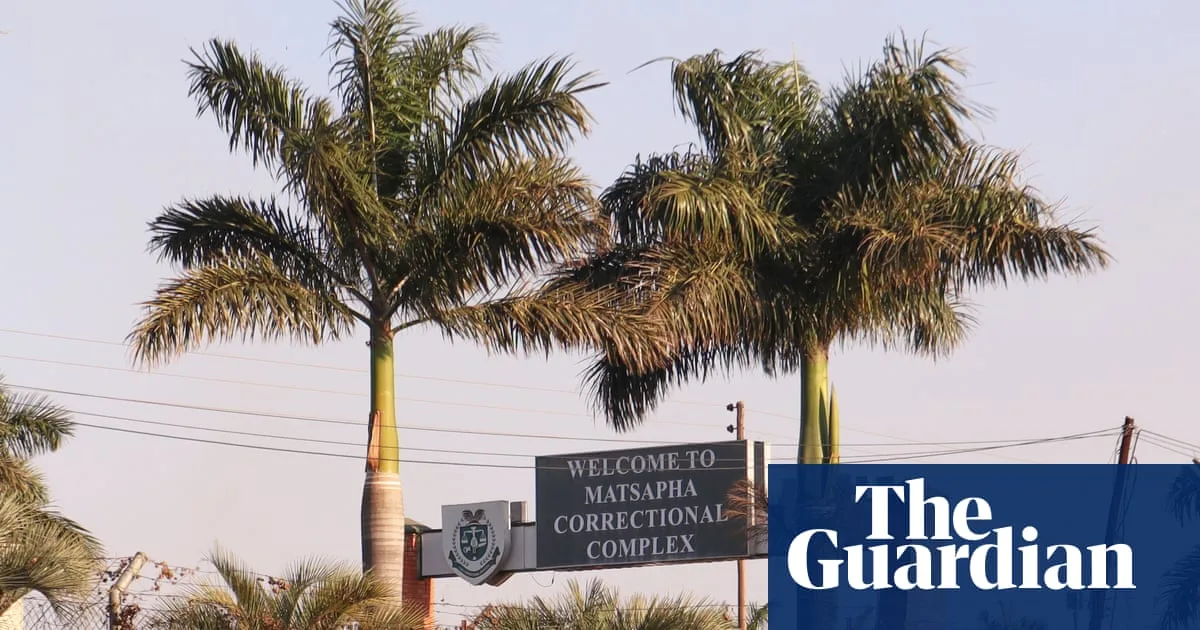
Lawyers for five men deported by the United States to Eswatini have said their clients are being imprisoned illegally and denied proper access to legal representation. The men, who are from Vietnam, Jamaica, Laos, Yemen and Cuba, had all served criminal sentences in the US and been released before they were sent to the southern African nation in July without warning.
The US authorities have claimed the men were "so uniquely barbaric that their home countries refused to take them back", a statement made by assistant homeland security secretary Tricia McLaughlin. However, the lawyers said the men had been released after completing their sentences and were living in the US. The deportation is part of a broader US policy of sending migrants to third countries, including South Sudan, Rwanda and Uganda, as well as to a notorious prison in El Salvador.
The lawyers say they have been unable to hold private conversations with their clients, who are permitted only one short video call a week in the presence of prison staff. A local lawyer has also been prevented from visiting the men at the maximum security Matsapha correctional centre. Alma David, representing the Yemeni and Cuban men, said a hearing in the case was postponed on Monday after the judge failed to appear.
Among the deportees is Orville Etoria, a 62-year-old Jamaican national who came to the US legally in 1976 aged 12. He was convicted of murder in 1997 and sentenced to 25 years, but was released on parole in 2021. According to his lawyer Mia Unger, Etoria had been working in a men's shelter and studying for a master's degree in divinity. His relatives said he had first been put on a plane to Jamaica before being removed to Eswatini. Jamaica's foreign minister, Kamina Smith, said diplomats had visited Etoria and found him "in good spirits".
The other men include a 70-year-old Yemeni who served 22 years for murder and was released in 2020, and a Cuban man in his mid-50s who had been working for a plumbing company in Florida. Tin Thanh Nguyen, representing the Vietnamese and Laotian deportees, said the men were aged 34 and 45 and had been released in 2015 and 2023 respectively. He added that the Laotian man was showing signs of depression. "The United States is outsourcing their detention … to purge the United States of immigrants and refugees and to make a spectacle of deportations," Nguyen said.
Last month, a group of Eswatini NGOs challenged the government's acceptance of the deportees on constitutional grounds, arguing that parliament had not been consulted and that the men's human rights were being violated. An Eswatini government spokesperson said they would not respond while court cases were under way. US Immigration and Customs Enforcement and the Department of Homeland Security did not respond to a request for comment.




