ICE's Largest Detention Camp Faces Crisis: 911 Calls Reveal Medical Neglect
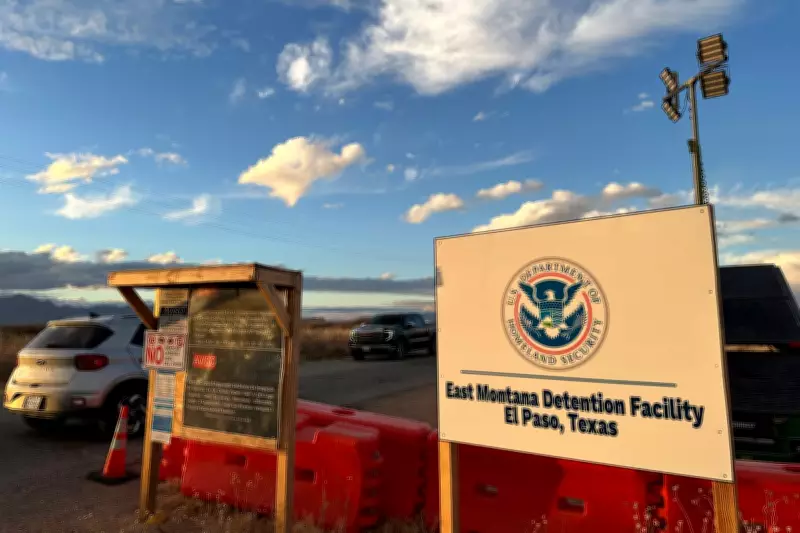
Serious medical and mental health emergencies have become routine occurrences at the nation's largest U.S. Immigration and Customs Enforcement detention facility since its opening in August, according to records obtained by The Associated Press. Data from over a hundred 911 calls at Camp East Montana in El Paso, Texas, combined with interviews and court filings, paint a disturbing portrait of systemic failures.
Overcrowding and Substandard Conditions
Current and former detainees describe a camp where approximately 3,000 people live daily in loud, unsanitary quarters. They report struggling to obtain healthcare as diseases spread, losing weight due to inadequate food provisions, and fearing security guards known to use force to suppress disturbances. "Every day felt like a week. Every week felt like a month. Every month felt like a year," said Owen Ramsingh, a former property manager from Columbia, Missouri, who spent several weeks in the camp before his deportation to the Netherlands in February. "Camp East Montana was 1,000% worse than a prison."
A Department of Homeland Security spokesperson, who declined to provide their name, rejected claims of substandard conditions, asserting that detainees receive food, water, and medical treatment in a regularly cleaned facility.

Alarming 911 Call Frequency
Staff at the camp made nearly one 911 call per day during its first five months of operation, according to data covering 130 calls obtained from the City of El Paso. The calls reveal a range of emergencies, from a man sobbing after being assaulted by another detainee to a doctor reporting a detainee banging his head against a wall while expressing suicidal thoughts. In another instance, a nurse described a pregnant woman in severe pain with coronavirus.
Injured detainees included a 19-year-old man who fell from a bunk bed and a 79-year-old man struggling to breathe. At least 20 emergencies were reported as seizures, some resulting in serious head trauma.
Suicide Attempts and Deaths
The 911 calls show detainees have repeatedly attempted to harm themselves and expressed suicidal thoughts. Two incidents resulted in death: on January 3, a 55-year-old Cuban man, Geraldo Lunas Campos, died from asphyxia after security guards used handcuffs and force to restrain him following a self-harm attempt; on January 14, a 36-year-old Nicaraguan man died by suicide days after being detained in Minnesota. Records indicate at least six other suicide attempts were reported.
The DHS spokesperson stated that facility staff "closely monitors at-risk detainees" and provides mental health treatment.
Withheld Inspection Reports
In September, The Washington Post reported that a required ICE inspection found conditions at Camp East Montana violated at least 60 federal standards for immigration detention. However, this report has never been released, unlike dozens of other facility inspections posted on ICE's website. DHS has called claims of violations false without explaining why the inspection report was incorrect.
ICE's current database indicates the camp has never been inspected but is scheduled for one this fiscal year. A DHS spokesperson confirmed that ICE's Office of Detention Oversight recently completed an inspection but provided no further details, and the results remain unpublished.
Political Calls for Closure
U.S. Representative Veronica Escobar, an El Paso Democrat who has toured the camp multiple times, is demanding its closure. "This facility should not be operational. It feels like this contractor is reinventing the wheel, and people are losing their lives in their experiment," she said. During a visit last month, she noted the population had been temporarily reduced below 1,900 due to a measles outbreak, leading to a temporary closure to visitors.
Escobar witnessed a detainee showing a meager serving of scrambled eggs that was still frozen in the middle and learned that detainees protested after juice, fruit, and milk were removed from meals. She also met a detainee from Ecuador whose arm was broken during a violent arrest in Minnesota; weeks later, fractured bones were still visible under his skin.

Escobar called for an investigation into contractor Acquisition Logistics LLC, which was awarded a contract worth up to $1.3 billion to build and operate the camp. She accused the company, which did not return messages, and its subcontractors of failing to deliver taxpayer-funded services. "People should be moved by the abject cruelty, but if they're not, I hope they're moved by the fraud and corruption," Escobar said.
This story includes discussion of suicide. If you or someone you know needs help, the national suicide and crisis lifeline in the U.S. is available by calling or texting 988. There is also an online chat at 988lifeline.org.