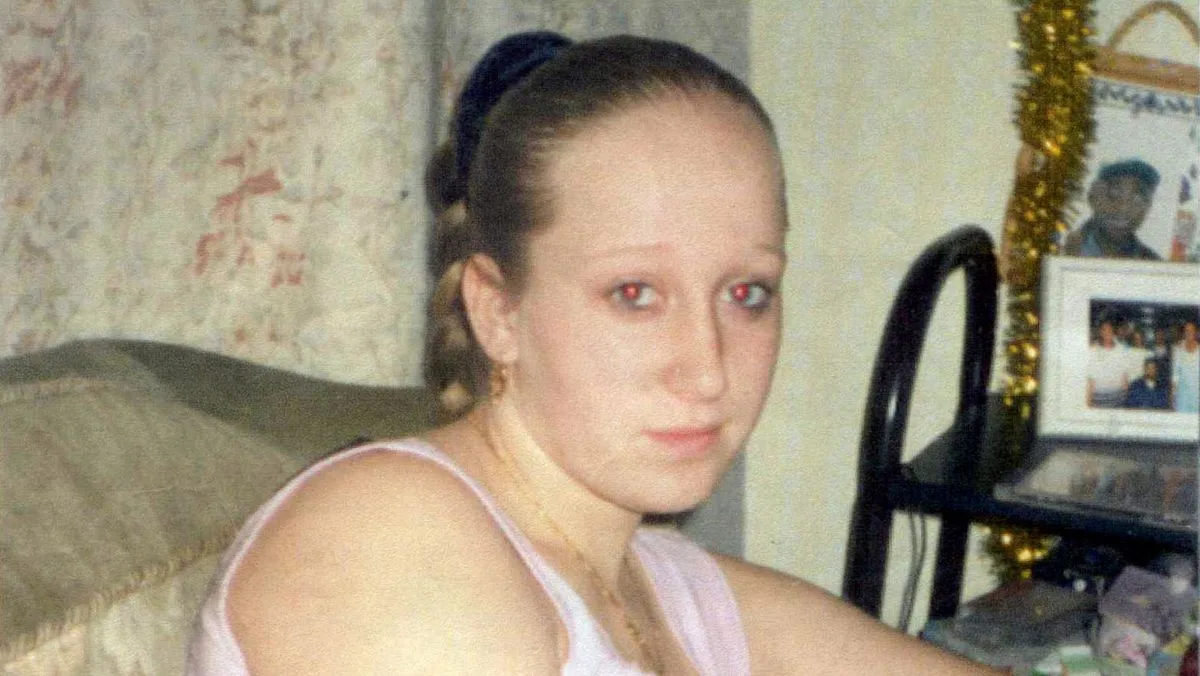
25 Years On: The Tragic Murder of Hannah Williams and Media Neglect
Hannah Williams Murder: 25 Years On, Media Neglect Exposed

The Disappearance That Shook a Community

On April 21, 2001, a 14-year-old schoolgirl named Hannah Williams left her home in Deptford, southeast London, telling her mother Bernadette she was heading to Dartford for some window shopping. The teenager, who came from a working-class background and lived with her single mother, never returned. This Saturday outing, just one month before her 15th birthday, should have been an ordinary day of adolescent leisure.

Hannah had previously gone missing and had spent time in care after suffering sexual abuse at age four by a partner of her mother's. When she vanished again, initial police assumptions leaned toward her being a runaway who would eventually return. Appeals in local newspapers yielded little traction, and the case failed to capture widespread public attention.

A Chilling Discovery

Nearly a year later, in March 2002, a workman made a horrifying discovery at an industrial site in Northfleet. Hannah's badly decomposed remains were found wrapped in tarpaulin within disused cement blocks. A blue rope was tied around her neck, and the clothes she had worn when she disappeared were present at the scene, which was disturbingly close to the home of her killer.

Wide Pickt banner — collaborative shopping lists app for Telegram, phone mockup with grocery list

Forensic analysis revealed Hannah had suffered a depraved sexual assault before being strangled to death while fighting back. The location where her body was dumped was known to her murderer, who had brought another girl to the same spot previously.

The Predator Behind the Crime

The man responsible was Robert Howard, a 61-year-old prolific paedophile from County Laois, Ireland, with a 40-year history of sexual violence dating back to an attempted rape of a six-year-old in 1965. Police described him as having a "predatory interest in young teenage girls." Howard knew Hannah through his then-partner Mary Scollan, who was friends with the schoolgirl. Hannah had visited their home in Mottingham, London, in the period leading up to her murder.

Prosecutor Wendy Joseph QC later told the court: "After that phone call nothing is really known about Hannah. There is nobody who can say she had been seen. From some point that morning Hannah simply vanished. Her mum waited and waited for any sign of Hannah and, from time to time, tried ringing her phone. They were unable to make any contact with her at all. In fact, after that call just before 11am, Hannah never used her phone again."

Justice Served and Unanswered Questions

Howard was convicted of Hannah's murder in October 2003 at Maidstone Crown Court and sentenced to life imprisonment. During sentencing, Mr Justice McKinnon stated: "It is plain to me that there are no mitigating circumstances whatsoever. It is clear that you are a danger to teenage girls and other women and have been for a long time." Howard died of natural causes in prison in 2015 at age 71.

The case revealed disturbing connections to other crimes. Howard had been alleged to have murdered 15-year-old Arlene Arkinson from County Tyrone, Northern Ireland, in 1994, though he was acquitted by Belfast Crown Court in 2005. Reports suggested he was "on the cusp" of revealing where Arkinson's body was buried before his death. Additionally, Howard raped a 16-year-old girl who later testified against him during Hannah's murder trial.

Systemic Failures and Media Bias

Hannah's murder exposed significant criticisms of both police handling and media coverage. Her mother Bernadette expressed frustration, telling the Mirror in 2005: "The police obviously thought she had run away that she was happy. Hannah was very close to me. She would always tell me 'Mum, I would never leave you'. The police should have done a lot more than they did. It was months before they even interviewed me." Three Metropolitan Police officers were disciplined for their handling of the case.

The case became a textbook example of what criminologists term "missing white woman syndrome" – the phenomenon where upper- or middle-class white women receive disproportionate media attention compared to males, people of color, or those from working-class backgrounds. Hannah's discovery coincided with two of Britain's most high-profile missing persons cases in 2002: Milly Dowler, and Holly Wells and Jessica Chapman.

Pickt after-article banner — collaborative shopping lists app with family illustration

Professor Fiona Brookman wrote in her book Understanding Homicide: "Hannah's disappearance never attracted the kind of headlines that followed the disappearance of Danielle Jones (a 15-year-old Essex schoolgirl who went missing two months after Hannah), nor the widespread media coverage of the disappearance of Millie Dowler (aged 13). Despite the best efforts of the National Missing Persons Helpline to generate significant media coverage for all vulnerable missing persons, the media only tend to focus on particular cases that fit in with their publications."

She added: "The vulnerable cases which generate the greatest publicity tend to be those where the missing person is white, female, from a middle-class, two-parent stable family and where there is no indication that the young person may have run away. Hannah did not fit all of these criteria — she was not the model middle-class schoolgirl. Rather, she was from a working-class background, her parents were estranged and she wore a stud in her nose."

Twenty-five years later, Hannah Williams' tragedy serves as a sobering reminder of how systemic biases can affect both investigative priorities and public awareness, leaving families to grieve without the support and attention their loved ones deserve.




