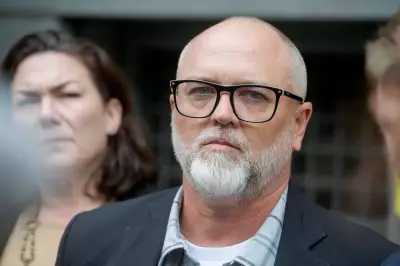
In a shocking development, a grandmother and bookkeeper has been arrested on child abuse charges connected to the case of acclaimed Australian children's author Craig Silvey. Glenda Joy McGregor, aged 68, is now facing serious allegations that have sent ripples through literary and legal circles.
Charges and Arrest Details
Glenda Joy McGregor has been formally charged with two counts of producing child exploitation material and one count of distributing it. Following her arrest in February, she was remanded in custody after being denied bail. Additional charges include three counts of failing to comply with reporting obligations, further complicating her legal situation.
The arrest came as part of an ongoing police investigation into Craig Silvey, which involved a forensic analysis of material seized from his electronic devices. Western Australian Police revealed these charges against McGregor simultaneously with new charges against Silvey himself.
Profile of the Accused
McGregor presents a complex profile that contrasts sharply with the allegations against her. She has worked extensively as an administration and finance manager, most recently for an industrial machinery manufacturer. Her professional background spans the transport and mining industries, showcasing a diverse career history.
Beyond her professional life, McGregor is a grandmother of five who lists her residence as Marangaroo, north of Perth. She has been an active member of Ulysses Fremantle, a social motorcycle club for riders over 40 that emphasizes charitable activities rather than criminal connections.
Through this organization, McGregor has volunteered for significant community events including the annual MACA Cancer 200 bike ride and the Walk for Women's Cancer. She is scheduled to appear before Fremantle Magistrates Court on April 2 as her legal proceedings continue.
Craig Silvey's Legal Troubles
The case against McGregor emerges alongside deepening legal problems for award-winning author Craig Silvey. Police have now charged the 43-year-old writer with additional counts, including producing child exploitation material and possessing such material, building upon earlier charges of possession and distribution.
Court documents allege that Silvey engaged in online conversations over several days where he reportedly expressed sexual interest in children and distributed child exploitation material. Using the alias 'Jimmy Jimmy Jimmy' on adult websites, he allegedly identified himself as a 'Fremantle guy' with 'very similar interests' to other users.
Silvey's arrest in January came after police allegedly caught him 'actively engaging' with other suspected child exploitation offenders online. Initially, he refused detectives permission to access his phone, computer, and other devices, though forensic analysis eventually proceeded.
Bail Conditions and Legal Maneuvers
Despite the serious nature of the charges, Silvey remains on bail with both a $100,000 surety and a $100,000 personal undertaking. A magistrate noted in January that 'imprisonment is a likely outcome' should he be convicted, highlighting the gravity of the situation.
His bail conditions are exceptionally restrictive. Silvey cannot leave Western Australia, is prohibited from any work involving children, and may only access the internet for banking, medical, or legal purposes. He is specifically banned from encrypted communication platforms.
Days after his arrest, Silvey's lawyer applied to vary bail conditions to allow deletion of social media accounts where derogatory remarks had been posted. The court permitted disabling applications but not deleting comments, creating a delicate balance between reputation management and evidence preservation.
Career Consequences and Cultural Impact
The charges have effectively paralyzed Silvey's once-celebrated literary career. His publisher, Allen & Unwin, has halted all promotion of his books while acknowledging his right to a presumption of innocence. This professional freeze reflects the serious nature of the allegations against the author.
Education departments across multiple Australian states and territories—including New South Wales, Victoria, Queensland, Tasmania, South Australia, and the Northern Territory—have instructed schools to remove Silvey's novels from shelves and delete his catalogue from educational materials.
Jasper Jones and Rhubarb, which were previously suggested texts for Year 11 and 12 students in Western Australia, have been stripped from the state's school curriculum. This represents a significant reversal for works that were once celebrated educational resources.
Commercial and Cultural Fallout
Bookstores nationwide have removed Silvey's works from their shelves, with major retailer Dymocks erasing his name entirely from its website. This commercial rejection compounds the educational sector's response, creating a comprehensive cultural distancing from the author's work.
The City of Subiaco has removed Silvey's name from its once-prestigious Craig Silvey Award for Young Writers, though his image remains in historical website photographs posing with children. This partial erasure reflects the complex process of disentangling cultural recognition from personal allegations.
A stage adaptation of Silvey's award-winning 2022 novel Runt by Sydney's Belvoir Theatre Company has been postponed indefinitely, demonstrating how the allegations have affected not just literary but theatrical adaptations of his work.
Literary Legacy Under Scrutiny
Craig Silvey's literary achievements now exist in stark contrast to the allegations against him. His 2009 novel Jasper Jones sold almost one million copies globally, won the Australian Book Industry's Book of the Year Award, and was adapted into both film and various stage productions.
Silvey published his first novel, Rhubarb, in 2004 when he was just 19 years old, launching what appeared to be a brilliant literary career. His 2022 novel Runt also received critical acclaim and was adapted for film, though the stage adaptation now faces indefinite postponement.
Both Silvey and McGregor face ongoing legal proceedings that will determine their futures. Silvey's next court appearance is scheduled for May, where he will face four charges relating to child exploitation material. The simultaneous cases represent a complex legal web with significant implications for both individuals and the cultural institutions that once celebrated Silvey's work.