German Bank Heist: Professional Gang Steals Millions in 48-Hour Vault Raid
In the pre-dawn darkness of December 27, a fire alarm shattered the winter stillness in Gelsenkirchen-Buer, western Germany. At 6:09am, emergency services descended upon a local Sparkasse savings bank branch, responding to an alert from its underground vault. Finding a sealed shutter and no visible signs of fire, they dismissed it as another false alarm in a city historically nicknamed the 'City of a Thousand Fires'.
Unbeknownst to them, just feet away, a professional criminal crew was already at work. Behind a closed archive room door, industrial drilling equipment had generated enough smoke to trigger the sensors. This marked the beginning of what investigators now fear is the largest bank robbery in German history.
The Precision Operation
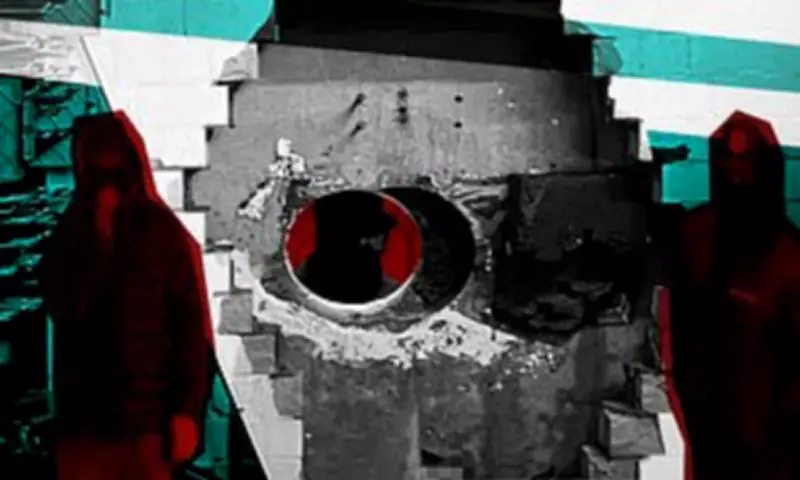
Over the next 48 hours, the gang meticulously carved a 40-centimetre diameter tunnel through a thick concrete wall using powerful industrial drills. The vibrations were so intense they triggered alarms at a neighbouring jeweller approximately 150 metres away, yet curiously, no further alerts sounded within the bank itself.

Thomas Nowaczyk of Gelsenkirchen Police told the Daily Mail: 'We have to assume professionals were at work here. This is obviously not something one spontaneously thinks up one morning and carries out in the evening. There must have been lengthy planning beforehand.'
The operation displayed remarkable precision and preparation. The gang first entered through an adjoining public underground car park, using what investigators believe was a stolen chip card to access restricted areas beneath the bank. They navigated past sabotaged fire exit locks sealed with silicone and motion detectors deliberately taped over to blind the security system.
The Systematic Looting
Once inside the vault, the crew worked with chilling efficiency, prying open nearly all of the 3,200 safe deposit boxes. They systematically sorted through contents, selectively taking gold and cash - items hardest to trace and easiest to sell on the black market.
'Everything else - documents, valuables, especially jewellery, unique pieces that are difficult to sell - they dropped on the floor or threw into the side rooms,' explained Mr Nowaczyk.
Forensic teams later discovered discarded valuables worth several hundred thousand euros 'spread across the rooms' and stacked in piles 'several metres high'. Precious heirlooms, engraved jewellery, Rolex watches, passports, birth certificates and vital deeds lay strewn carelessly throughout the vault.
The Investigation Challenges
Nearly two months after the audacious raid, the suspects remain at large, and authorities still cannot determine the true value of stolen goods. Estimates range wildly from at least €30 million (£26 million) to an astronomical €500 million (£435 million).
A special task force, BAO Bohrer, has been established with 350 officers working on the case - an unprecedented police response for such a crime. However, investigators face monumental challenges:
- 10,000 hours of surveillance footage to examine
- Cell tower data analysis across multiple networks
- Interviewing approximately 3,000 victims
- Cataloguing mountains of discarded valuables
'Investigations are ongoing, but so far we've had no hot leads,' admitted Mr Nowaczyk. 'Overall, it's very challenging... it all takes time.'
The Human Cost
The financial and emotional devastation extends across thousands of victims from all walks of life. Lawyer Daniel Kuhlmann, whose firm represents more than 600 affected clients, described heartbreaking cases including an elderly woman nearing 90 who lost €390,000 (£340,000) - her entire life savings from selling her home.
'That is a huge amount for anyone, let alone a woman of her age,' said Mr Kuhlmann. 'Now she has had to contact social services because she can't even pay her rent. She is completely ruined. Hers is a drastic case.'

Many victims come from migrant communities where storing gold and cash in safe deposit boxes represents cultural tradition and financial security. Turkish families, for instance, often receive gold for weddings, with gold prices having quadrupled over the past four years.
Security Questions and Legal Actions
Serious questions have emerged about the bank's security measures. Mr Kuhlmann's firm has launched test lawsuits against Sparkasse, examining whether security systems met industry standards.
'There are indications that they did not have the proper security systems in place,' he claimed. 'For example, for some 48 hours while this was all going on, no alarm was triggered at all. And then there was the missed opportunity with the first fire alarm.'
He noted that while drilling vibrations triggered alarms five times at the neighbouring jeweller's shop, no corresponding alerts sounded within the bank itself. The lawyer also pointed to low insurance caps on each safe as potential evidence of insufficient security levels.
However, Sparkasse chief Michael Klotz has defended the institution's systems: 'The branch, including the safe-deposit box room, was secured according to recognised state-of-the-art technology. Nevertheless, the burglars managed to overcome several independent security measures.'
The Aftermath and Ongoing Search
In the days following the heist, hundreds of panicked customers gathered outside the bank in emotional scenes, demanding information about their valuables. The bank's communication failures have compounded victims' distress, with many reporting unreachable hotlines and delayed notifications.
Victim Joachim Wagner, 63, who lost approximately €50,000 (£43,000) in gold, savings and family heirlooms, described his reaction: 'I nearly collapsed backward when I heard. What hurts most are the things you've had since childhood... I cried - tears were running down my face.'
As forensic teams continue working around-the-clock to catalogue contents for return to rightful owners, the only potential lead - licence plates found dumped near a Dortmund taxi stand - has yielded no breakthroughs. Whether these belonged to getaway vehicles remains unclear, leaving investigators with a cold trail.
For thousands who entrusted their life savings and most precious possessions to what they believed was Germany's safest banking institution, the wait for answers and justice continues, with many facing financial ruin and shattered trust in the country's financial security systems.