
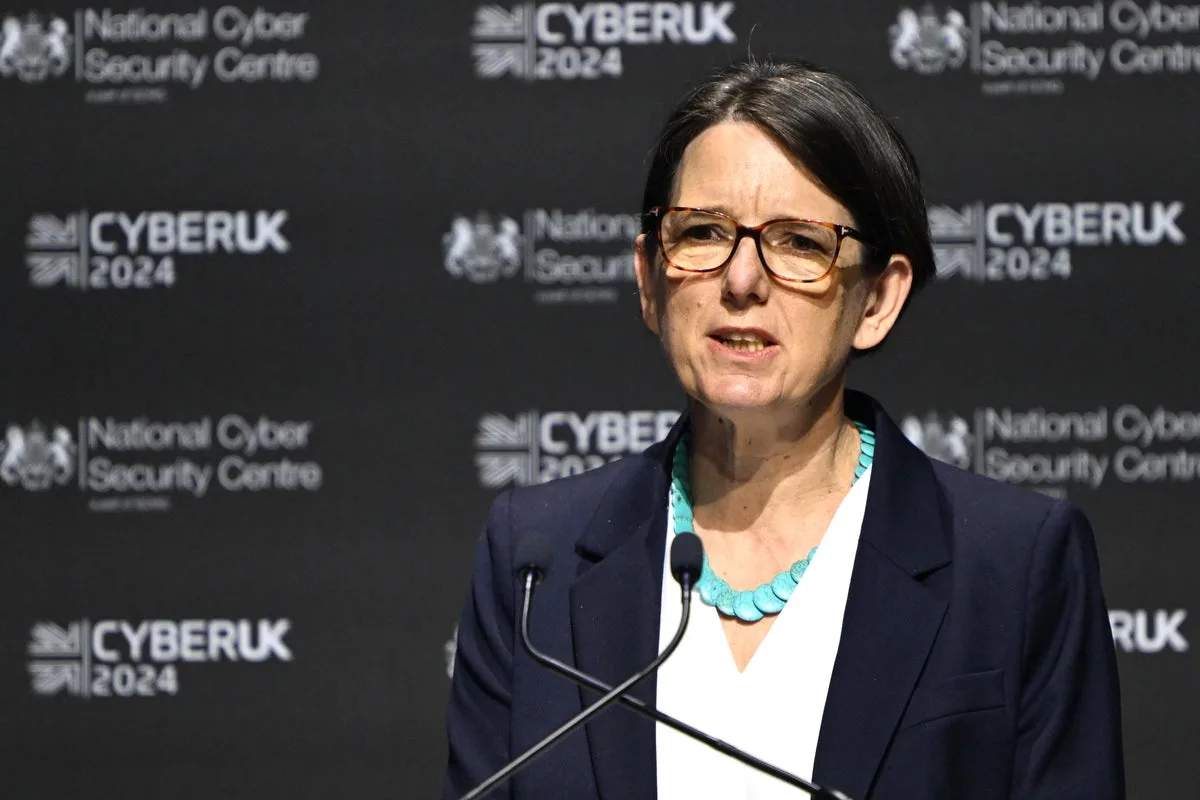
The head of GCHQ, Anne Keast-Butler, is set to warn that Russia is 'relentlessly' targeting critical infrastructure, democratic processes, supply chains and public trust in the UK and Europe. In her inaugural GCHQ annual lecture on Wednesday, she will urge the public and businesses to urgently ramp up cyber security efforts.
Keast-Butler will highlight the organisation's work in disrupting Russia's smuggling of western tech, fending off cyber attacks, and countering sabotage and assassination attempts. She will also note that as the UK remains steadfast in its support for Ukraine, 'Putin is going backwards on the battlefield'.
The warning comes amid heightened tensions, with US General Christopher Donahue, head of Nato's Land Command, recently stating that the alliance must be 'mission-ready by 2030' to meet a potential Russian attack. Nato forces have been testing electronic warfare capabilities to jam Russia's communications and down drones in the event of an invasion of a Baltic country.
Keast-Butler will also address the threat from China, describing it as a 'science and tech superpower' with sophisticated intelligence, cyber and military capabilities. She will call on the technology industry and national security professionals to 'anticipate and drive advancements, together, at the speed of the frontier'.
The speech follows an incident where an RAF jet carrying Defence Secretary John Healey had its signals jammed near the Russian border, with Russia believed to be behind the electronic attack. A defence source described it as 'reckless Russian interference', but said the RAF was well prepared to deal with such activity.
Earlier this year, Dr Richard Horne, head of the National Cyber Security Centre, warned that most nationally significant cyber attacks on Britain were carried out by hostile states including Russia, China and Iran. He said the body dealt with around four such attacks each week, and urged businesses to prepare without relying on paying ransoms.




