New Forensic Analysis Challenges Official Suicide Ruling in Kurt Cobain's Death
Three decades after his shocking death sent tremors through the music world, the tragic demise of Nirvana lead singer Kurt Cobain is facing unprecedented scientific scrutiny. A groundbreaking peer-reviewed forensic paper now presents compelling evidence suggesting the 1994 incident was not suicide but homicide, directly contradicting official findings that have stood for thirty years.
Forensic Team Presents Ten Points of Evidence
An independent team of forensic scientists, including specialist Brian Burnett who has worked on controversial cases involving overdose and gunshot trauma, has conducted an exhaustive review of autopsy materials and crime scene evidence. After just three days of examination, Burnett reportedly declared: "This is a homicide. We've got to do something about this."
The research, published in the International Journal of Forensic Science, outlines ten distinct points of evidence that collectively paint a disturbing picture. The scientists propose that Cobain was confronted by one or more assailants who first forced a massive heroin overdose to incapacitate him, then shot him in the head with a Remington Model 11 20-gauge shotgun, carefully placed the weapon in his arms, and left behind a forged suicide note.

Autopsy Findings Inconsistent with Gunshot Death
"There are things in the autopsy that go, well, wait, this person didn't die very quickly of a gunshot blast," explained researcher Michelle Wilkins, who collaborated with the forensic team. She pointed specifically to organ damage associated with oxygen deprivation that is characteristic of overdose deaths rather than instantaneous shotgun fatalities.
The autopsy revealed fluid in the lungs, bleeding in the eyes, and significant damage to both brain and liver tissues. According to the forensic report, these findings are highly unusual for a rapid gunshot death but are entirely consistent with deaths from heroin overdoses, which cause slow breathing and reduced blood flow over time.
"The necrosis of the brain and liver happens in an overdose," Wilkins emphasized. "It doesn't happen in a shotgun death." The team concluded that Cobain's body showed signs of being starved of oxygen, a condition unlikely to result from the gunshot alone.
Crime Scene Anomalies Raise Suspicion
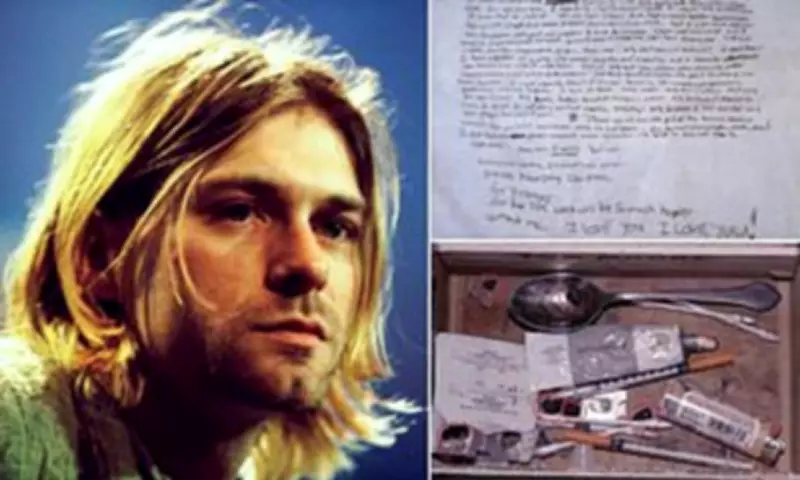
The forensic examination uncovered numerous irregularities at the death scene that challenge the suicide narrative. Cobain's heroin kit was found several feet away from his body, containing capped syringes, cotton buds, and pieces of black heroin of remarkably equal size—an unusual level of organization for someone supposedly in the process of ending their life.
"We're supposed to believe he capped the needles and put everything back in order after shooting up three times, because that's what someone does while they're dying," Wilkins noted with skepticism. "Suicides are messy, and this was a very clean scene."
Further questions emerged from the placement of evidence. The receipt for the shotgun was found in Cobain's left front pocket alongside a note describing the weapon's specifications, while shotgun shells were neatly lined up at his feet. "To me, it looks like someone staged a movie and wanted you to be absolutely certain this was a suicide," Wilkins observed.
Physical Evidence Contradicts Suicide Scenario
The positioning of Cobain's body and the weapon presented additional forensic puzzles. His left hand was tightly wrapped around the muzzle end of the shotgun barrel, yet forensic replication demonstrated that with a hand in that position, the weapon would not eject a shell at all—contradicting the presence of a shotgun shell found on a pile of clothes opposite the expected ejection direction.
Blood spatter patterns raised further doubts. Cobain's left hand was remarkably clean despite the violent nature of shotgun wounds. "If you ever look at photos of shotgun suicides, they are brutal," Wilkins stated. "There is no universe where that hand is not covered in blood. You could eat off of... well, I mean, gross, but, like, his hand is so clean."

The team also noted blood on the bottom of Cobain's shirt that suggested the body may have been moved after death. "The only way the blood would get on his shirt is if Kurt was lifted and his head was down," Wilkins explained. "There's no blood on his hand. There's no blood on the rest of his shirt, but there's a big blood stain on the bottom of his shirt."
Questioning the Suicide Note
The alleged suicide note itself came under scrutiny during the investigation. "The top of the note is written by Kurt," Wilkins acknowledged. "There's nothing about suicide in that. It's basically just him talking about quitting the band."
She continued: "Then there are four lines at the bottom. If you even look at the note, you can see that the last four lines are written in different... the text is a little bit different. It's bigger, it's... looks more scrawly." This discrepancy suggests the possibility of forgery in the note's concluding section.
Official Response and Ongoing Controversy
The King County Medical Examiner's Office maintains its original determination. A spokesperson stated: "King County Medical Examiner's Office worked with the local law enforcement agency, conducted a full autopsy, and followed all of its procedures in coming to the determination of the manner of death as a suicide. Our office is always open to revisiting its conclusions if new evidence comes to light, but we've seen nothing to date that would warrant re-opening of this case and our previous determination of death."
Despite this official stance, the forensic team continues to advocate for transparency and reexamination. "We weren't saying, arrest people tomorrow," Wilkins clarified. "We were saying, you have these... the extra evidence that we don't have."
The researchers emphasize the broader implications of their findings, noting that copycat suicides have continued for decades among fans who believed Cobain took his own life. "In 2022, a kid took his life because he believed Cobain did," Wilkins revealed. "The copycat suicides have never stopped."
For the forensic team, the goal remains straightforward despite official resistance to reopening the case. "If we're wrong, just prove it to us," Wilkins concluded. "That's all we asked them to do." As the thirtieth anniversary of Cobain's death approaches, these new scientific findings ensure that questions about what truly happened on April 5, 1994, will continue to resonate through both forensic circles and music history.