Cambodia's Only Scam Compound Shelter Overwhelmed as Thousands Flee
In Cambodia, thousands of workers are flooding out of notorious 'scam compounds,' only to find increasingly little assistance available. A shelter in Phnom Penh, the sole facility of its kind dedicated to helping victims escape these operations, is now overwhelmed and struggling to cope with the unprecedented surge.
A Shelter Stretched to Its Limits
One recent night, a man named Youga was grateful to finally sleep in a bed—even though it had neither pillow nor blanket. For two days prior, the African national slept on the streets of Phnom Penh after escaping a scam compound in O'Smach, near the Thai border. With only $100 to his name, he sought to conserve his funds. The Caritas shelter took him in, but it is now operating with just a third of its former staff and a fraction of its previous budget, having turned away more than 300 people in need.
Mark Taylor, an expert on human trafficking issues in Cambodia, described the situation as "triage." As of last week, the shelter housed about 150 individuals, with many new arrivals sleeping in a common room with nothing but the clothes on their backs. Youga, who spoke on condition of anonymity due to fears of retaliation from former bosses, confirmed the shelter lacks sufficient pillows and blankets.

Unprecedented Exodus from Scam Compounds
Cambodia is experiencing an unprecedented flood of workers leaving scam compounds, a crisis that has escalated in recent weeks. This follows the extradition of a suspected kingpin of the scam business to China in January, a figure who had held a prominent role in Cambodian society. Online-based scams have become endemic across the region, including in Cambodia, Myanmar, and Laos.
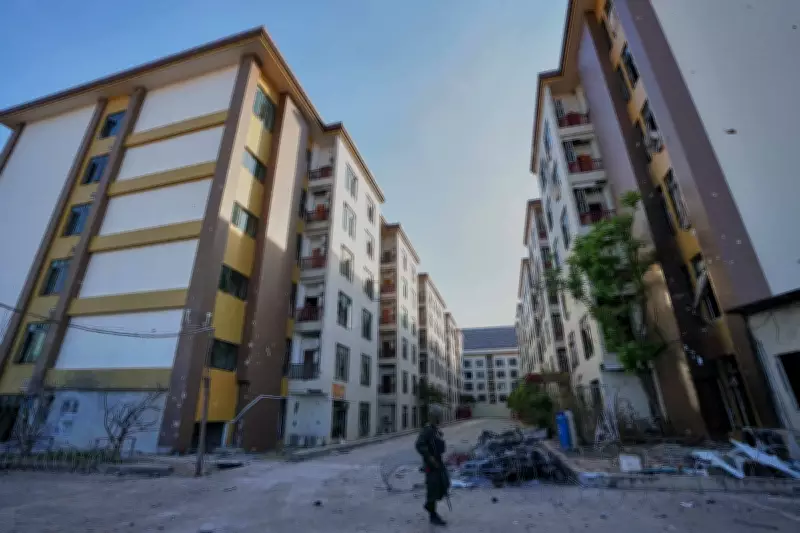
Inside these compounds, scammers run sophisticated operations featuring soundproofed phone booths, multilingual scripts, and even fake police booths mimicking authorities from countries like Brazil to China. The U.N. Office of the High Commissioner on Human Rights estimated that up to 100,000 workers were involved in Cambodia alone in 2023.
Government Response and International Pressure
Under growing international pressure from nations such as South Korea, the U.S., and China, Cambodian Prime Minister Hun Manet announced last month that "combating crime is a deliberate political priority," specifically naming cyberfraud. The government reported deporting 1,620 foreign nationals from 21 countries linked to scam operations in January.
However, compounds have been releasing people en masse recently, according to 15 verified social media videos and images analyzed by Amnesty International. The organization interviewed 35 victims who described "chaotic and dangerous" conditions during their escape, noting a lack of involvement from Cambodian authorities in the mass exodus.
A Humanitarian Crisis Ignored
Montse Ferrer, regional research director for Amnesty International, stated that the departures have created a humanitarian crisis on the streets, one that activists claim is being ignored by the Cambodian government. "Amid scenes of chaos and suffering, thousands of traumatized survivors are being left to fend for themselves with no state support," Ferrer said.
In response, Neth Pheaktra, Cambodia's Minister of Information, rejected claims that the government is failing trafficking victims or tolerating abuse linked to scam compounds. "All individuals are screened to separate victims from perpetrators, with victims receiving protection, shelter, medical care, and assistance for safe return," Pheaktra asserted.
Systemic Breakdown and Funding Cuts
Li Ling, a rescuer, reported having a list of 223 people, mostly from Uganda and Kenya, who emerged from compounds seeking help to return home. She and her partner have spent at least $1,000 of their own money to shelter the most desperate cases but cannot sustain this beyond another week. Some victims have even returned to work in the compounds to avoid sleeping on the streets.
Li Ling highlighted a systemic breakdown: "When international organizations based in Cambodia are continuing to tell victims to go to their embassies, but the embassies tell us frankly, they don’t have a clear path or process, the responsibility is being shoved back and forth, creating a closed loop with no exit."

Victims have waited for hours outside the Phnom Penh office of the International Organization for Migration (IOM), a UN agency, only to be told the Caritas shelter—which IOM works with—is full. The shelter's funding has been severely cut; it was due to receive $1.4 million from USAID from September 2023 through early 2026, but this support vanished after U.S. foreign assistance was suspended and USAID was dismantled in early 2025. IOM, largely funded by the U.S., has also faced funding reductions.
A Repressive Environment and Limited Options
In Cambodia's increasingly repressive environment, the Caritas shelter remains the only organization taking in victims of scam compounds. Independent media have shut down under government pressure, and a journalist known for reporting on scam compounds was arrested and detained for a month. Jacob Daniel Sims, a visiting fellow at the Harvard University Asia Center with experience in countertrafficking in Cambodia, noted, "Given the deeply repressive environment in Cambodia that emerges from the scam industry's role as a dominant source of ruling party elite rent seeking, there are an extremely small number of formal organizations willing to respond to the issue on the ground."
Rescuers warn that those who cannot access the shelter may end up in immigration detention, facing demands for bribes from officials. Others with funds book hotel rooms in groups, while those with embassies in the country, such as Indonesians or Filipinos, receive some assistance.
Personal Stories of Desperation
Youga, from the Democratic Republic of the Congo, recounted being beaten often in a compound for refusing to work. He escaped on his own as mass releases began. The Associated Press could not independently verify all details of his journey but saw messages of his pleas for help to IOM, which declined to comment on individual cases.
Unable to return home due to being from the Banyamulenge ethnic group—targeted by armed groups—and lacking embassy support in the region, Youga's situation is dire. He was lured to a scam compound in November after his family sent him to neighboring Burundi, despite not seeking employment. A recruiter contacted him via phone and email, offering an all-expenses-paid job, and proceeded without his consent. Previously a university student, Youga now hopes for a safe place to rebuild his life with dignity.
As Taylor emphasized, the shelter's most immediate concern in the coming weeks is its food budget, describing the situation as "hand to mouth." With thousands fleeing scam compounds and limited resources, the humanitarian crisis in Cambodia continues to deepen, leaving many victims without the support they desperately need.