Australian Citizens Face Dire Conditions in Syrian Detention Camp
Thirty-four Australian women and children, relatives of alleged Islamic State operatives, have been forcibly returned to the Roj camp in north-eastern Syria. This group, consisting of 11 women and 23 children, finds themselves in increasingly perilous circumstances as conditions within the camp deteriorate dramatically.
Camp Conditions Worsen Amid Uncertainty
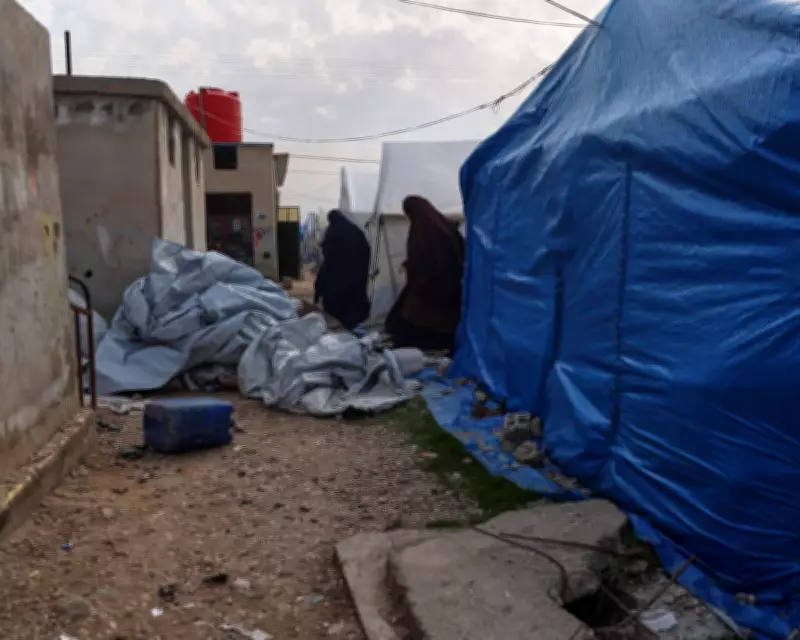
Upon their forced return to Roj camp on Monday, the Australian group discovered their tents demolished and possessions seized. Kurdish officials have reportedly refused to return their tents, scattering the Australians across the shrinking, unstable camp where they must now billet with other families. The camp, located near the Turkish and Iraqi borders, faces growing instability and violence.
Sources on the ground report near-nightly raids and increasingly violent beatings have become commonplace. The situation is further complicated by uncertainty surrounding the camp's future control, with expectations it will soon be transferred from Kurdish forces to the Syrian government. This transition raises fears of renewed violence amid a fragile ceasefire between the conflicting parties.
Failed Escape Attempt and Government Stance
The Australians had previously been granted passports and permission to leave Roj camp, but their attempt to reach Damascus and subsequently fly to Australia was thwarted when Syrian government officials stopped their convoy. They were denied permission to cross into government-controlled territory and forcibly returned to the camp.
Australian Prime Minister Anthony Albanese has expressed firm opposition to their repatriation, stating: "I have nothing but contempt for these people. The government is providing no support for the repatriation of these people or any support whatsoever." When questioned about the children in the group, some of whom were born in the camps, Albanese acknowledged their unfortunate circumstances but maintained the government's position.
Humanitarian Concerns and Advocacy
Human rights organizations have intensified their calls for the Australian government to prioritize the safety and rights of the children involved. Mat Tinkler, Chief Executive of Save the Children Australia, emphasized: "This is a group of innocent Australian children who deserve safety and protection, as every child does. That has largely been lost from the debate in recent days."
Daniela Gavshon, Australia Director of Human Rights Watch, reported that conditions have deteriorated significantly in recent weeks, with women experiencing raids and beatings of unprecedented severity. Gavshon stated: "The conditions in the camps are dire. The situation is untenable and the government needs to find a solution."
Historical Context and Political Considerations
The Australian government has previously undertaken two successful repatriation missions:
- Eight orphaned children in 2019
- Four women and 13 children in 2022
However, the government maintains it has no plans to repatriate this final group. Political considerations appear to influence this stance, with concerns about backlash from community groups in marginal western Sydney seats reportedly contributing to the abandonment of a repatriation plan in 2024.
The United States, which funds security operations in north-eastern Syria through the Kurdish-led Syrian Democratic Forces, advocates for camp closure and has urged allies to repatriate their citizens. US officials have warned that camps like Roj serve as "incubators for radicalization" as Islamic State continues efforts to indoctrinate residents.
The Human Toll
One mother of a stranded Australian told the Guardian she avoids news coverage because "any mention of the fate of the Australians who remained stranded in Syria was unbearable." She expressed the anguish of families waiting nearly seven years for their loved ones' return.
Tinkler highlighted the particular vulnerability of the children, noting: "Every parent knows that babies and toddlers don't make beds. The reality is that some of these children were born in the displacement camps, and many were toddlers when they were first taken there."
As the situation continues to deteriorate, humanitarian organizations stress that leaving Australian citizens in these conditions may present greater long-term security risks than repatriation, with experts warning that the greatest danger may be leaving vulnerable children in an environment conducive to radicalization.