Americans Seek Dual Citizenship as 'Escape Route' Amid Trump Era Uncertainty
Americans rush for dual citizenship as political fears grow

Faced with political turbulence and concerns over fundamental rights, a growing number of native-born Americans are urgently seeking a second passport, turning to the homelands their families once fled for security and opportunity.

The Search for a 'Plan B'

The concept of needing an escape route from the United States was once unthinkable for many citizens. Today, that sentiment is shifting dramatically. Law professor Peter Spiro notes that recent political instability and the Covid-19 pandemic have underscored the 'insurance value' of a second nationality, making a 'plan B' a new consideration for Americans.

For those with a parent or grandparent born abroad, citizenship by descent, or jus sanguinis, offers a relatively straightforward path to a second passport. Countries across Europe, Africa, and parts of Asia permit dual citizenship, requiring mainly patience and paperwork to prove familial ties. This process stands in stark contrast to the complex visa routes available to migrants or spouses.

Personal Tipping Points: From Arts Funding to LGBTQ+ Rights

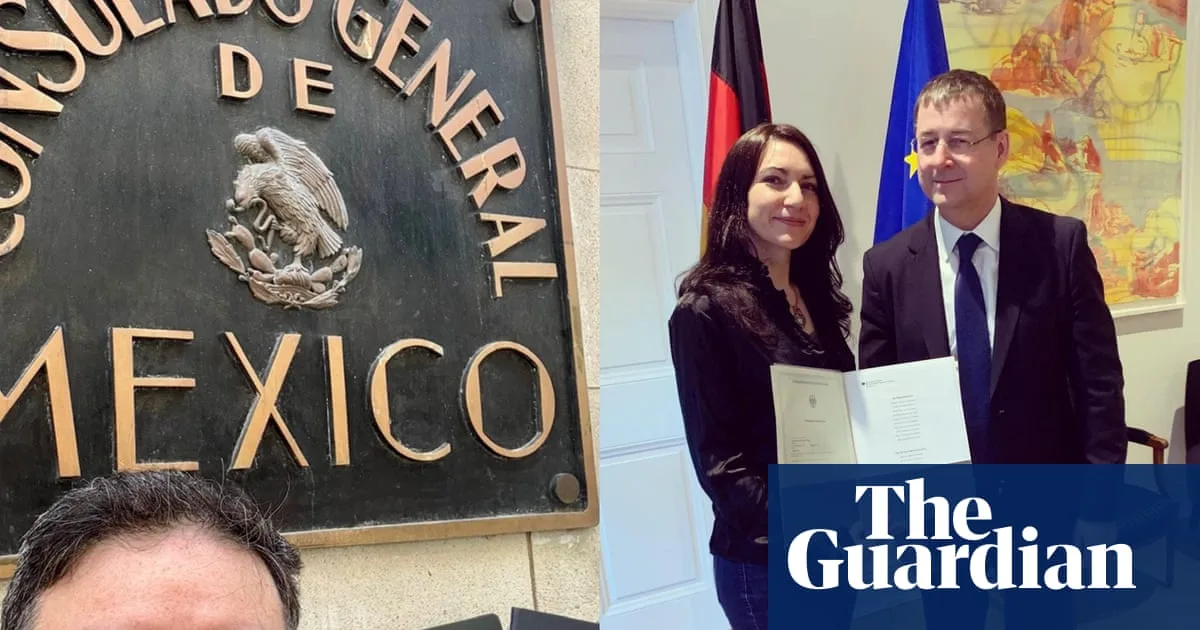
The motivations are deeply personal, yet share common threads of anxiety about America's direction. Daniel Kamalić, a 48-year-old New York opera singer, began his application for Croatian citizenship after his father's death, but accelerated the process as a second Trump administration seemed likely. He cites fears over declining arts funding, rising antisemitism, and aggressive immigration enforcement.

"The more that happens, the more I worry about it being in the realm of possibility: to need to become a political refugee from the US," Kamalić explains. His father had fled communist Yugoslavia. "I want that escape route."

For Hollis Rutledge, a 48-year-old Texas native, economic concerns initially drove him to claim Mexican citizenship through his mother's parents. However, the destruction of US Aid food and the rolling back of women's and LGBTQ+ rights—he has a transgender child—solidified his decision. His 102-year-old grandmother, who refused US naturalisation for decades until Mexico allowed dual citizenship in 1998, wept with joy at his choice.

A Dramatic Surge in Applications

While the US lacks a central registry for dual citizens, data suggests a seismic shift in interest. Applications for citizenship by descent may have grown by 500% since 2023, according to figures gathered by Al Jazeera. In May, the UK reported the highest number of American applicants for British citizenship in 21 years, most citing family links. A recent Harris Poll found 66% of US Gen Z and millennials now view dual citizenship as an aspirational goal.

For 24-year-old Mariam Diop (a pseudonym), seeking Senegalese citizenship is about rejecting a 'raw deal' in the US and embracing a future in West Africa. "I feel sadness and grief at the direction of the country," she says, questioning the American promise of upward mobility. Meanwhile, 16-year-old Kyla Shannon from Oregon, who secured a German passport via a Jewish great-grandmother who fled the Nazis, sees it as a practical pathway to European education, noting her friends' envy.

The journey often stirs complex emotions about identity and belonging. Rose Freymuth-Frazier, 47, recently had her German citizenship restored under Article 116, which addresses those persecuted by the Nazis. While her grandmother was 'run out of her country', Freymuth-Frazier now holds a passport from a nation she's never visited. "I do have mixed feelings about it," she admits, reflecting on the unsettling rise in antisemitic rhetoric she's witnessed in New York since October 2023.

What was once stigmatised as a sign of disloyalty is now, for a record number of Americans, viewed as a prudent safeguard—a means to reclaim a heritage once abandoned, and to secure the freedoms they fear may be fading at home.