

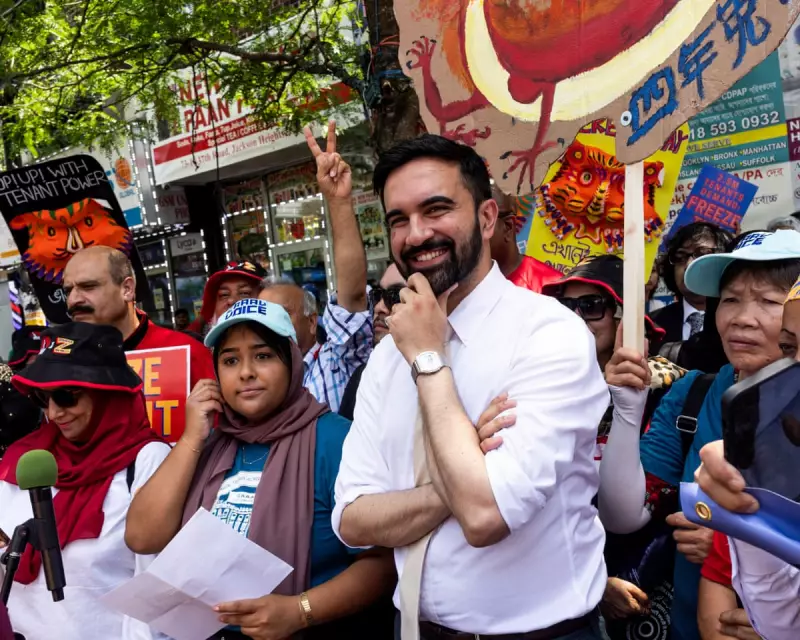
In a landmark moment for American politics, Zohran Mamdani was officially sworn in as the 110th mayor of New York City on the steps of City Hall. The inauguration, followed by a celebratory event for 40,000 people in Lower Manhattan, marks the start of a new era for the metropolis, with Mamdani becoming its youngest mayor since 1892, its first Muslim mayor, and its first leader born on the African continent.
A New Chapter for a Global City
The historic swearing-in ceremony on a cold January day represents more than a simple political transition. For many New Yorkers, particularly within the city's diverse Muslim community which numbers around one million, it symbolises a profound shift in representation. As author and long-time resident Mona Eltahawy notes, having lived in New York for 23 years, none of the previous mayors—Michael Bloomberg, Bill de Blasio, or Eric Adams—encapsulated the complex identities felt by so many. Mamdani's rise, she argues, makes the city feel like a true home.
The mayor-elect, often referred to simply as "Zohran" by supporters in a manner akin to iconic mononyms like Madonna or Beyoncé, announced his candidacy in late 2024. His campaign quickly galvanised a coalition focused on affordability and social justice. A key pledge was to freeze rents for two million people living in rent-stabilised apartments, a policy that resonated deeply with tenants like Eltahawy, who resides in a Harlem brownstone.

Roots in Queens and a Rejection of Division
Mamdani's personal and political roots are firmly planted in Queens, a borough celebrated as a global capital of linguistic diversity where hundreds of languages are spoken. It was in a Queens park, at a fundraiser for the Asiyah Women’s Centre—the oldest and largest shelter for American Muslim victims of domestic violence—that Eltahawy witnessed the organic, community-driven support for Mamdani. A kebab vendor proudly volunteered that his food was one of Zohran's favourites, illustrating the candidate's local connection.
This stands in stark contrast to other political figures from Queens, such as former President Donald Trump, whose administration has plans to strip naturalised citizens of their status, and Republican councilwoman Vickie Paladino, who called for the "expulsion of Muslims" following the Bondi Beach massacre. In this climate, Mamdani's victory is seen as a decisive rejection of hate and nationalism, offering a more youthful and urgent path toward social justice.
Representation and Identity in Post-9/11 America
Mamdani's election carries significant weight for American Muslims, a group that comprises less than 2% of the U.S. population. For many, the aftermath of the September 11 attacks forced an unwanted visibility. Eltahawy, who moved to New York from Egypt in 2002, recalls friends "coming out" as Muslim after the attacks, having previously been mistaken for Latinx. She herself has frequently had to say "No hablo español" across the city.
The new mayor complicates the monolithic narrative of what a Muslim is. His unapologetic and relatable persona was on full display during mayoral debates when, asked if he had ever purchased marijuana, he replied with a grin: "I’ve purchased marijuana at a legal cannabis shop." This candidness, coupled with his policy-driven focus on equity, frames him as a figure of both symbolic and substantive change.
As Zohran Mamdani assumes office, the eyes of the world are on New York. His journey from a candidate championing tenants' rights and community representation to the city's highest office signals a potential transformation in urban governance. For residents like Mona Eltahawy, he is now a beacon to point to—proof that the arduous complexities of identity in America can be not only acknowledged but embraced at the highest level of civic leadership.






