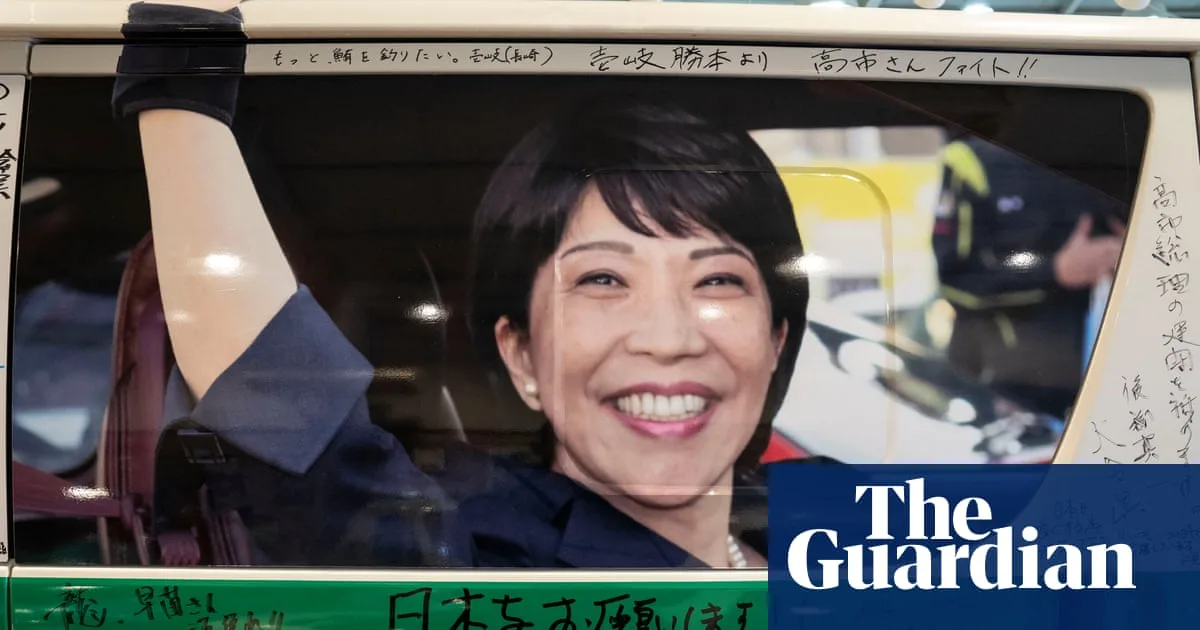
Sana-mania Sweeps Japan as Takaichi's Commoner Appeal Fuels Election Landslide
Japan's political landscape is undergoing a seismic shift as Sanae Takaichi, the nation's first female prime minister, generates unprecedented buzz ahead of Sunday's lower house elections. Some have drawn comparisons to baseball superstar Shohei Ohtani, while others praise her as a 'commoner prime minister', with her unique persona sparking a nationwide phenomenon dubbed 'Sana-mania'.
From Political Abyss to Historic Comeback
Just eight months ago, Japan's ruling Liberal Democratic Party (LDP) appeared to be teetering on the edge of electoral collapse. The party had lost its parliamentary majority for the second time in fifteen months, numerous MPs were embroiled in a protracted slush fund scandal, and then-prime minister Shigeru Ishiba faced intense factional plotting against his leadership.
Yet as voters prepare to brave freezing temperatures this weekend, the LDP is projected to achieve a momentous victory that would have seemed impossible last year. This dramatic recovery is largely attributed to one woman: Sanae Takaichi.
The Unlikely Leader Who Defied Expectations
When the LDP's conservative wing forced a leadership contest to replace the embattled Ishiba in October last year, most political observers expected victory for his ally Shinjiro Koizumi – the young, telegenic son of a former prime minister. Instead, Japan's dominant political party for nearly seven decades took a remarkable gamble on his ultra-conservative rival, installing Takaichi as the country's first female prime minister.
If current opinion polls prove accurate, that gamble is about to pay off spectacularly. Surveys this week indicate the LDP and its minor coalition partner, the Japan Innovation Party, will secure more than 300 of the 465 seats in the lower house – enough for a commanding two-thirds majority and control of parliamentary committees. Meanwhile, the main opposition Centrist Reform Alliance braces for substantial losses.
A Personality Cult Takes Root
In just four eventful months, Takaichi has met with former US president Donald Trump – who recently offered both an endorsement and a White House invitation for March – alongside engagements with China's Xi Jinping and South Korea's President Lee Jae Myung. She has sparked unresolved tensions with Beijing over Taiwan's future, unsettled bond markets with promises of sweeping tax cuts, and faced renewed scrutiny over her connections to the disgraced Unification Church.
Despite these challenges, Takaichi has emerged as the LDP's most potent political weapon, becoming the focal point of a personality cult that extends to her fashion choices, train journey snacks, and even the distinctive pink pen she uses for parliamentary note-taking.
The Commoner Prime Minister's Unconventional Appeal
As a 64-year-old admirer of Margaret Thatcher, Takaichi hardly represents a natural ally for Japanese feminism or Generation Z aspirations. She opposes allowing female members of the imperial family to become reigning empresses, insists married couples should share a surname (typically the husband's), and shows no interest in challenging centuries of tradition by stepping onto 'sacred' sumo arenas to present trophies.
Instead, she has ignited enthusiasm among younger voters through a sophisticated social media campaign that emphasizes what she is not: a hereditary, male politician of a certain vintage with an inherent belief in his entitlement to govern.
"Until now, politics has been dominated by senior male figures," explains Yuiko Fujita, an associate professor at Tokyo University. "The fact that the prime minister is now a woman, someone with a different background from what people are accustomed to, creates a feeling that something is shifting."
Modest Beginnings and Relatable Politics
Takaichi, whose mother served as a police officer and father worked as a car company employee, has frequently cited Thatcher – the daughter of a shopkeeper – as her political inspiration. At recent campaign events in Tokyo, she references her modest upbringing while addressing issues ranging from immigration control to the rising costs of visiting hair salons.
Unlike her male predecessors, she avoids late-night drinking sessions and expensive restaurants, preferring home comforts and early-morning meetings with aides. "She has a clear, decisive way of speaking," observes Takeo Fujimura, a 24-year-old office worker volunteering at a campaign event. "She communicates in a bright, positive way and I think that energy resonates with young people."
The Social Media Phenomenon
Japan's 'commoner prime minister' has harnessed social media power unlike any previous Japanese politician. Her official X account boasts more than 2.6 million followers, dramatically overshadowing the 64,000 followers of Yoshihiko Noda, co-leader of the centrist opposition alliance.
"Even though I'm not that much into politics, pro-Takaichi videos are recommended to me a lot on YouTube," says Mana Suzuki, a 20-year-old Tokyo resident. "And there is almost no criticism of her in the comments section."
The tangible effects of 'Sana-mania' are evident everywhere: the $900 black leather handbag she uses has sold out completely, while her favourite snacks experience unprecedented demand. Voters express attraction to her approachable manner – whether smiling and waving to US troops stationed in Japan, playing drums with President Lee to the K-pop hit 'Golden', or singing 'Happy Birthday' in Italian to Giorgia Meloni.
Policy Challenges and Electoral Uncertainties
While policy discussions remain limited, Takaichi's personal qualities have combined to create a political wave that should provide her with substantial political capital to address pressing national challenges: a severe cost-of-living crisis, a volatile yen, and security threats from both China and a nuclear-armed North Korea.
However, this midwinter election carries significant risks. Many voters remain unconvinced that her promise to suspend the 8% consumption tax on food for two years will genuinely assist struggling families. "Prices are so high," notes Tomomi Kawamura, a Tokyo housewife impressed by Takaichi's social media presence but undecided about her vote. "I want something done about that."
Furthermore, there is no guarantee that younger people – historically low turnout demographics in Japanese elections – will translate their admiration for Takaichi into actual votes during what forecasts predict will be a frigid weekend nationwide.
A Defining Moment for Japanese Democracy
When Takaichi called this snap election last month, she declared that citizens must have the opportunity to decide whether she was "fit to run the country." This Sunday, Japanese voters appear poised to deliver a resounding affirmative answer, potentially reshaping the nation's political trajectory for years to come through what could become one of the most significant electoral victories in recent Japanese history.




