

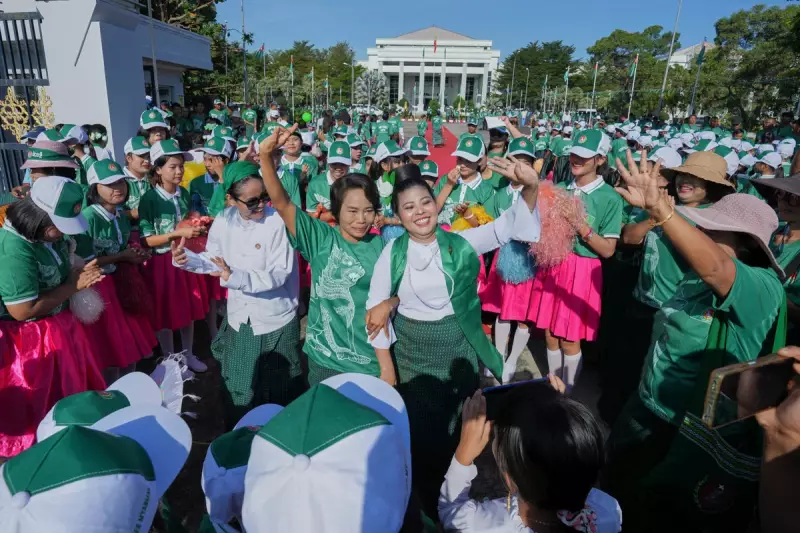
Myanmar is set to hold the first phase of a general election on Sunday, marking the country's first vote in five years. The ruling military junta has framed the exercise as a return to multi-party democracy, but critics and opposition groups assert it will do nothing to restore the fragile democracy shattered by the 2021 army takeover or end the devastating civil war that followed.
A Vote Without Credibility
The military, which seized power after ousting the elected government of Aung San Suu Kyi four years ago, is widely seen as using the polls to add a facade of legitimacy to its rule. Voting will be conducted in three phases: the initial round on Sunday, 26 December 2025, followed by further rounds on 11 January and 25 January 2026.
Human rights organisations and analysts have dismissed the election's credibility. Richard Horsey, a Myanmar analyst for the International Crisis Group, told The Associated Press that the vote is being run by the same military behind the 2021 coup. "These elections are not credible at all," he stated, noting they exclude all major political parties that performed well in previous elections.

The military's apparent strategy is for its favoured Union Solidarity and Development Party (USDP) to win a landslide. This would shift the country from direct military rule to a government with a "civilian veneer," perpetuating army control while allowing it to claim progress towards inclusivity.
Key Players Absent and a Climate of Fear
Significantly, the nation's former leader, 80-year-old Aung San Suu Kyi, and her National League for Democracy (NLD) party are not participating. Suu Kyi is serving a 27-year prison term on charges widely considered politically motivated, and the NLD was dissolved after refusing to register under new military rules.
Other parties are boycotting or declining to run under what they call unfair conditions. The political landscape is starkly different from 2020; parties that won 90% of seats then no longer exist. An Election Protection Law with harsh penalties has further restricted political activity, effectively banning public criticism of the polls. Over 200 people have been charged for leafleting or online activity in recent months.
On Sunday, ballots will be cast in 102 of the country’s 330 townships. No voting is planned in 65 townships due to ongoing conflict. While 57 parties have fielded candidates, only six are competing nationwide. In total, nearly 5,000 candidates are competing for over 1,100 parliamentary seats.
Deepening Conflict and Human Suffering
The human cost of Myanmar's instability remains catastrophic. According to the Assistance Association for Political Prisoners, more than 22,000 people are detained for political offenses, and security forces have killed over 7,600 civilians since the coup. The conflict has created more than 3.6 million internally displaced people.
The United Nations Human Rights Office has warned of "intensified violence, repression, and intimidation ahead of military-controlled elections." Amnesty International researcher Joe Freeman noted widespread fear that the election will only entrench the power of those responsible for years of unlawful killings.
Analysts like Horsey believe the aftermath of the polls is likely to see increased conflict as opponents attempt to prove the military still lacks popular legitimacy. The election, rather than paving a path to peace, appears set to deepen Myanmar's profound crisis.






