
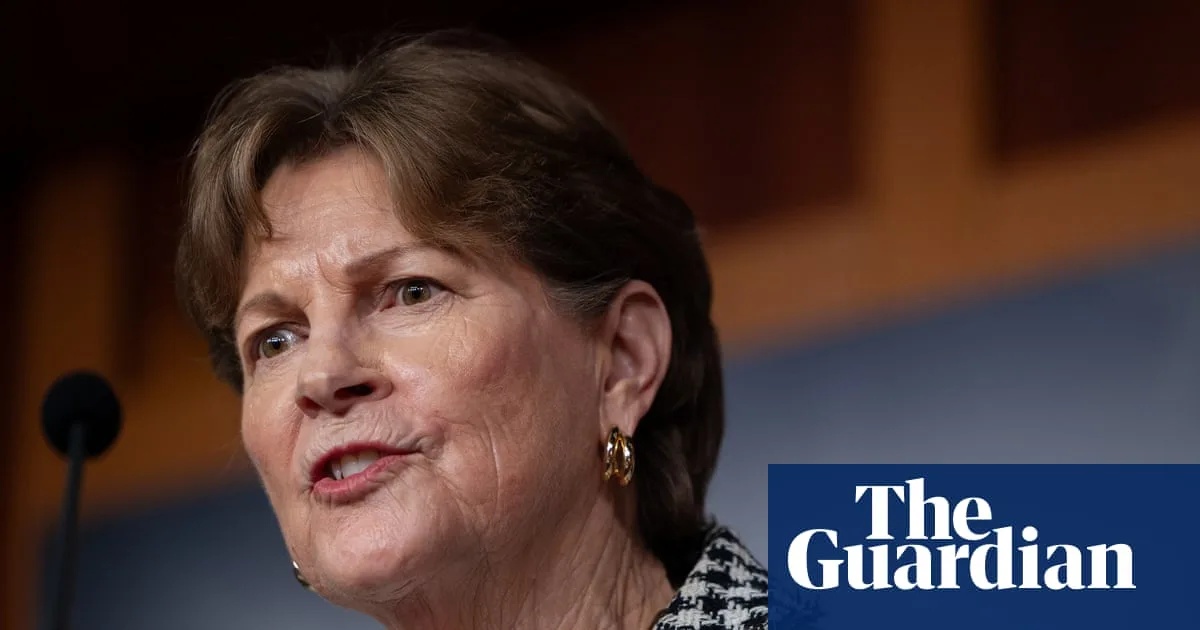
Stefany Shaheen, a Democratic congressional candidate in New Hampshire, has faced a backlash after criticising the bipartisan deal to end the US government shutdown without disclosing that her mother, Senator Jeanne Shaheen, voted to approve it.
In a post on X, Stefany Shaheen said she could not support the deal because House Speaker Mike Johnson had refused to allow a vote on extending health care tax credits. However, her mother was one of seven Democrats who broke ranks with party leadership on Sunday night to advance the funding bill, which ends the 40-day shutdown without securing guarantees for healthcare subsidies.
Speaking to the New York Times, Stefany Shaheen said: “Clearly we had different approaches here. I can’t speak for her. I think she did what she believes is right.” Senator Shaheen, who has served since 2009, defended her decision, saying: “This was the only deal on the table. It was our best chance to reopen the government and immediately begin negotiations to extend the ACA tax credits.”
The deal extends government funding until 30 January but only promises a vote on a healthcare bill in the Senate next month, not an extension of the Affordable Care Act tax credits that help keep premiums low. Social media users reacted sharply, with one writing: “Your mom just ruined your career,” and another saying: “We don’t vote for the children of traitors.”
Stefany Shaheen, a mother of four whose campaign biography describes her as a “passionate advocate for groundbreaking medical research and a successful entrepreneur and business leader”, has said improving healthcare is “the cause of my life”. Her website says she is running because “it’s not enough to just get mad” when Donald Trump is “crushing medical research, and Republicans [are] slashing Medicaid, and healthcare for kids, seniors, and veterans”.
According to the Center on Budget and Policy Priorities, about 15 million people will lose healthcare by 2034 because of Medicaid and ACA marketplace cuts, and an additional 4.2 million will lose marketplace cover if premium tax credits are not extended. Senator Shaheen and fellow Democrat Dick Durbin have announced they will retire next year, while the other five Democratic senators who voted yes, along with independent Angus King, face voters in 2028.




