
In Macomb county, Michigan, a blue-collar Detroit suburb that twice voted for Barack Obama before backing Donald Trump in his three presidential runs, residents are exhausted. Township trustee Shannon King, a Democrat still undecided, hears similar complaints: "You're going backwards in your paycheck. You're going backwards in your healthcare. You go to work every day. You might have a side hustle. Your significant other has a side hustle, too. And you're still struggling to do childcare."
Daily Realities Drive Voter Concerns
These are the realities faced by Michiganders as the Democratic party chooses its candidate for the US Senate contest, one of the most closely watched races in November's midterm elections. In key battlegrounds like Lansing, Macomb county, Dearborn, and Grand Rapids, residents aren't following the daily beats of the primary. They want to talk about healthcare, rent, their parents' social security checks, the devastation in Gaza, and their cousins in Beirut, and whether anyone in office will act before it's too late.
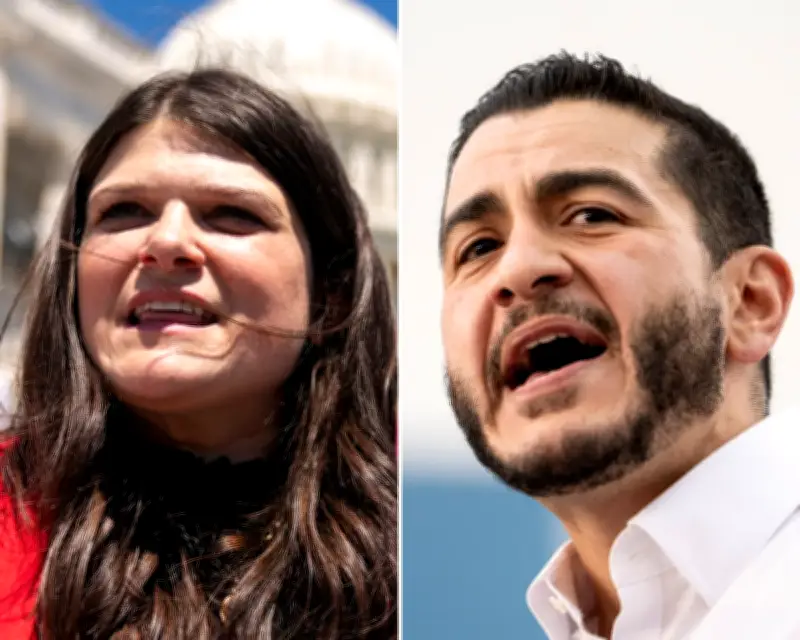
In Washington, the election is seen as a proxy war over the Democratic party's direction after its 2024 defeat. Cable panels and social media debate whether Abdul El-Sayed's rise is a Mamdani-style insurgency or whether Haley Stevens is the safe, "electable" pick. Three candidates were vying for the nomination until Mallory McMorrow dropped out on Sunday.
Spending Floods Airwaves
Spending has flooded the airwaves: at least five groups have poured more than $34 million into boosting Stevens, led by Aipac's United Democracy Project Super PAC, which alone has spent roughly $20 million. Stevens's ads focus on her record working with Barack Obama's rescue of the automotive industry, while El-Sayed launched TV ads in mid-June leaning on his Michigan upbringing and his relationship with Senator Bernie Sanders. With McMorrow out, El-Sayed's apparent lead in the polls is being tested as both contenders vie for her supporters.
"I think inaction on behalf of the Democrats is costing them votes," said Toni Gordon, 33, a PhD student at Michigan State and East Lansing election chairperson. "The performative, old-school way of doing things, in the attempt to be diplomatic, or judicial ... it's costing them voter support." Gordon, who calls herself left-leaning with "some conservative values" from her time as an army reservist, backs El-Sayed but predicts Stevens will win the primary due to name recognition and party machine support.
Black and Youth Turnout Key
Detroit anchors one of the largest Black populations of any US city, and turnout there could decide the state. "Michigan is only a swing state if Black people choose not to vote," Gordon said. "A large number of them will not vote this election." Polling shows El-Sayed pulling support from four out of five voters under 44, but the primary falls on August 4, deep in summer recess, when many college students are away from their Michigan addresses.
Michigan, which Trump won in 2024, is a diverse political patchwork. Macomb, which backed Obama before flipping to Trump in 2016, has grown redder, awarding Trump 53% in 2020 and nearly 56% in 2024. Wayne County, home to Detroit and Dearborn, still went for Kamala Harris in 2024 but swung more than nine points toward Trump. Dearborn itself flipped: Trump became the first Republican to win a plurality there since 2000, in a city with one of the largest Arab American populations in the country. Kent County, anchored by Grand Rapids, moved opposite, voting for Harris by five points.
Gaza Drives Anti-Establishment Sentiment
Ali Fawaz, 34, a lifelong Dearborn resident who identifies as independent, said the city's Trump vote was never really about Trump. "They watched the genocide in Gaza, and they saw Biden do absolutely nothing," he said. "Out of desperation, they looked for other options." Fawaz believes Dearborn is disproportionately attuned to geopolitics, even as it pays comparatively little attention to Congress's domestic business. "Every single person has family in Lebanon, or Palestinians here who have family back there, wondering on the daily what's going to happen to them."
El-Sayed has engaged this community. In June, he delivered the keynote at the inauguration of a $16 million mosque and Islamic complex in Dearborn Heights. He has "changed his tone" since running for governor in 2018, according to Fawaz. El-Sayed, an epidemiologist, has not taken corporate PAC money and campaigns for universal healthcare, ending military aid to Israel, abolishing ICE, and aggressive AI regulation. He describes himself as a capitalist in an oligarchic society and has endorsements from Alexandria Ocasio-Cortez, Bernie Sanders, and Jewish Voice for Peace Action—its first Senate endorsement.
Stevens, who flipped a Republican House seat, is the choice of much of the party's Washington wing, including Senate Minority Leader Chuck Schumer and the Detroit News. She wants to expand Obamacare and authored a bill to investigate ICE misconduct, though she faces criticism over a vote seen as friendly to ICE and her support for Israel. She has held few public town halls this cycle, a pattern Republican critics have seized on. Dana Nessel, the state attorney general, endorsed her the day after McMorrow dropped out, calling Stevens "wicked smart" and someone "who connects with people on a level so sincere and genuine."
Voters Feel Disconnected from Officials
Misty Ramsey, an El-Sayed supporter who landscapes yards and does deliveries, is animated not by the economy but by Gaza. She heard a Macklemore song about Hind Rajab, a five-year-old killed in Gaza after pleading with emergency dispatchers, and it reshaped her views. "When I realized the scope of the lies, not only is that devastating for the people of Gaza, it's terrifying for us that we've been conditioned to not care," she said. "That dichotomy – between elected officials and the reality – is very unsettling to me."
El-Sayed is riding this anti-establishment wave. At a recent western Michigan rally, a Grand Rapids voter once registered as a Republican said she backs him because of his vocal opposition to Aipac funding and support for Medicare for All, and because "he seems to be the only one who is truly for the people."
With about a month to go, the primary remains unsettled. Recent polling before McMorrow dropped out showed El-Sayed with a single-digit lead over Stevens, with McMorrow at a distant third. Voting is already under way, as ballots were mailed out in late June. "I don't know how much it matters," Gordon said, "but in previous years, there were conversations about young people being disengaged from politics. I noticed that those are the individuals who seem to be the most motivated to participate now. People are fed up with both parties."




