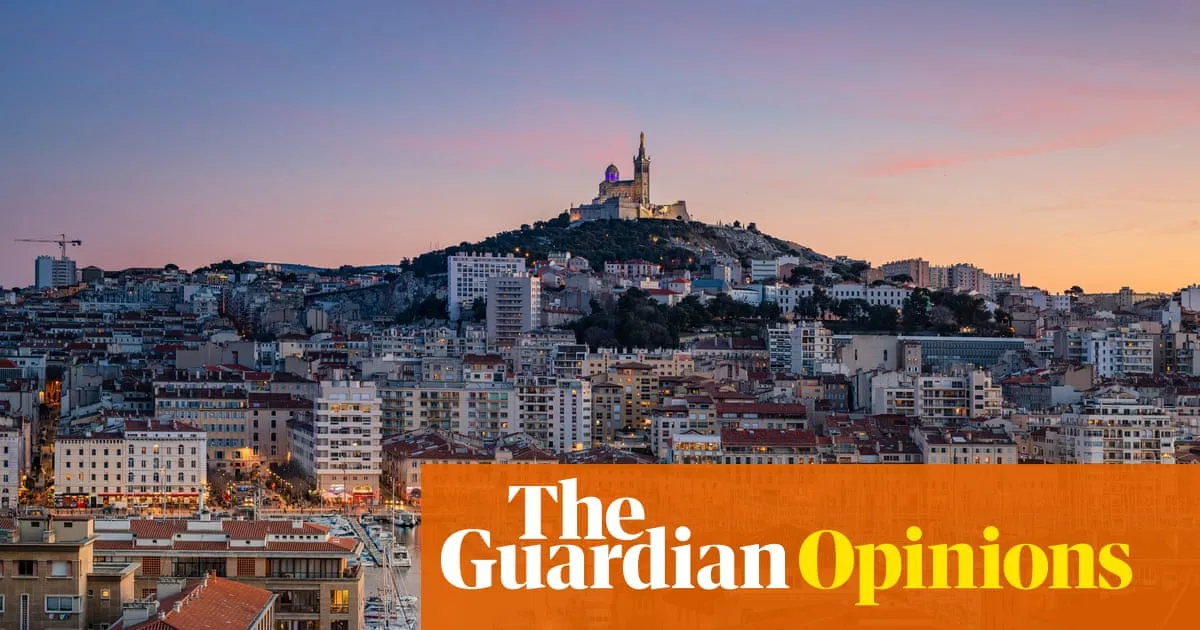
Marseille's Political Crossroads: Could France's Progressive Hub Embrace Far-Right Rule?
Marseille's Political Crossroads: Far-Right Threatens Progressive Hub

Marseille's Political Identity Faces Unprecedented Challenge

Marseille, celebrated as France's coolest city and a haven for artists and progressives, stands at a political precipice that could redefine its character and send shockwaves throughout the nation. For decades, this Mediterranean metropolis has been shaped by waves of immigration, developing a proud working-class identity and vibrant multicultural communities. Yet polling data indicates Marine Le Pen's National Rally (RN) could achieve what was once unthinkable: capturing the mayoralty of France's second-largest city in the forthcoming municipal elections.

A City Haunted by History

For many Marseillais, the far-right remains forever linked to the tragic 1995 killing of teenager Ibrahim Ali, who was shot in the back by National Front militants while returning from a rap band rehearsal. Thirty-one years later, that same political movement—now rebranded as the National Rally under Marine Le Pen's leadership—stands poised for potential victory. The first round of voting on 15 March represents a critical juncture for a city that has long considered itself a progressive outlier in France's traditionally conservative south.

Current polling shows RN candidate Franck Allisio tied with incumbent socialist mayor Benoît Payan, with nearly one in three of Marseille's 880,000 residents indicating they plan to vote for the far-right party. This represents a significant ten-point increase from the 2020 local elections and has created palpable anxiety among the city's progressive communities. The tension has spilled into public life, with Olympique de Marseille football fans regularly expressing opposition to the far right through chants and banners during home matches.

Wide Pickt banner — collaborative shopping lists app for Telegram, phone mockup with grocery list

The Far-Right's Calculated Transformation

The National Rally's potential breakthrough in one of France's most diverse cities reveals much about the party's evolving strategy and growing appeal nationwide. Franck Allisio, the RN candidate, deliberately defies traditional far-right stereotypes. A former adviser to conservative president Nicolas Sarkozy who joined Le Pen's party in 2015, Allisio presents himself as embodying Marseille's diversity, with parents of Italian heritage who lived in Tunisia before settling in France.

His campaign committee includes individuals of both North African Muslim and Jewish backgrounds, reflecting RN's concerted effort to build support among Marseille's substantial Jewish population—the second largest in France after Paris—through pro-Israel positioning. Significantly, Allisio focuses his rhetoric more on crime and security than immigration, though many of his supporters conflate these issues. He has promised to triple police numbers, double CCTV cameras, and declare a state of emergency against drug traffickers.

Leftwing Divisions and Political Realignment

Marseille's political landscape has undergone substantial transformation in recent years. The city was governed for a quarter-century by rightwing mayor Jean-Claude Gaudin before the Green-left alliance Marseille Spring took power in 2020, delivering the city's first female mayor and challenging decades of clientelist politics. Key to that victory were votes from néo-Marseillais—newer, left-leaning residents attracted by cheaper rents and the city's Mediterranean lifestyle.

Yet the left now faces bitter internal divisions, with the radical La France Insoumise party candidate attacking socialist incumbent Payan more vigorously than the far right. Meanwhile, the RN has steadily expanded beyond Marseille's multicultural center into peripheral neighborhoods and former Communist strongholds swallowed by urban sprawl. The party's growth in these areas demonstrates how traditional political boundaries have blurred, with the far right making inroads into once-reliable leftwing constituencies.

Pickt after-article banner — collaborative shopping lists app with family illustration

Crime, Security, and Social Fractures

Law and order consistently rank among voters' primary concerns in Marseille, where drug-related gang violence has plagued northern districts for decades. The November killing of anti-drugs campaigner Amine Kessaci's younger brother—believed by authorities to be an act of intimidation—highlighted the persistent security challenges. Allisio's proposed "anti-scum pass" to restrict beach access to families and elderly people has proven particularly controversial, though it resonates with some voters frustrated by perceived urban disorder.

Payan's re-election campaign received a boost when Kessaci joined his team, warning about the risks of far-right victory in a city where many families have generations-old North African origins. Yet as candidates enter the final campaign days, anxiety about a potential RN victory has intensified. The mainstream conservative Les Républicains party has so far refused to consider a second-round alliance with Allisio that would guarantee far-right control of city hall, but that position could change.

National Implications and Historical Significance

This municipal election represents the most closely watched local contest in France, as the far right has never before captured a major French metropolis. RN leaders, including party president Jordan Bardella, recognize that winning Marseille would carry profound symbolic weight and potentially foreshadow success in next year's presidential elections. Bardella's recent campaign visit to Marseille projected confidence, despite his posters being regularly defaced in the city center.

Mayor Payan has warned that an RN victory would constitute a political "earthquake" for France's second-largest city. Few in Marseille—often called Planète Mars by locals for its unique character—would dispute this assessment. The city's political direction will reverberate far beyond its boundaries, potentially reshaping national political dynamics and challenging France's self-image as a bastion of progressive values. As Marseille prepares to vote, it faces not merely a local election but a referendum on its identity and France's political future.




