

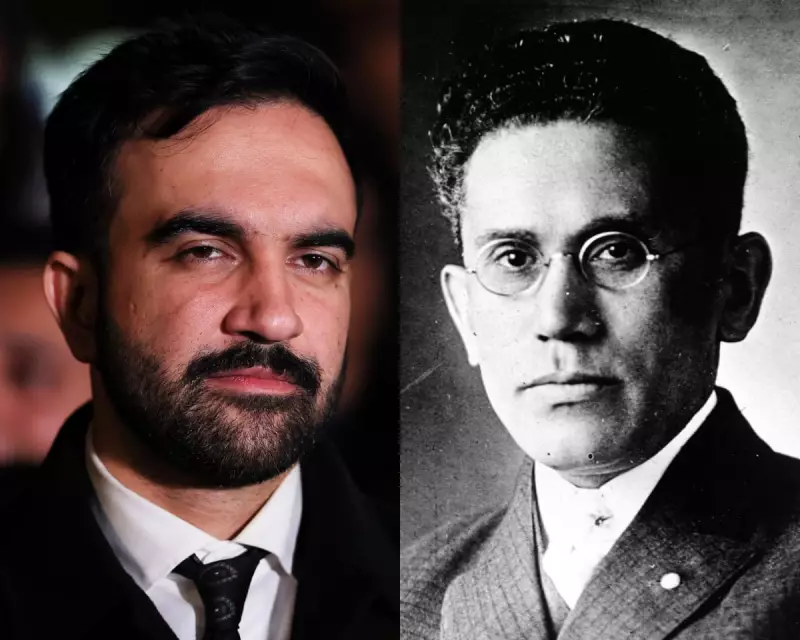
In a landmark victory that defied a torrent of opposition, Zohran Mamdani has been elected as the first socialist mayor of New York City. His ascent was met with fierce resistance from billionaire donors, mainstream political machines, and accusations of extremism. Yet, a closer look reveals his triumph is not a radical break, but a revival of a deep, venerable strand in the city's history: the tradition of Yiddish socialism that helped build modern New York.
The Direct Line to a Troublemaking Past
The connection is sometimes strikingly direct. Among Mamdani's transition team is Bruce Vladeck, whose surname carries profound historical weight. He is the great-grandson of Baruch Charney Vladeck, a Marxist activist from the Pale of Settlement in the Russian Empire. Arriving in New York after the failed 1905 revolution, bearing scars from a Cossack saber, Baruch later became a socialist alderman and served in Mayor Fiorello La Guardia's administration.
His adopted name, Vladeck, was a nom de guerre from his time in the Jewish Labor Bund. This secular, socialist, and anti-Zionist movement championed the slogan "here where we live is our country"—a sentiment that resonates powerfully with Mamdani's vision for the city.

The Fertile Ground of the Lower East Side
At the dawn of the 20th century, New York was home to nearly 600,000 Jews, forming the world's largest Jewish city. Crowded into the tenements of the Lower East Side, they laboured in garment sweatshops. From these harsh conditions emerged a radical, disputatious proletariat—the very constituency that powered Mamdani's campaign a century later.
This community built a robust, secular socialist world. Socialist Yiddish newspapers sold 120,000 copies daily. The Workmen's Circle boasted tens of thousands of members. Garment workers' unions, led by former Jewish revolutionaries, represented over 100,000 workers. In 1912, the Yiddish Forward newspaper erected a Beaux-Arts skyscraper on Rutgers Square, its facade adorned with busts of Marx and Engels, serving as a secular temple for the working class.
Parallel Campaigns: Old Tactics, New Coalitions
Mamdani's political methodology mirrors that of his predecessors. Like the Jewish socialists of old, he rooted his power in militant labour organising. In 2021, he famously moved his assembly office to the sidewalk to support taxi drivers striking against crippling debt, joining them on a 14-day hunger strike.
His campaign, managed by the Democratic Socialists of America (DSA), replicated the thick culture of mutual aid, education, and canvassing that defined the earlier movement. Despite attempts to paint him as un-American, Mamdani ran a multilingual, multiracial campaign focused on class-first politics, speaking to New York's diverse communities in their own idioms.
The historical precedent for such success is clear. Before the First World War, Jewish districts in New York elected 10 socialist assemblymen, seven city councilmen, and sent Jewish socialist Meyer London to Congress in 1914. London, like Mamdani, was a target for establishment fury, opposing the creation of a Jewish ethnostate in Palestine and supporting open immigration.
The Backlash: A Recurring Pattern of Smears and Suppression
The fierce opposition Mamdani faced has a direct historical echo. Meyer London lost his seat in 1918 after wealthy Zionists denounced his stance on Palestine—a campaign reminiscent of billionaire Bill Ackman's futile efforts against Mamdani. The post-WWI Red Scare saw socialist politicians arrested and five New York socialist assemblymen expelled; three were Jewish.
This pattern of suppression through the Palmer Raids and the McCarthy era partially erased the legacy of the Jewish left, allowing modern institutions to falsely claim Mamdani's politics were alien to New York. Yet, the smear campaign labelling him an antisemite failed spectacularly, with polls showing two-thirds of Jews under 40 supported him.

Throughout his campaign, Mamdani consciously situated himself within this reclaimed legacy, giving history lessons on figures like socialist birth control pioneer Fania Mindell while engaging with the city's newest communities. His victory proves that the old, generous idiom of Yiddish socialism—the fight for dignity, for "roti and roses"—still finds a potent home in the ever-evolving heart of New York.





