

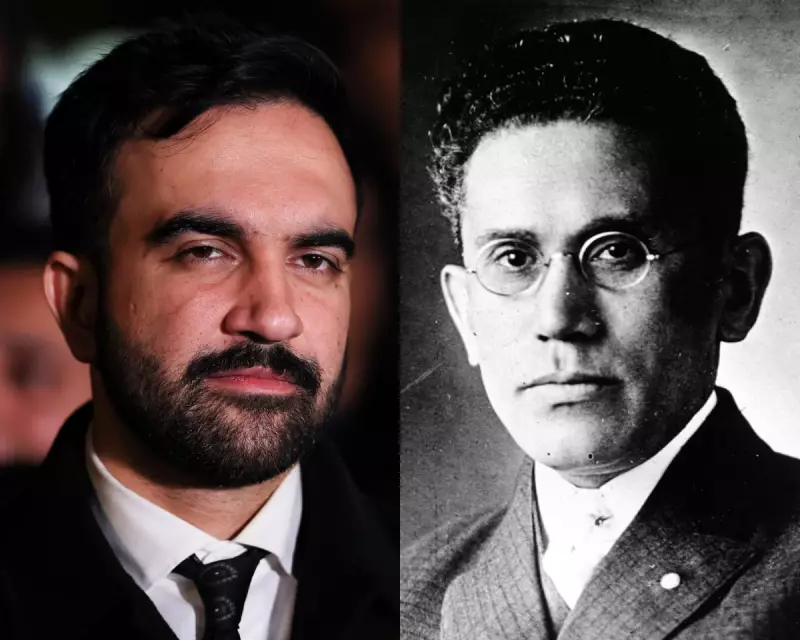
In a seismic shift for American politics, Zohran Mamdani has been sworn in as the first socialist mayor of New York City. His ascent came despite a ferocious campaign against him, funded by billionaires and amplified by mainstream Jewish institutions that labelled him a radical outsider. Yet, a closer look reveals Mamdani not as a break from history, but as the modern heir to a deep and venerable Jewish tradition: the Yiddish socialism that helped build the city itself.
The Roots of Rebellion: From the Pale to the Lower East Side
The connections are sometimes direct. A key figure in Mamdani's transition is Bruce Vladeck, whose great-grandfather was Baruch Charney Vladeck. A Marxist activist from the Russian Empire's Pale of Settlement, Baruch arrived in New York after the 1905 revolution, his face scarred by Cossack sabres. He later became a socialist alderman. His adopted surname, Vladeck, was a nom de guerre from the Jewish Labour Bund—a secular, socialist, and anti-Zionist movement whose slogan, "here where we live is our country," resonates powerfully with Mamdani's vision for New York.
At the dawn of the 20th century, New York was home to nearly 600,000 Jews, the largest Jewish city on Earth. Packed into Lower East Side tenements and toiling in garment sweatshops, they forged a radical, disputatious proletariat. This was the fertile ground where exiled revolutionaries thrived, creating a vibrant secular socialist culture woven through mutual aid societies, debate clubs, and militant unions.

A Legacy of Organising: Newspapers, Unions, and Political Power
This Yiddish socialist world was vast and influential. Socialist Yiddish newspapers sold 120,000 copies daily. The Workmen's Circle boasted tens of thousands of members. Garment workers' unions, led by former Jewish revolutionaries, represented over 100,000 workers. In 1912, the Jewish Daily Forward erected its Beaux-Arts skyscraper on the Lower East Side, a secular "temple" adorned with busts of Marx and Engels.
This movement also translated into tangible political power. Before the First World War, Jewish districts in New York elected 10 socialist assemblymen, 7 councilmen, and a municipal judge. In 1914, they sent labour lawyer Meyer London to Congress. London, like Mamdani, was a controversial figure: he opposed the creation of a Jewish ethnostate in Palestine and was denounced by wealthy Zionists, a pattern eerily mirrored in the billionaire-funded attacks on Mamdani over a century later.
Erasure and Reclamation: The Campaign That Remembered History
The Jewish socialist left was systematically suppressed by the Palmer Raids, the Red Scare, and McCarthyism. This erasure was so effective that by 2025, establishment institutions could claim Mamdani's politics were alien to New York Jewry. Mamdani's campaign consciously worked to reclaim this obscured history. His team produced videos where he lectured on forbearers like socialist birth control pioneer Fania Mindell, while also engaging with the city's contemporary multicultural fabric—from Subway Takes to Diwali in Jackson Heights.
His organising mirrored the old traditions. In 2021, he camped out with indebted taxi drivers, moving his office to the sidewalk and undertaking a 14-day hunger strike. His multilingual campaign, running ads in Spanish, Bangla, Hindi, and Arabic, echoed the cross-ethnic solidarity of the old Jewish left. Ultimately, the smear campaign labelling him an antisemite failed spectacularly, with one July poll showing two-thirds of Jews under 40 supported him.
Zohran Mamdani's victory is not an anomaly. It is a return. He walks in the footsteps of the socialist sweatshop workers, the Bundists, and the radical organisers—the tradition of so many great-grandparents, not that of ritzy Upper East Side synagogues. In doing so, he has reconnected New York City with a foundational, and fiercely beautiful, part of its own soul.






