
From the moment I stepped out of Wigan North Western railway station, it was clear something unusual was taking place. The first person I saw on the street outside was Darren Jones MP, the Chief Secretary to the Prime Minister. And on top of that, people were asking him for a selfie. It should go without saying that this is not the sort of thing that would normally happen in the centre of Wigan. But it was not a normal day. This was June 18 2026 – the date of a vote so crucial, political reporters had quickly run out of superlatives to describe it. ‘The most consequential by-election in modern British history’ seemed to be the consensus. I had come to visit Makerfield.
Arrival in Wigan
My hotel sat just outside the constituency in Wigan itself, the seat of Culture Secretary and top Andy Burnham backer Lisa Nandy, so I needed to start by catching some public transport south. Immediately, I was struck by the number of bright yellow Bee Network buses passing through the town centre. I hopped on the 610, heading for Ashton-in-Makerfield. This integrated transport system was one of Burnham’s top initiatives during his spell as Mayor of Greater Manchester, and it was hard to shake the idea that each vehicle was the equivalent of a big ‘Vote Andy’ sign. (Compare that to the turquoise Reform-branded double-decker that was blocking off a bus stop on the Wigan Road, much to the chagrin of the schoolchildren behind me.)
Campaign Trail Observations
The bus passed plenty of garden signs for Reform and Labour, only a few of which had been defaced. We also saw a group of supporters for Rupert Lowe’s Restore Britain party parked in the central reservation and waving flags. There were also a few enthusiastic Burnham backers holding up signs at the side of the road, and I got off to chat with a few of them. They had travelled up from London – not unusual for a by-election campaign, it’s important to say – and were infused with a positive spirit. The group received many supportive honks from passing cars and, more surprisingly, a few from passing yellow buses. Bee drivers clearly aren’t shy about their affinity for Andy. While I stood there chatting, there was just one instance of a car passenger yelling a nasty word that begins with ‘w’ and ends in ‘kers’ from the window. I reckon the ratio would be rather different in any other Labour campaign.
Reform Campaigners
Arriving in the centre of Ashton, a crowd of Reform campaigners had taken over all sides of the road in a busy junction. The women I spoke to there had also travelled up from London. They, too, were upbeat about the campaign though deeply negative about the state of the country. The plight of the yachting couple who faced warning shots from a Russian vessel in the Channel recently was raised. When I asked about the idea that voting Burnham was the quickest way to oust Sir Keir Starmer as PM, they weren’t having it: ‘Burnham would be out too in a few months anyway.’ One older local lady set out one of the biggest problems Reform were facing, though. She described the party’s candidate Robert Kenyon as a ‘sexist’, reflecting controversy over past social media posts. (Both Kenyon and Reform UK have repeatedly rejected this characterisation.) Though she was not enamoured with many politicians these days, she said she had voted Burnham – despite resolutely refusing to tell a door-knocker who she would be backing earlier in the day. This woman may have been an example of what another Reform activist described to me as the ‘shy Labour vote’ – people who didn’t want to admit they were supporting a party that’s had a bit of a brand crisis lately.
The Result
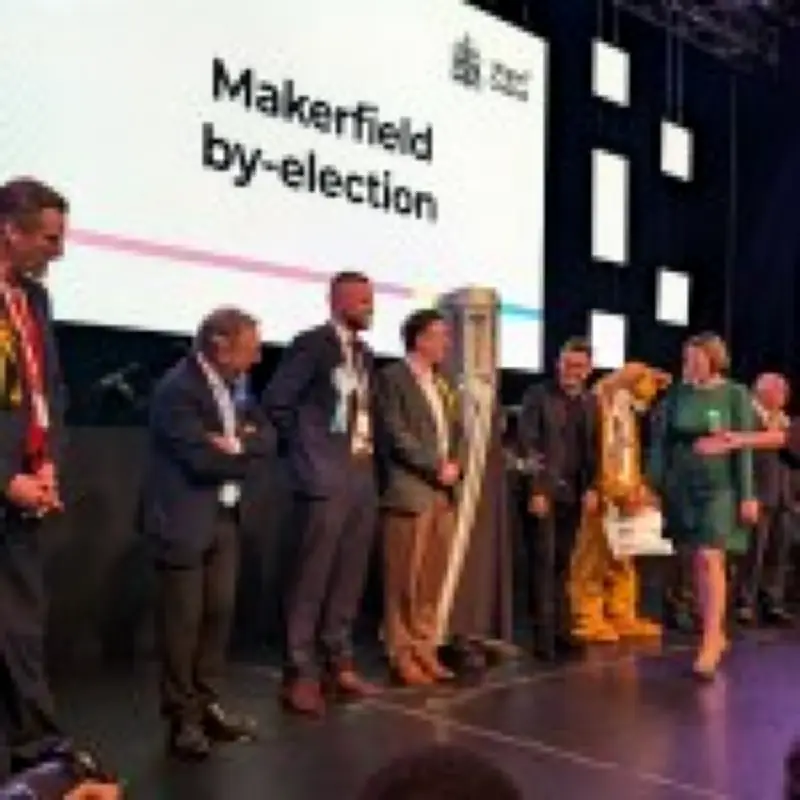
Less than 12 hours later, in a venue called The Edge beside the famous Wigan Pier, the extent of that phenomenon was made astoundingly clear. Polls in the lead-up to the by-election had suggested Burnham would end up with 45% of the vote, a small margin ahead of Kenyon. In the actual event, Labour ended up with just under 55% – a full 20% above Reform. In the time it took for me to edit a TikTok video of the vote count announcement, almost everyone had shuffled out from the hall. This northern constituency’s time at the centre of the nation’s attention had come to an end. But despite the lofty ambitions of the winning candidate, he vowed to make sure we all stay familiar with its name. ‘Everyone can feel that the country isn’t where it should be. Tonight could, just could, be the turning point,’ Burnham said in his victory speech. ‘From here on I will give everything I have got to make it so. To ensure the name Makerfield is forever synonymous with bringing about the change this country needs, bringing back something we’ve lost – hope – hope for the future.’




