

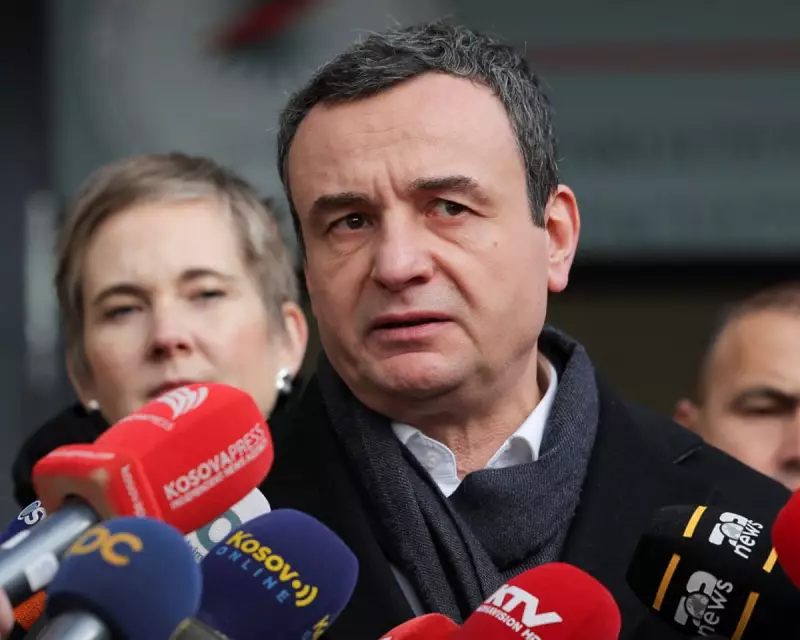
Voters in Kosovo are heading to the polls in a crucial snap parliamentary election, aiming to break a political deadlock that has paralysed governance in the young Balkan nation for much of the year.
A Nation Seeking Stability
The early vote was called after Prime Minister Albin Kurti's governing Vetëvendosje (Self-Determination) party failed to form a government following an election on 9 February, despite winning the most seats. This marked the first time Kosovo has been unable to establish an administration since it declared independence from Serbia in 2008.
While Kurti's party remains the favourite, analysts question whether it can secure a working majority in the 120-seat parliament. Other mainstream parties have refused to enter an alliance with him. Under Kosovo's election laws, 20 seats are automatically reserved for ethnic Serb representatives and other minority parties.

High Stakes and Deep Divisions
Another inconclusive result would deepen the crisis significantly. The country of 2 million people has not yet approved a budget for next year, raising fears for its already fragile economy. Furthermore, lawmakers must elect a new president by March, as the mandate of current President Vjosa Osmani expires in early April. Failure to do so would trigger yet another snap election.
The main opposition, the Democratic League of Kosovo (LDK) and the Democratic Party of Kosovo (PDK), have accused Kurti of authoritarian tendencies and of straining relations with key allies the US and the European Union. A former political prisoner under Serbian rule, the 50-year-old Kurti has taken a hardline stance in EU-mediated talks on normalising ties with Belgrade, leading to punitive measures from both Washington and Brussels.
No reliable pre-election polls have been published. In the February contest, Vetëvendosje won around 42% of the vote, while the two main rival parties combined secured roughly 40%. Analysts suggest even minor shifts in support on Sunday could decisively alter the power balance.
Broader Challenges: Economy, Security, and Migration
The political impasse unfolds against a backdrop of severe challenges. Kosovo has one of Europe's poorest economies and is among six Western Balkan nations seeking EU membership, a process conditional on normalising relations with Serbia.
Tensions with restive ethnic Serbs in northern Kosovo flared into violence in 2023, injuring dozens of NATO peacekeepers. In a recent positive development, ethnic Serb mayors assumed power peacefully after municipal elections this month.
On the international stage, Kurti has agreed to a controversial US request to accept third-country migrants deported from America under Trump-era immigration rules. Authorities confirmed to the Associated Press that one migrant has arrived so far.
For citizens like 71-year-old pensioner Ilmi Deliu from Pristina, the election is a pivotal moment. "I hope the election will bring a change or we will end up in an abyss," he said, voicing a widespread concern about the nation's future. "Young people no longer want to live here."






