Green Party Surge Mirrors Reform UK's Rise as Voters Reject System
Green Party surge mirrors Reform UK in voter disillusionment

The Unlikely Parallels in a Divided Political Landscape

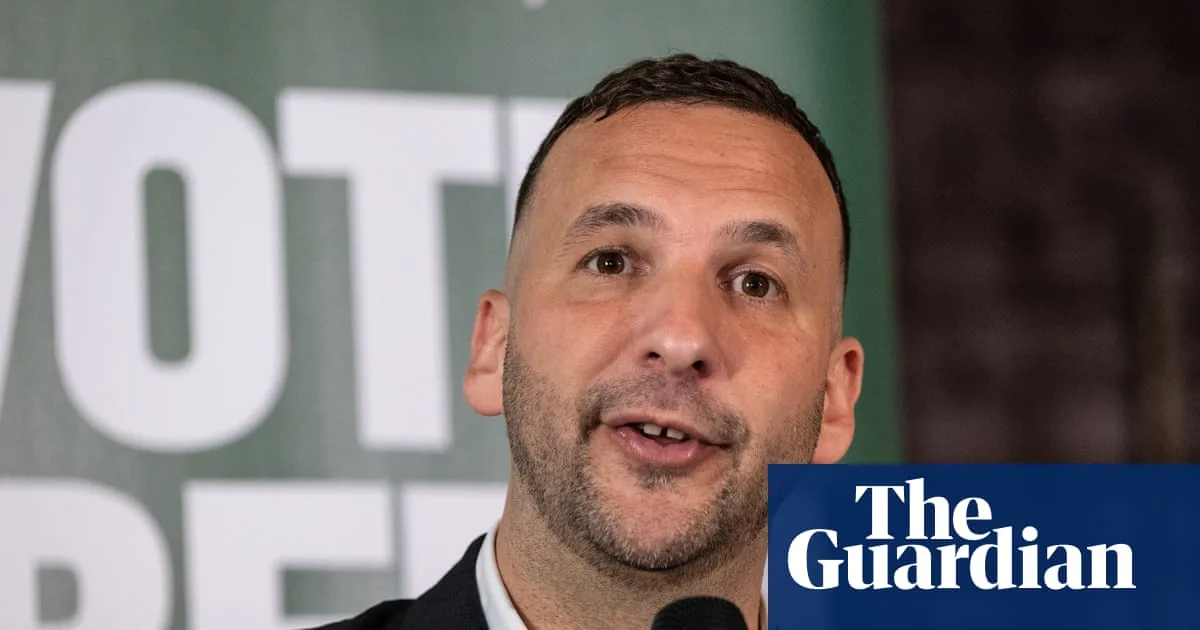
In a striking development within British politics, the surging Green Party, under its charismatic new leader Zack Polanski, is demonstrating unexpected similarities with its polar opposite, Nigel Farage's Reform UK. Despite their vastly different ideologies, pollsters have identified a crucial common denominator: both parties are running highly effective, social media-savvy operations that are successfully appealing to a growing base of disillusioned voters.

Anti-System Sentiment Bridges the Left-Right Divide

The phenomenon was starkly illustrated when a voter in a More in Common focus group recently expressed admiration for both Zack Polanski and Nigel Farage, a statement that highlights how traditional political allegiances are fracturing. Luke Tryl, Executive Director of the polling firm, explained this paradox, stating: "It's because that anti-system feeling is overcoming the traditional left-right divide."

This sentiment is rooted in a widespread perception that the country is broken. Mr Tryl emphasised that the word people are most likely to use to describe Britain is 'broken', creating a new political space for disenfranchised voters, including many who abstained from the last election. Polling data reveals a telling statistic: while 60% of people wish to preserve social and political institutions, a significant 40% harbour the feeling that they would "rather just let them all burn."

Digital Savvy and Accessible Politics Drive Momentum

Beyond the shared anti-establishment energy, the operational tactics of both parties are proving highly effective in the modern 'attention economy'. Both the Greens and Reform UK have mastered the art of creating snappy, memorable video clips tailored for short-form social media platforms, which are easily reshared and amplify their message.

Mr Polanski, a self-styled 'eco-populist' elected as Green leader in September, has consciously adopted an accessible communication style. He contrasted his approach with the major parties, telling The Mirror: "I think journalists have often commented that they are surprised how accessible I am... I'm very willing to walk around with them and speak to people in the street that I've not met or vetted in advance." He attributes his and Mr Farage's resonance with the public to this rejection of the "overly stage-managed and performative" nature of Labour and Conservative politics.

The impact of this strategy is becoming evident in the polls. In a significant milestone at the end of October, the Greens overtook all major parties for the first time, reaching 17% in one poll, trailing only behind Reform UK, which stood at 32%. While other surveys, such as a more recent MIC poll, place the Greens at 9%, the surge has undoubtedly caused alarm within the established parties, particularly Labour.

This unease is most acute in specific urban centres. Mr Tryl identified London, Bristol, Sheffield, and Manchester as areas at risk of a Green Party advance, with one Labour MP bluntly admitting that "London MPs are s***ting it." The Greens are drawing strength from Generation Z, young women, and progressive activists, often concentrated in university towns and cities, who are motivated by issues like climate change rather than the immigration focus of Reform UK.

Implications for Labour and the Future Political Battle

The rise of these two insurgent parties presents a complex challenge for the Labour government. Mr Tryl suggests that Labour must perform a delicate balancing act. It needs to articulate a compelling progressive vision to win back voters flirting with the Greens, while simultaneously addressing the more conservative concerns, such as immigration and Channel crossings, that are driving support to Reform UK.

Mr Polanski believes his party's growth can push Labour to the left, telling The Mirror he hopes for a government that "actually cares about people's squeezed living standards." Analysis of YouGov polling indicates that tactical voting could see Lib Dem and Green supporters return to Labour to prevent Nigel Farage from entering Number 10. However, Mr Tryl cautions that this is not guaranteed. For it to work, Labour must present an "ambitious offer to progressives" that convinces them the government is delivering enough on their values.

The political battlefield is being redrawn. The concurrent surges of the Green Party and Reform UK signal a profound shift in the UK's political landscape, where digital strategy and anti-system sentiment are proving to be as powerful as traditional ideology.




