
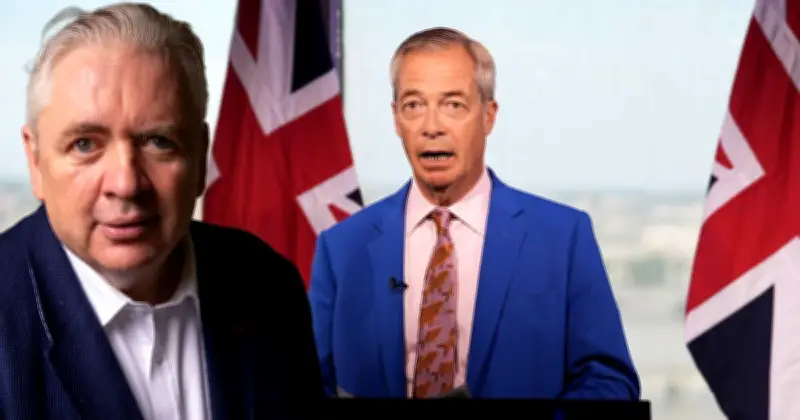
Nigel Farage's decision to resign his Commons seat in Clacton, Essex, and fight a by-election could backfire disastrously, according to a political commentator. Leo McKinstry argues that the move, intended to rally public support against investigations into his financial dealings, risks descending into farce and could even end Farage's political career.
Background to the by-election gamble
For months, Farage appeared on the cusp of power, with Reform UK gaining momentum. However, poor by-election results in Denton and Makerfield have created a mood of vulnerability, exploited by media outlets hostile to his Euroscepticism and immigration stance. Investigations into his finances have intensified, focusing on an undeclared £5 million donation from cryptocurrency billionaire Christopher Harborne and his association with convicted fraudster George Cottrell, who provided Farage with undeclared security, staffing, and use of a town house near Buckingham Palace.
Farage's supporters argue he had no duty to register these personal gifts as he was not an MP at the time, dismissing the inquiries as a witch-hunt. Farage himself has resigned his seat to force a by-election, framing it as a fight against a quasi-judicial establishment.
Potential opponents and risks of farce
However, no major party is fielding a candidate against Farage. His sole opposition could come from novelty candidate Count Binface, a cartoon character played by comedian Jon Harvey, or maverick right-wing actor Lawrence Fox of the tiny Reclaim Party. McKinstry warns that a contest against Binface or Fox would be a farce. Even if Farage wins easily, it would be a damp squib that neither halts investigations nor strengthens Reform. At worst, he could lose if frivolous momentum builds behind Binface.
McKinstry draws parallels to the 2002 Hartlepool mayoral election, where a joke candidate playing mascot H'Angus the Monkey won a landslide. Similarly, in 2016, a public vote to name a polar research ship chose "Boaty McBoatface" over the official choice of Sir David Attenborough. He also notes that in the 2024 general election, Farage won only 46% of the vote in Clacton, more than 2,000 votes behind the combined total for all other candidates.
Historical precedents and potential tragedy
McKinstry argues that by-elections triggered by politically motivated resignations rarely achieve their objectives. In January 1986, 15 Unionist MPs in Ulster quit in protest at the Anglo-Irish Agreement; they lost one seat in the subsequent by-elections and failed to stop power-sharing. David Davis's 2008 by-election victory in Haltemprice over civil rights achieved nothing except to confirm doubts about his judgment.
Two crucial exceptions were UKIP's triumphs in Rochester and Clacton in 2014, which terrified the Tories and persuaded David Cameron to promise an EU referendum. That outcome was testimony to Farage's colossal influence, according to McKinstry. With his eloquence, humour, resilience and patriotism, Farage has done more for British freedom than any other living politician. Brexit would never have happened without him. McKinstry concludes: "It would be a tragedy if this unnecessary, ill-judged by-election were to drive him from British public life."




