North Carolina Primaries Set Stage for Pivotal Senate and House Races
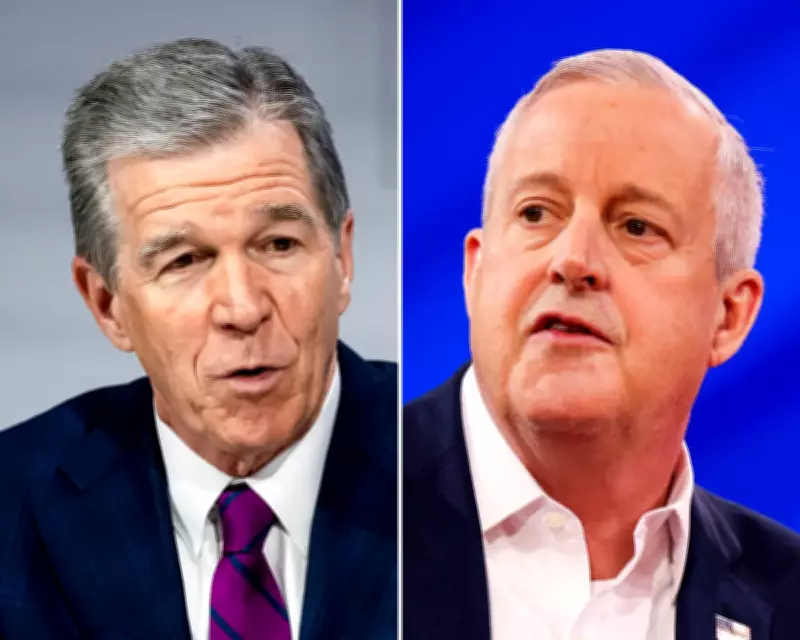
As North Carolina prepares for its midterm primaries on Tuesday, Democrat Roy Cooper and Republican Michael Whatley are leading the polls for their respective parties in the race for a key US Senate seat. This contest marks one of the first major primary battles of the 2026 election cycle, drawing intense national attention due to its potential impact on control of Congress.
Senate Race Dynamics: Cooper vs. Whatley
In the Democratic primary, former two-term governor Roy Cooper holds a significant advantage over a slate of candidates who have never held elected office. Cooper is widely viewed by North Carolina Democrats as their strongest contender to flip the Republican-controlled seat currently held by retiring senator Thom Tillis. Tillis, a conservative, has notably opposed the Trump administration on issues such as healthcare, defense, and the Epstein file disclosures.
On the Republican side, Michael Whatley, the former Republican National Committee chair, leads in polling, with his closest competitor, representative Don Brown, trailing in single digits. However, polling has been limited, and about half of Republican voters remain undecided, indicating potential softness in conservative support for Whatley.

Whatley has secured an endorsement from former president Donald Trump, but this has not quelled criticism from some conservative circles. Brant Clifton, publisher of the Daily Haymaker, a conservative news site in North Carolina, expressed discontent, stating, "The president made a horrible mistake forcing Whatley on us." Clifton noted that Whatley's close ties to Tillis, who has become unpopular among certain voters, could hinder his appeal.
General Election Prospects and Voter Sentiment
Polling for a head-to-head matchup between Cooper and Whatley shows Cooper with a 10-point lead. This advantage reflects Cooper's longstanding relationship with North Carolina voters and a negative turn in sentiment toward Trump. A recent Change Research poll indicates that 50% of voters strongly disapprove of Trump's job performance, while about 60% feel their income is falling behind the cost of living, and three-quarters report stress due to inflation and rising costs.
North Carolina's primary runoff rules add complexity: if the top candidate fails to receive 30% of the vote, the second-place finisher can request a runoff, potentially prolonging the nomination process.
House Races and Redistricting Impact
Beyond the Senate race, mid-decade redistricting has reshaped House contests, widening partisan advantages in several districts to reduce Democratic gains. For instance, incumbent Democratic representative Don Davis, first elected in 2022, now represents a district redrawn in 2025 to include more Republican voters, shifting it from a safely Democratic seat to one that analysts believe leans Republican. Five Republican candidates are vying in the primary for this district.
In North Carolina's fourth district, located in the Research Triangle area, the primary is likely to determine the November winner in this overwhelmingly Democratic seat. The race has become a nationalized battle between incumbent Valerie Foushee and Durham county commissioner Nida Allam, who positions herself as a more progressive alternative. Outside groups have spent over $4 million in this contest, making it one of the most expensive primaries this year. The American Priorities Super Pac has invested heavily to highlight Allam's opposition to military aid to Israel, while the Article One Pac, linked to the American Israel Public Affairs Committee (Aipac), has supported Foushee. Additionally, political groups tied to the AI industry have backed Foushee, emphasizing "sensible AI regulation."
State-Level Focus: Rockingham County Senate Race
While federal races dominate headlines, a state senate election in Rockingham county may have profound consequences for North Carolina voters. State senate president Phil Berger, considered the most powerful Republican politician in the state, faces a tough challenge from insurgent candidate Sam Page, the longtime county sheriff. Turnout in this race is approaching presidential election levels, underscoring its significance.

Trump has endorsed Berger, and sources indicate he attempted to persuade Page to drop out by offering a federal appointment. Clifton remarked on the high stakes, noting, "They're estimating that, when all is said and done, $10 million would have been spent on the senate president's behalf for a job that pays $17,000 a year." This local contest highlights the intense political dynamics at play in North Carolina's primaries.
With control of the US Senate and House of Representatives hanging in the balance, North Carolina's primaries serve as a critical bellwether for the 2026 midterm elections, drawing scrutiny from across the political spectrum.