
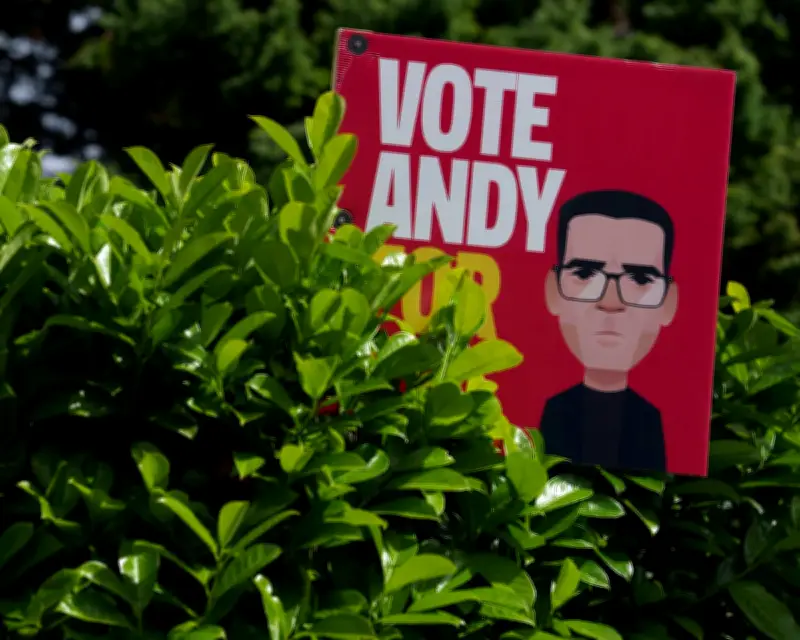
Andy Burnham's landslide victory in the Makerfield byelection was not solely due to Labour loyalists. Instead, a coalition of voters from across the political spectrum united to back him at the ballot box, delivering a decisive win over Reform UK.
Election Results and Turnout
Burnham secured a majority of 9,231 votes over Reform UK candidate Robert Kenyon, surpassing the margin of his predecessor. Labour won 55% of the vote, compared to Reform's 35%, while the hard-right Restore Britain party garnered 7%. Turnout reached 59%, up six percentage points from the general election, with 45,510 votes cast.
The Liberal Democrats and Green Party ran low-key campaigns, allowing Labour to absorb a broad range of voters. The right-wing vote was split between Reform UK and Restore Britain. Veteran pollster Peter Kellner noted that the Liberal Democrat and Green candidates had won 11% of the Makerfield vote two years ago, but this time they garnered just 1%, effectively shedding votes to ensure Burnham's victory.
Voices from the Constituency
At Orrell Waterpark, three friends—Mal, 64, Peta, 48, and Barb, 64—said they typically support the Green Party but backed Burnham on Thursday because they believed he had the best chance of defeating what they called “divisive” right-wing politics. Mal, a former social worker, expressed anger over the immigration-focused campaigns of Reform and Restore in Makerfield, a constituency where 95% of the population is white British. “It's nothing to do with migrants—they're the people treating us in hospital. Reform are coming in causing so many problems and that's why we don't want that,” he said.
Peta described the byelection as deeply divisive, “between family, neighbours, people you speak to in the street. I don't know if people realise how far right they've fallen.” Barb expressed hope that the area could reunite after the intense campaign, noting that many Reform and Restore activists came from outside the constituency. “There will need to be work done to bring ordinary, decent people back together again,” she said.
Support from Former Reform Voters
Some of Burnham's borrowed supporters came from the right, including past Reform voters. Joseph, 50, a heavy goods driver, said he had voted for Reform's Robert Kenyon in the 2024 general election. “I'm not a Labour fan but I like Burnham and I think this is bigger than just us here,” he said. “I voted for him this time because at least for the next few years I think he's the best chance we have.”
Ellen, 63, said any fondness she and her peers had for Nigel Farage had waned over the past year, and she was eager to prevent Reform from winning in her constituency. “I don't trust him [Farage] any more. I think he's backwards, and the man who they chose to stand here, I think he's an odd one,” she said. “I don't like the stuff he said about women and I get a bad sense from him. I'm not pro-Labour but if he [Burnham] was the other option I was happy to vote for him. I'm happy he won and I'm really happy that it's over.”
Green Supporters Considered Switching
Amber, 37, one of only 308 people who voted for Green candidate Sarah Wakefield, said she had considered backing Burnham instead. “I live on a very pro-Burnham street, so I've been seeing a lot of red recently. I would have been shocked if he'd lost,” she said. “I was tempted and I'm glad he won because I'd have felt awful if Reform had got in.” She added, “I know other people who usually vote Green who backed him and I understand it. I think it was something a lot of people who don't like Labour did.”




