
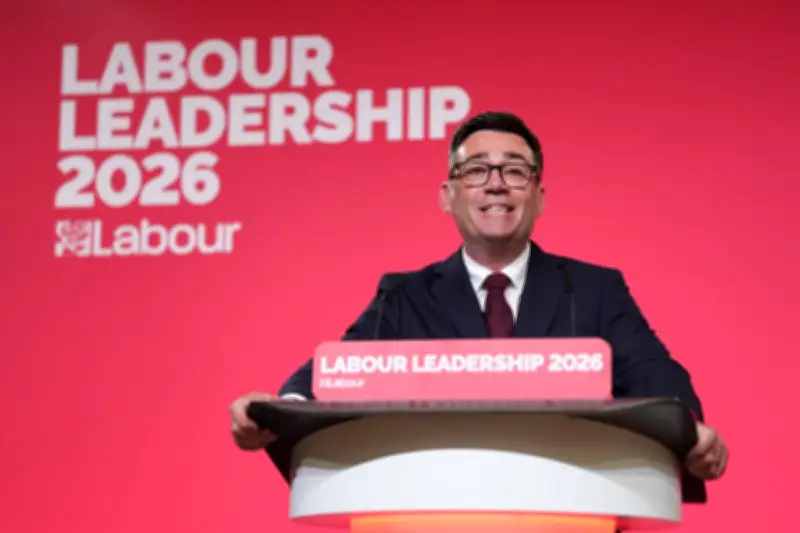
Andy Burnham has sparked fears of tax increases on London and elsewhere after vowing to govern in a 'distinctively Labour' way in his first speech as party leader. The former Mayor of Greater Manchester was installed in a 'coronation' at a special conference on Friday, after no other candidates entered the contest to replace Sir Keir Starmer.
Burnham's Pledge for 'Hope' and Devolution
Mr Burnham said he was 'ready' to lead, to govern for the whole country, and promised to give people 'hope back' and 'the Labour they once knew'. He has vowed to deliver the 'biggest devolution of power in modern times', which could see tens of thousands of government jobs moved out of Whitehall. Before delivering his speech in central London, he posted on X: 'The next few days are about more than changing who governs Britain. They're about changing how Britain is governed.'
Tax Concerns and Wealth Levy Speculation
On tax, Mr Burnham has said he may want to 'ask for a little' more at some point, as he stopped short of ruling out a wealth levy. He has suggested that raising taxes will not be an imminent step when he takes over as Prime Minister on Monday. However, shadow minister for London Gareth Bacon, MP for Orpington, responded: 'After two years of a Labour Government in Westminster and a decade of Sadiq Khan at City Hall, Londoners already face sky-high taxes that are driving people and businesses out of our city. Any new wealth tax proposed by Andy Burnham would only exacerbate this. We cannot allow that to happen.'
Economic Renewal and Reindustrialisation
In his speech at the Trades Union Congress headquarters, the Makerfield MP set out plans to focus on economic renewal, more public control and reindustrialisation. He pledged to 'set a direction that is distinctively Labour'. He added: 'We won't try to outgreen the Greens or out-Reform Reform, or doing what we've done in the past of wearing too many Tory clothes.' He is promising to offer the 'courage to fix the big things that politics has neglected' and the 'conviction to argue for our plans'.
Critique of 1980s Policies
Mr Burnham said that Britain took 'a series of wrong turns in the 1980s' when 'political power was centralised and economic power privatised'. Making the economy work for people across the UK will require 'a new path to the one we've been on for the last 40 years', he believes. He vowed to unite the party under his leadership and paid tribute to Sir Keir for returning Labour to government. 'We are united and we put the power that comes from that unity at the service of people and places who have been waiting too long for politics to let them hope again,' Mr Burnham said in his leadership acceptance speech attended by Labour MPs, grandees and mayors including Sir Sadiq Khan. 'That's what we're going to do, everybody. We're going to give them hope back.'
Social Care and Cabinet Reshuffle
In a video posted on social media on Thursday night, Mr Burnham also said he was going to 'expend quite a lot of political capital' on social care and spoke about his own family's experience with the system as his father has Alzheimer's. As he finalises his Cabinet, Home Secretary Shabana Mahmood was reported to have overtaken Net Zero Secretary Ed Miliband in the race to replace Rachel Reeves as Chancellor. Mr Burnham was the only candidate to get the required support to replace Sir Keir as party leader after his resignation. He was backed by 379 of the party's 403 MPs, far surpassing the 81 needed, and secured the support of eight of the 11 unions affiliated with the party.
Devolution and 'No10 North'
Questions remain about how far the former mayor's plans will differ from Sir Keir's agenda. Mr Burnham has spoken about how he wants to push powers to local leaders outside Westminster as part of his devolution agenda and to create a 'No10 North' outpost of Downing Street based in Manchester. He has said he will stick to Ms Reeves' fiscal rules as well as manifesto pledges not to raise income tax, VAT or national insurance. His close ally, Liverpool City Region Mayor Steve Rotheram, hinted that a wealth tax is under consideration, saying voters must be shown what the levy would 'achieve' for a particular 'sector or area' so it was not seen as punitive towards people who have 'got a few bob'.




