
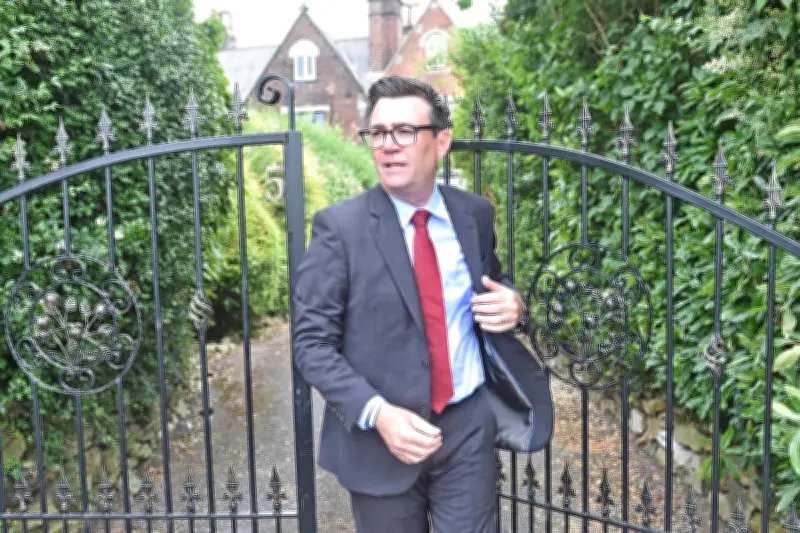
Andy Burnham is almost guaranteed to become the next prime minister of the United Kingdom after securing nominations from 322 Labour MPs, representing 80% of the parliamentary party, by 5pm on Thursday. This leaves only 81 Labour MPs who could potentially nominate another candidate, but convention dictates that outgoing leader Sir Keir Starmer does not nominate, making it impossible for any alternative to reach the required threshold.
Overwhelming Support from Parliamentary Labour Party
The former Greater Manchester mayor was already the only declared candidate in the race to succeed Sir Keir, but the scale of his support effectively eliminates any late challenger. Mr Burnham expressed his gratitude, stating: 'I am deeply grateful to the 322 colleagues who have nominated me. Their support comes from across the PLP and reflects a shared belief that Britain needs a new approach to politics.' He added that he wants to 'empower MPs to bring the experiences of their constituents into the heart of government.'
Almost every Cabinet member backed Mr Burnham, including former health secretary Wes Streeting and former armed forces minister Al Carns, both previously seen as potential challengers. Mr Streeting ruled himself out within minutes of Mr Burnham's candidacy announcement on June 22, and Mr Carns declined to run on Wednesday.
Cabinet Support and Exceptions
Key Starmer ally Steve Reed was one of only three Cabinet members who did not nominate Mr Burnham on Thursday, along with Home Secretary Shabana Mahmood and party chairwoman Anna Turley. However, this does not necessarily indicate opposition, as nominations must be made in person or through limited proxy votes. Ms Mahmood, as chair of the party's national executive committee, is understood to be refraining from nominating any candidate.
Mr Burnham still needs formal nominations from three affiliated organisations, including two trade unions. Usdaw general secretary Joanne Thomas confirmed her union's executive committee had unanimously decided to endorse him, making his formal nomination almost certain.
Starmer's Endorsement and Past Collaboration
Speaking as nominations opened on Thursday, Sir Keir Starmer said he thought Mr Burnham would make a good prime minister, noting their long-standing relationship. He highlighted their work together on the Investigatory Powers Bill in 2015, when Mr Burnham was shadow home secretary, describing it as 'really important in terms of the powers and capabilities that our security and intelligence services need.' Sir Keir also referenced their collaboration on Northern Powerhouse Rail since 2024 and Mr Burnham's response to the Heaton Park synagogue attack last year. When asked if Mr Burnham would be a better prime minister, Sir Keir replied: 'These are things best judged by other people.'
Timeline and Foreign Policy Vision
Nominations remain open until July 16. In the absence of other candidates, Mr Burnham will be formally declared Labour leader at a special conference on July 17 and is expected to become prime minister on July 20.
Mr Burnham also outlined his foreign policy vision, signalling a tougher stance towards Israel over its Gaza operations. In a social media video, he apologised for Labour's previous position, saying the party 'didn't get it right' and was 'too slow to call for a ceasefire.' He suggested his government would 'do more to strengthen our approach,' including 'looking at further sanctions, both on those involved in the violence in Gaza, but also looking at measures to ban trade in goods with illegal settlements.' This followed a Times article in which he committed to Nato, the nuclear deterrent, close US ties, support for Ukraine, and closer EU relations.




