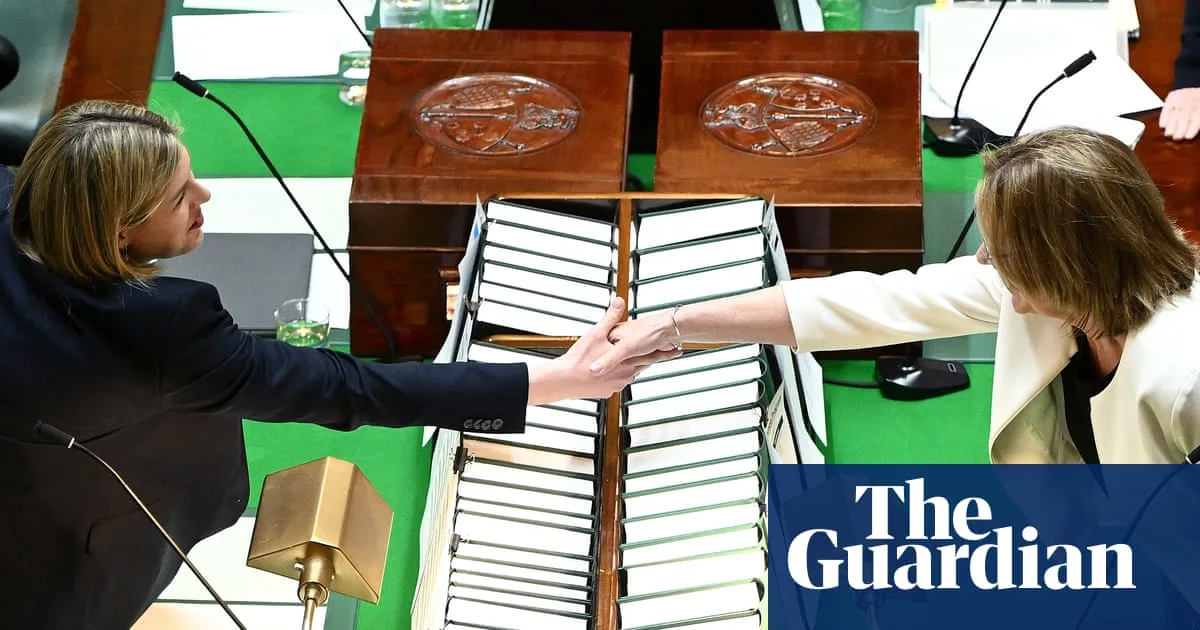
Victoria's Political Donation Caps Struck Down by High Court
Victoria's Political Donation Caps Struck Down

Victoria's Political Donation Laws Ruled Unconstitutional by High Court

In a landmark decision with far-reaching implications, the High Court of Australia has unanimously ruled that Victoria's political donation laws are unconstitutional. This ruling effectively removes all donation caps and disclosure requirements in the state, creating a regulatory vacuum just months before the November state election.

Unanimous Decision Strikes Down Key Legislation

The High Court's Wednesday ruling struck out an entire section of Victoria's Electoral Act that had introduced caps on political donations while creating a controversial exemption for major political parties. The court declared that Part 12 of the Electoral Act "impermissibly burdens" the constitution's implied freedom of political communication.

Victoria's donation laws, introduced in 2018 and implemented ahead of the 2022 election, had capped individual donations at $4,970 per term but provided a significant loophole through "nominated entities." Only Labor, Liberal, and National parties had registered nominated entities with the Victorian Electoral Commission, allowing them to bypass the donation caps that applied to other political actors.

Wide Pickt banner — collaborative shopping lists app for Telegram, phone mockup with grocery list

Legal Challenge by Independent Candidates

The case was brought by independent candidates Paul Hopper and Melissa Lowe, who contested the 2022 state election and plan to stand again in November. Their counsel, Ron Merkle SC, argued during February hearings that the nominated entity exemption should be scrapped as it was "solely enacted for the benefit of the three legacy parties."

Hopper expressed little surprise at the High Court's broader ruling, describing the existing laws as a "mess." He stated, "What they've done is send a clear message to the government of Victoria that things have to be fair and there has to be a level playing field."

Lowe revealed that if the government had scrapped the nominated entity exception as requested in a 2024 letter, the case would never have reached the High Court. "They clung to it for two years because they wanted to protect their own incumbency," she said.

Immediate Political Reactions and Concerns

The ruling has sparked immediate concern across the political spectrum. Shadow Attorney General James Newbury warned, "This is a very big problem for the integrity of our electoral system. We now have effectively no donation system, no caps and no limits on foreign donations."

Greens leader Ellen Sandell urged immediate government action to prevent a US-style system "where billionaires and big corporations can buy politicians and elections." She emphasized, "If Labor doesn't take immediate action to cap donations to political parties, they're giving big corporate interests and billionaires free rein to influence this year's state election."

A Victorian government spokesperson described the decision as "disappointing" and stated, "This is a win for billionaires and a loss for transparency. We are considering our options."

Broader Implications for Australian Politics

The ruling has significant implications beyond Victoria's borders. Similar campaign finance laws introduced by the South Australian and federal governments now face increased scrutiny. The federal government is already facing a challenge to its campaign finance laws on similar grounds by former independent MPs Zoe Daniel and Rex Patrick.

Catherine Williams, executive director of the Centre for Public Integrity, stated, "Today's judgment makes it clear: governments cannot rig electoral laws in favour of major parties and expect to get away with it." She urged Victoria to pursue "genuine reform – not cosmetic change."

Bill Browne from the Australia Institute echoed this sentiment, noting that the decision gives the state government a "chance to go back to the drawing board" to design a fairer system. He warned that the federal and South Australian governments are now "on notice" that their laws risk being struck down if not amended.

Urgent Legislative Response Required

With the November state election approaching, the Victorian government faces pressure to introduce new legislation urgently. However, it's understood that new legislation will not be introduced before the Nepean by-election on May 2, leaving the final weeks of that campaign without donation restrictions.

Pickt after-article banner — collaborative shopping lists app with family illustration

The ruling creates an unprecedented situation where Victoria currently has no legal framework governing political donations, raising serious questions about electoral integrity, transparency, and the potential influence of wealthy donors in the upcoming state election.




