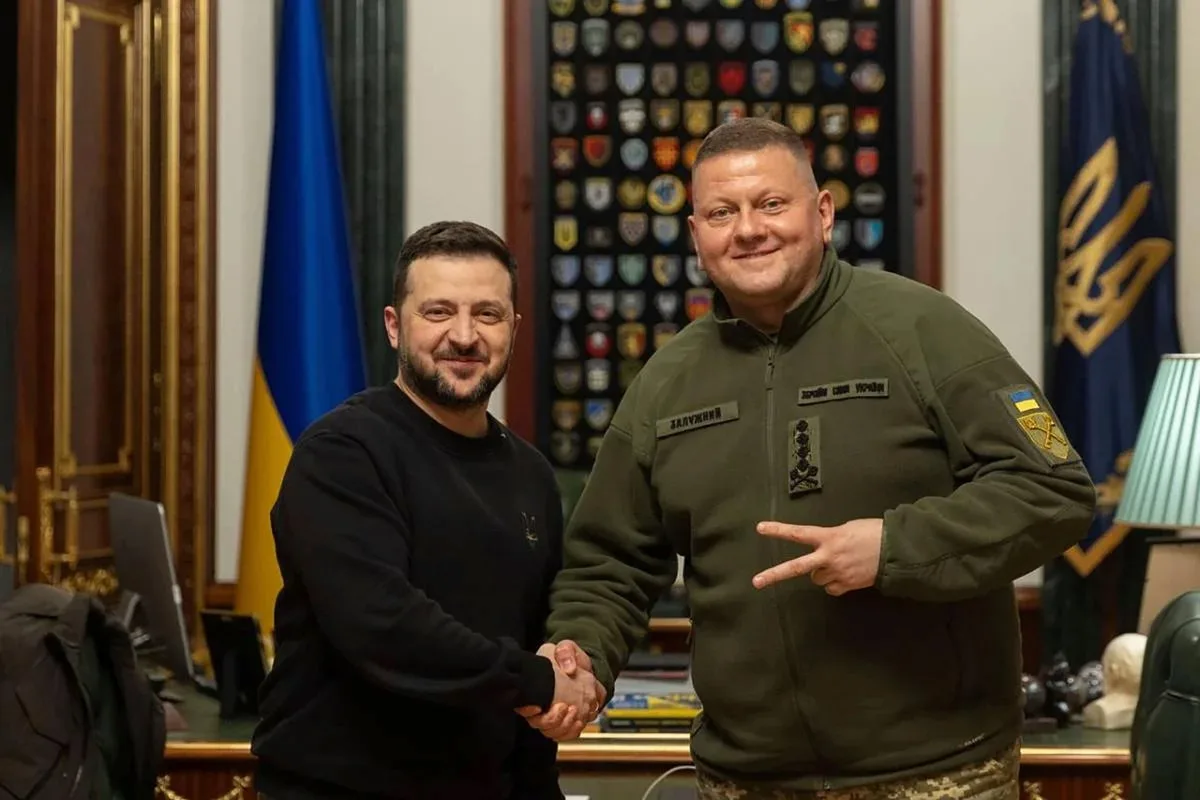
In a revealing interview with The Associated Press, Valerii Zaluzhnyi, the former Ukrainian army general widely regarded as President Volodymyr Zelenskyy's primary political rival, has publicly addressed the profound discord between them for the first time. This disclosure comes as Ukraine approaches the fourth anniversary of its war with Russia, highlighting internal divisions at a critical juncture.
Early Tensions and a Boiling Point
Zaluzhnyi, 52, who was ousted as army chief in 2024 and appointed ambassador to Britain, described how tensions with Zelenskyy emerged shortly after Russia's full-scale invasion in February 2022. According to Zaluzhnyi, disagreements frequently erupted over the best strategies to defend Ukraine, with tempers often flaring between the two leaders.
The strained relationship reached a crisis point later in 2022 when dozens of agents from Ukraine's domestic intelligence service, the SBU, raided Zaluzhnyi's office. He alleges this previously unreported incident was an act of intimidation, risking exposure of their rivalry when national unity was paramount. Zelenskyy's office and the SBU declined to comment, and the AP could not independently confirm the account.
A Stark Warning During the Raid
During the raid, Zaluzhnyi recounted calling Zelenskyy's chief of staff, Andrii Yermak, with a stark warning: "I will fight with you and have already called in reinforcements to the center of Kyiv for support." He threatened to deploy military forces to stop the search and protect the command center, emphasizing, "I told Yermak that I would repel this attack, because I know how to fight."
Zaluzhnyi also phoned the then-head of the SBU, Vasyl Maliuk, who claimed ignorance of the raid and promised to investigate. Later, it was discovered that the SBU had obtained a search warrant for a strip club at the same address, but employees confirmed the club had been closed since before the invasion, leading Zaluzhnyi to believe the warrant was a pretext.
Disagreements Over Military Strategy
Despite the near-crisis passing, disagreements persisted, with Zaluzhnyi often challenging Zelenskyy's military approach. A particularly contentious dispute arose over the 2023 counteroffensive, which ultimately failed. Zaluzhnyi argued that the plan, crafted with NATO partners, required concentrating forces into a "single fist" to retake Zaporizhzhia and advance to the Sea of Azov, but resources were dispersed, diluting their impact.
His account was corroborated by two Western defense officials speaking anonymously. Zaluzhnyi's popularity, bolstered by battlefield successes, did not prevent his dismissal in February 2024, a move analysts saw as an effort to limit his political influence by distancing him from Ukraine's daily affairs.
Political Ambitions and Public Opinion
Zaluzhnyi refuses to discuss political ambitions, citing concerns over harming unity during the war. However, polls show him with a slight lead over Zelenskyy in hypothetical elections, as the president's popularity has waned amid a prolonged conflict and corruption scandals. An Ipsos poll last month indicated 23% support for Zaluzhnyi versus 20% for Zelenskyy.
Political analyst Volodymyr Fesenko noted, "People will vote not only for Zaluzhnyi but also against Zelenskyy — blaming him for the failures of his presidency." Despite his reticence, campaign consultants, including Paul Manafort, have approached Zaluzhnyi, though he declined their services.
Current Context and Implications
The revelation of this rift threatens to polarize Ukrainian public opinion as Russian forces make slow gains on the eastern front and the U.S. pressures for a peace deal. Zelenskyy has agreed in principle to a plan by former President Donald Trump for post-war elections with security guarantees.
Zaluzhnyi, now in London, remains critical of Ukraine's war strategy, citing unrealistic troop numbers and poor technology deployment. He maintains "absolutely friendly" conversations with Zelenskyy in rare meetings but stays out of military decisions, a factor some analysts say could weaken his appeal.
As Ukraine navigates these internal divisions, the deep-seated tensions between its former army chief and president underscore the challenges of maintaining unity in a protracted conflict.




