

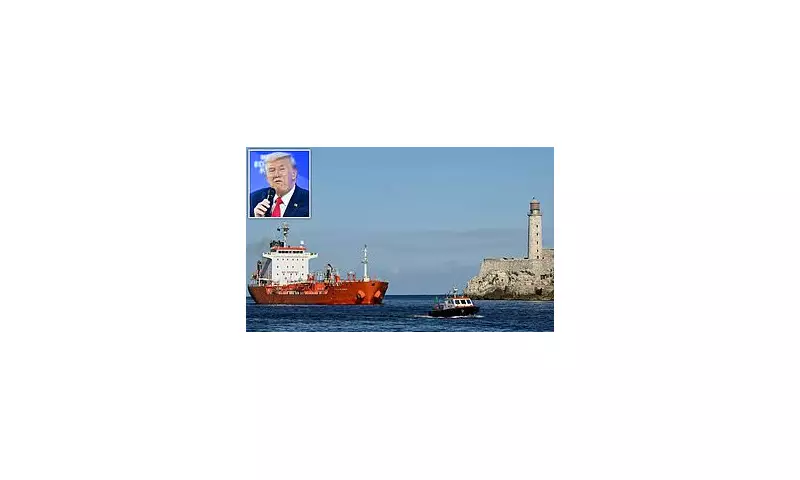
The White House is currently assessing a series of aggressive new strategies designed to facilitate a transition of power in Cuba, with one particularly severe option under consideration being a complete cessation of all oil deliveries to the island nation. This information comes from three sources with direct knowledge of the internal discussions, who spoke to Politico on the condition of anonymity.
A Hardline Approach Championed by Key Figures
This significantly tougher stance is being actively promoted by Secretary of State Marco Rubio, alongside other senior administration officials who have been consistently critical of the Cuban regime. Although no final decision has been made, this strategy is anticipated to be included in a comprehensive list of options presented to President Donald Trump, all aimed at the overarching goal of dismantling Cuba's long-standing communist system.
Major Escalation in US Policy
A total ban on oil shipments would represent a major escalation from the administration's previous focus, which centred on disrupting Venezuelan crude exports. For decades, Venezuela served as Cuba's primary source of oil, creating a vital economic lifeline between Havana and Caracas. The enforcement actions taken by the Trump administration have already severely disrupted this long-standing energy bond.

One individual familiar with the developing plan starkly summarised the rationale to Politico, stating, 'Energy is the chokehold to kill the regime.' This perspective underscores a belief within certain administration circles that Cuba's economy is now at its most vulnerable point in decades, particularly following the dramatic capture of Venezuelan leader Nicolas Maduro by US forces.
Legal Framework and Internal Debate
Such a plan would find its legal authorisation under the Helms-Burton Act, formally known as the 1994 LIBERTAD Act. This legislation officially mandates and defines the United States' extensive restrictions on commerce and financial dealings with Cuba. Despite this legal pathway, there is reported to be some internal friction regarding whether President Trump should proceed with such a bold and consequential move, given that Cuba's economy has already suffered a serious blow from the reduction in Venezuelan oil.
Shifting Suppliers and Economic Vulnerability
Following the successful US efforts to seize sanctioned Venezuelan cargo, Mexico has emerged as the leading provider of oil to Cuba. However, this new supply chain comes at a cost, with Mexico charging Cuba for the imported fuel. According to data from the International Energy Agency, imported fuel currently accounts for approximately 60 percent of Cuba's total oil consumption, highlighting the nation's acute dependency and vulnerability.
The closure of Venezuelan supplies has already intensified Cuba's fuel shortages, leading to prolonged queues at gas stations and renewed concerns over energy and broader supply disruptions across the island. A source emphasised the administration's timeline, noting that deposing the communist government, which has held power since the 1959 revolution, is viewed as '100 percent a 2026 event' from their perspective.
Political Support and Strategic Logic
Secretary of State Marco Rubio has publicly joined President Trump in expressing a renewed wave of optimism that the end of the Castro-founded government is imminent. This sentiment is echoed by hardline Republican members who have signalled strong support for a total embargo on Cuba's energy supplies. During a brief interview last week, Senator Rick Scott forcefully articulated this position, declaring, 'There should be not a dime, no petroleum. Nothing should ever get to Cuba.'
The administration's strategic logic appears straightforward: with Venezuela's economic lifeline now severed after Maduro's exit, Cuba is perceived to be standing on financial quicksand, presenting a unique opportunity to apply maximum pressure. The White House and Cuba's embassy did not provide an immediate response to requests for comment on these reported deliberations.






