Von der Leyen Advocates for Fundamental Shift in EU Foreign Policy Approach
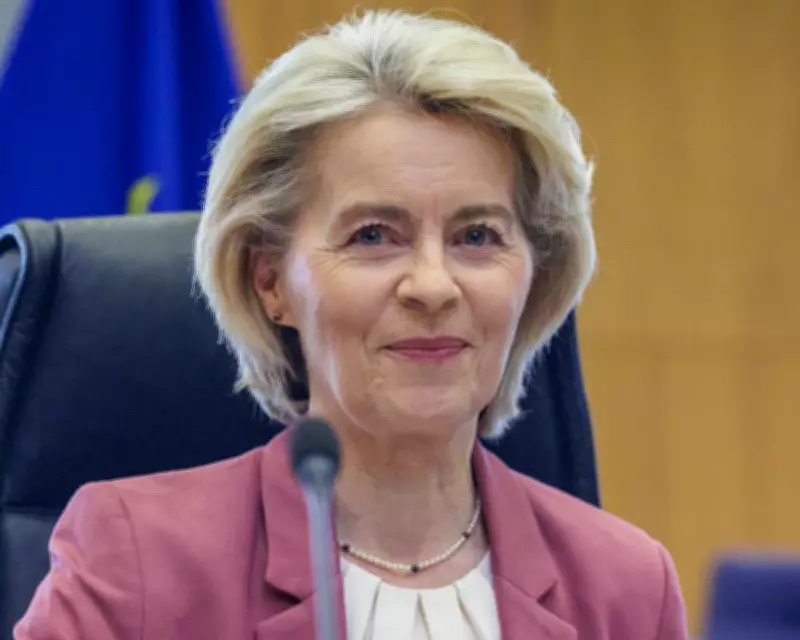
European Commission President Ursula von der Leyen has delivered a significant address urging European Union ambassadors to reconsider whether the bloc's postwar institutions remain effective on the contemporary global stage. Speaking to assembled diplomats on Monday, von der Leyen articulated a pressing need for the EU to develop "a more realistic and interest-driven foreign policy" that moves beyond traditional frameworks.
Questioning Postwar Institutional Relevance
Von der Leyen emphasized that Europe "can no longer be a custodian for the old-world order" and must critically examine whether its established doctrines, institutions, and decision-making processes—designed during an era of postwar stability and multilateralism—have adequately adapted to rapid global changes. "We urgently need to reflect on whether our doctrine, our institutions and our decision making have kept pace with the speed of change around us," she stated, questioning whether the consensus-driven system "is more a help or a hindrance to our credibility as a geopolitical actor."
The Commission President affirmed that the EU "will always defend and uphold the rules-based system" but acknowledged it could no longer solely rely upon this framework to protect European interests or shield the continent from emerging threats. This declaration represents a notable evolution in her geopolitical approach since pledging to lead a "geopolitical" commission upon taking office in 2019.

Addressing Regional Conflict and Criticism
Von der Leyen's remarks come amid scrutiny of her diplomatic handling of the Iran conflict, following recent US and Israeli military actions. Prominent French MEP and former minister Nathalie Loiseau recently criticized von der Leyen for conducting telephone diplomacy with Gulf leaders, accusing her of encroaching upon the responsibilities of EU foreign policy chief Kaja Kallas. Notably, von der Leyen had previously advocated for "a credible transition in Iran," adopting a more assertive position than Kallas during the conflict's early stages.
During Monday's address, von der Leyen avoided direct criticism of US and Israeli actions, describing debates about whether the conflict constituted "a war of choice or a war of necessity" as partially missing the point. She referenced Iran's domestic crackdowns, stating nobody would "shed tears for a regime that had slaughtered 17,000 young people," while also condemning Tehran's regional destabilization efforts.
Regional Consequences and Humanitarian Response
The Commission President highlighted the unfolding regional conflict's "unintended consequences," including spillover effects impacting energy markets, financial systems, trade routes, and transportation networks, alongside causing significant population displacement. She separately announced EU humanitarian aid for 130,000 people in Lebanon, expressing concern about the conflict's impact on Israel's northern neighbor, where recent Israeli bombing and evacuation orders have rendered approximately half a million people homeless.
Diplomatic Engagement and Security Enhancements
Von der Leyen and European Council President António Costa conducted video discussions with leaders and senior ministers from thirteen Middle Eastern and North African nations, including Armenia, Bahrain, Egypt, Iraq, Jordan, Kuwait, Lebanon, Oman, Qatar, Saudi Arabia, Syria, Turkey, and the United Arab Emirates. Brussels characterized these talks as demonstrations of solidarity amid regional instability.
Following these discussions, von der Leyen and Costa expressed openness to enhancing two maritime defensive operations: Aspides, established in 2024 following Houthi rebel attacks on international shipping, and Atalanta, originally created in 2008 to counter Somali piracy but subsequently expanded in scope. These operations aim to protect vital waterways and prevent supply chain disruptions in the Red Sea region and surrounding areas.
This comprehensive address signals a potential strategic reorientation for EU foreign policy, emphasizing pragmatic interests alongside traditional values as the bloc navigates complex geopolitical challenges and regional conflicts with global implications.